Wind Changes the Voice of an Explosion express
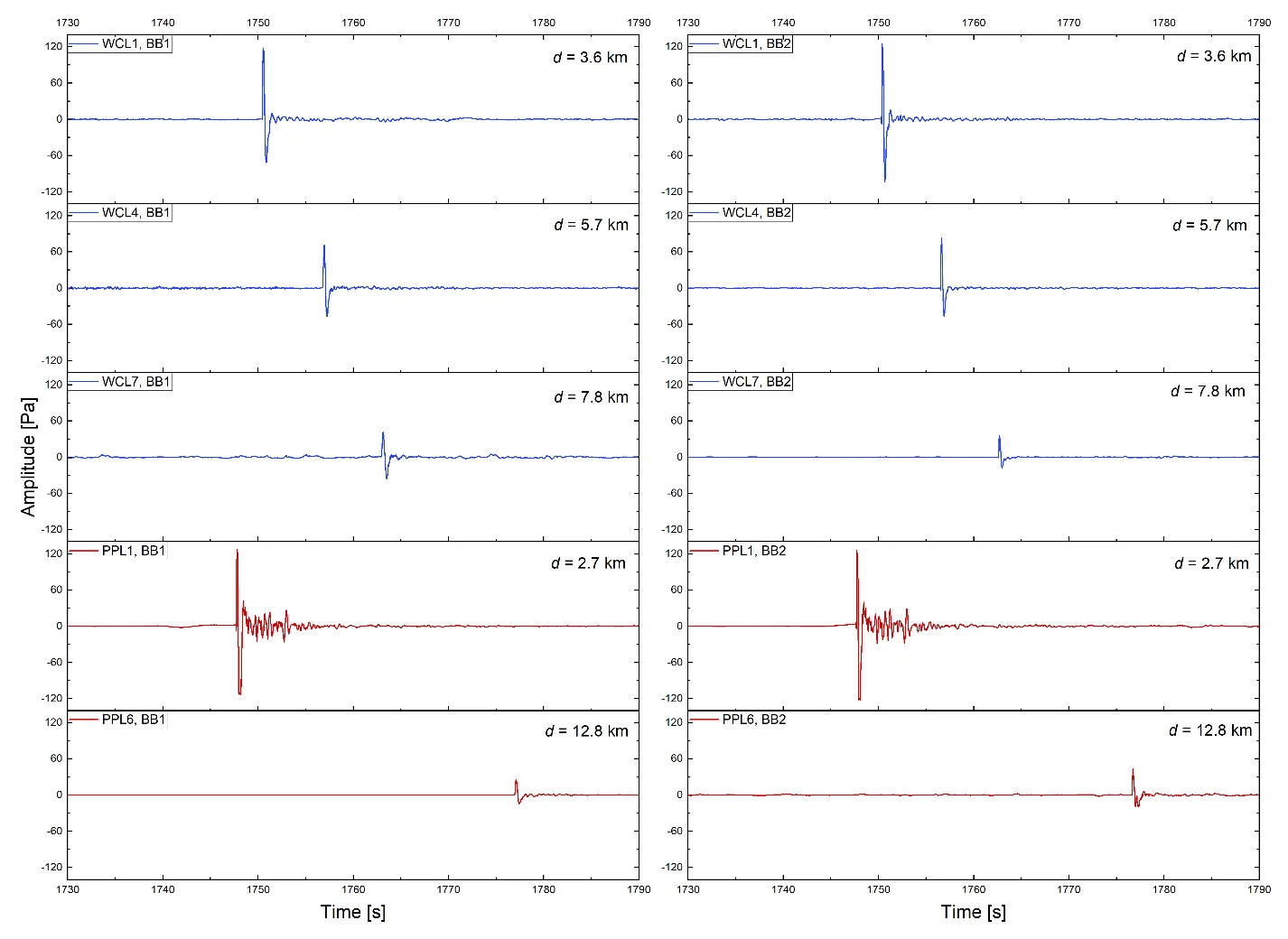
The same explosion can sound different: it all depends on which way the wind is blowing. In 2024, researchers set off charges equivalent to ten tons of TNT twice and recorded the sound with a network of 31 microphones spread over a radius of 23 kilometers. The source was identical, but the acoustic pictures turned out to be quite different.
In October, the signals at all sensors had similar oscillation periods. In May, the picture split: downwind, the sound kept its sharpness, while upwind it became noticeably duller. A strong headwind muffles high notes, leaving only a low rumble. The wind acts like a filter that lets slow oscillations through and dampens fast ones.
This is the first direct observation of such an effect over short distances. Previously, it was thought that this kind of filtering only appeared over long distances or under special atmospheric conditions. Now it is clear: ordinary wind near the ground can affect how we hear low-frequency sound — even when the explosion happens very close by.
The human ear cannot hear infrasound, but the body feels it: low frequencies can cause vibrations in the chest and a feeling of unease without any visible reason.