Popular

Rogue Moons: Warmth Without a Star ⚡ экспресс

Original: "Habitability of Tidally Heated H$$_2$$-Dominated Exomoons around Free-Floating Planets"
arXiv:2602.05378 · 2026-02-05 · CC BY · ⏱ 1 min · Exoplanets
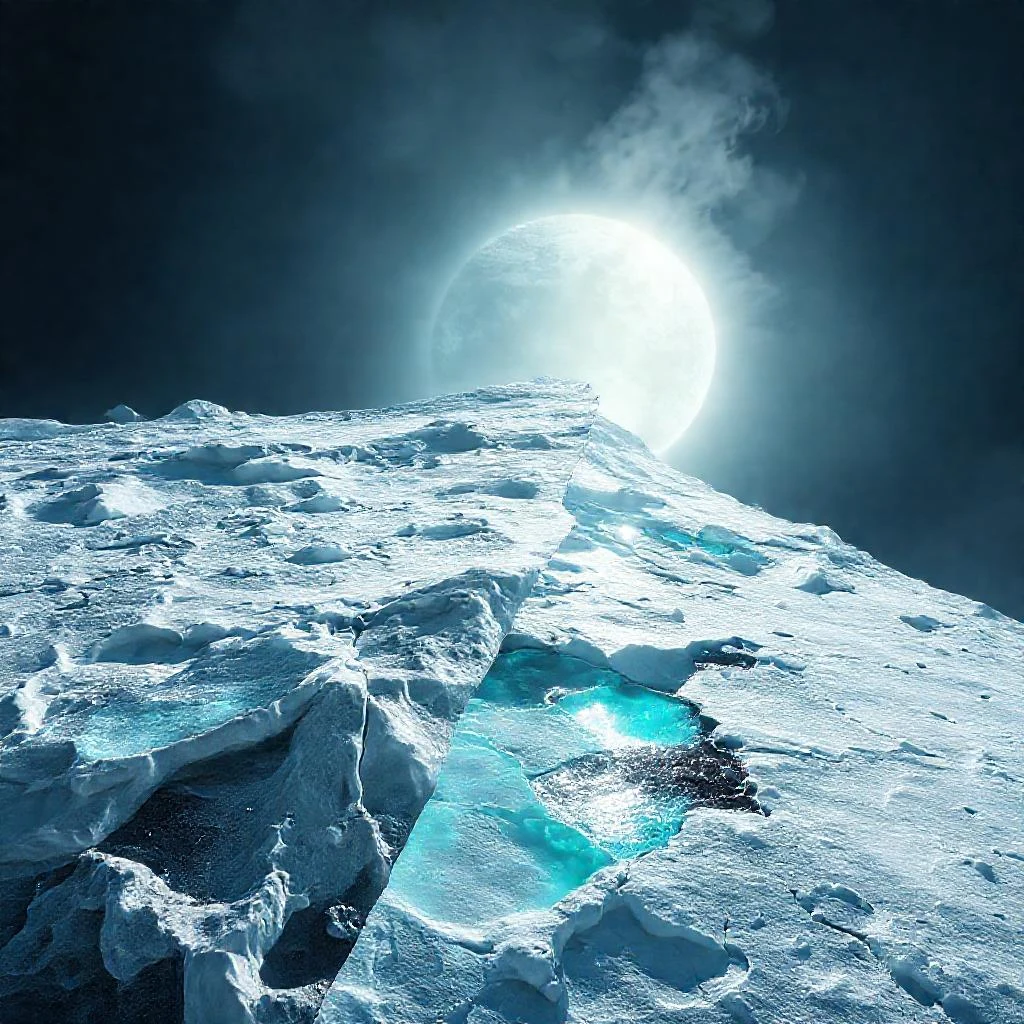
Moons of rogue planets can retain liquid water for billions of years thanks to tidal heat and a hydrogen atmosphere that acts like a warm blanket.
Abstract

Moons of rogue planets can be heated by tidal friction enough to sustain liquid water. Modeling shows that a hydrogen atmosphere acts as the perfect blanket: collisions of H₂ molecules trap heat, while it neither condenses nor breaks down over time, unlike carbon dioxide. Under certain pressure, oceans can last up to 4.3 billion years. Strong tides create wet-dry cycles, and dissolved ammonia makes the water alkaline — conditions favorable for assembling RNA. Thus, moons without suns could become cradles of life.

Links in the knowledge graph 1

📄 Showing the "Simple" version — "Popular" is not ready yet. Add it to favorites to help prioritize it.

Rogue planets, ejected from star systems, may harbor life on their moons. A moon of such a planet can preserve heat and liquid water for billions of years. The whole secret lies in a reliable "blanket" and an internal "stove."

The stove is tidal forces: they squeeze and stretch the moon's interior, heating it up like kneading clay.

But without a blanket, heat escapes. Carbon dioxide is a poor insulator: it freezes out too easily. A dense hydrogen envelope acts like a down comforter, trapping heat. This allows liquid water to exist for up to 4.3 billion years.

A surprising bonus: tides create wet-dry cycles, which, as it turns out, help assemble RNA chains—the first step toward life.

Add a bit of carbon, nitrogen, and ammonia to the atmosphere, and you get an alkaline environment, perfect for the chemistry of life. Even in the pitch darkness of interstellar space, warm worlds can bloom.

🎯 The hydrogen "fur coat" of such a moon can weigh as much as several Earth oceans, yet remain transparent—on the surface, eternal twilight, but warm.

Scientists
Christian DopplerD. B. McLaughlinDidier QuelozMichel MayorR. A. RossiterDavid Charbonneau
Tags
hydrogen exoplanet Water carbon
Laws
Doppler effectKepler's third lawCoulomb's lawKepler's first lawRydberg formulaKepler's second law
Original: arXiv:2602.05378 · CC BY · bridge42worlds