
Barbara Ercolano

4 articles · 14 co-authors · latest: 2026-07-21
7 citations · h-index 2 · 9 papersData: Semantic Scholar

We have retold 4 papers by this author. most often about: Moon, exomoon, natural satellite. 14 co-authors across our retellings.

Links in the knowledge graph
Exoplanets2025-10-111 minarXiv:2510.10344express
Can the Moon have its own moon?
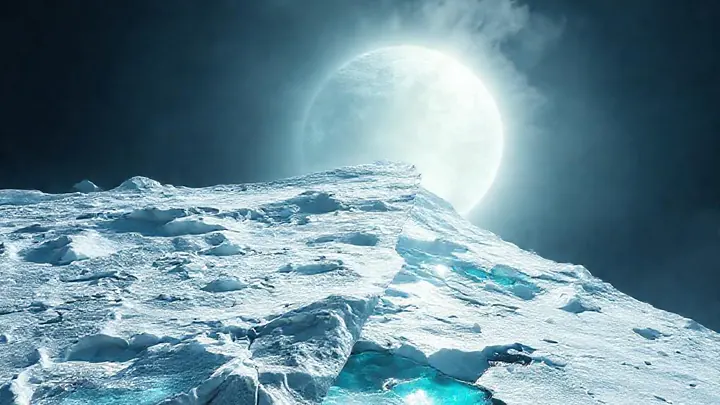
The Moon can have its own tiny moon — like a nesting doll, but in space. The outer doll is a planet, the middle one is a moon, the inner one is a small moon-satellite, or submoon. Ньютон showed that all bodies attract each other, and gravity holds them together.
Exoplanets2026-01-131 minarXiv:2601.08938express
How a Hole in a Disk Blocks the Light
Around a young star spins a flat pancake of gas and dust — the future building blocks of planets. The star heats it with ultraviolet radiation, and gas from the disk's surface escapes into space, like water from a puddle under the sun.
Exoplanets2026-02-051 minarXiv:2602.05378express
Rogue Moons: Warmth Without a Star
Rogue planets, ejected from star systems, may harbor life on their moons. A moon of such a planet can preserve heat and liquid water for billions of years. The whole secret lies in a reliable "blanket" and an internal "stove." The stove is tidal forces: they squeeze and stretch the moon's interior, heating it up like kneading clay.
Exoplanets2026-07-212 minarXiv:2607.19579express
Heavy Water on a Hot Jupiter: WASP-39 b Surprises Astronomers
Water comes in different varieties. Not just fresh or salty, but also "heavy"—when one of its hydrogen atoms is replaced by deuterium, its heavier cousin. Such water is called HDO, and it's a true cosmic passport: the amount of deuterium in water reveals where and when that water was born.
