Quantum Particle Defies Friction: Frictionless Motion in a One-Dimensional System express
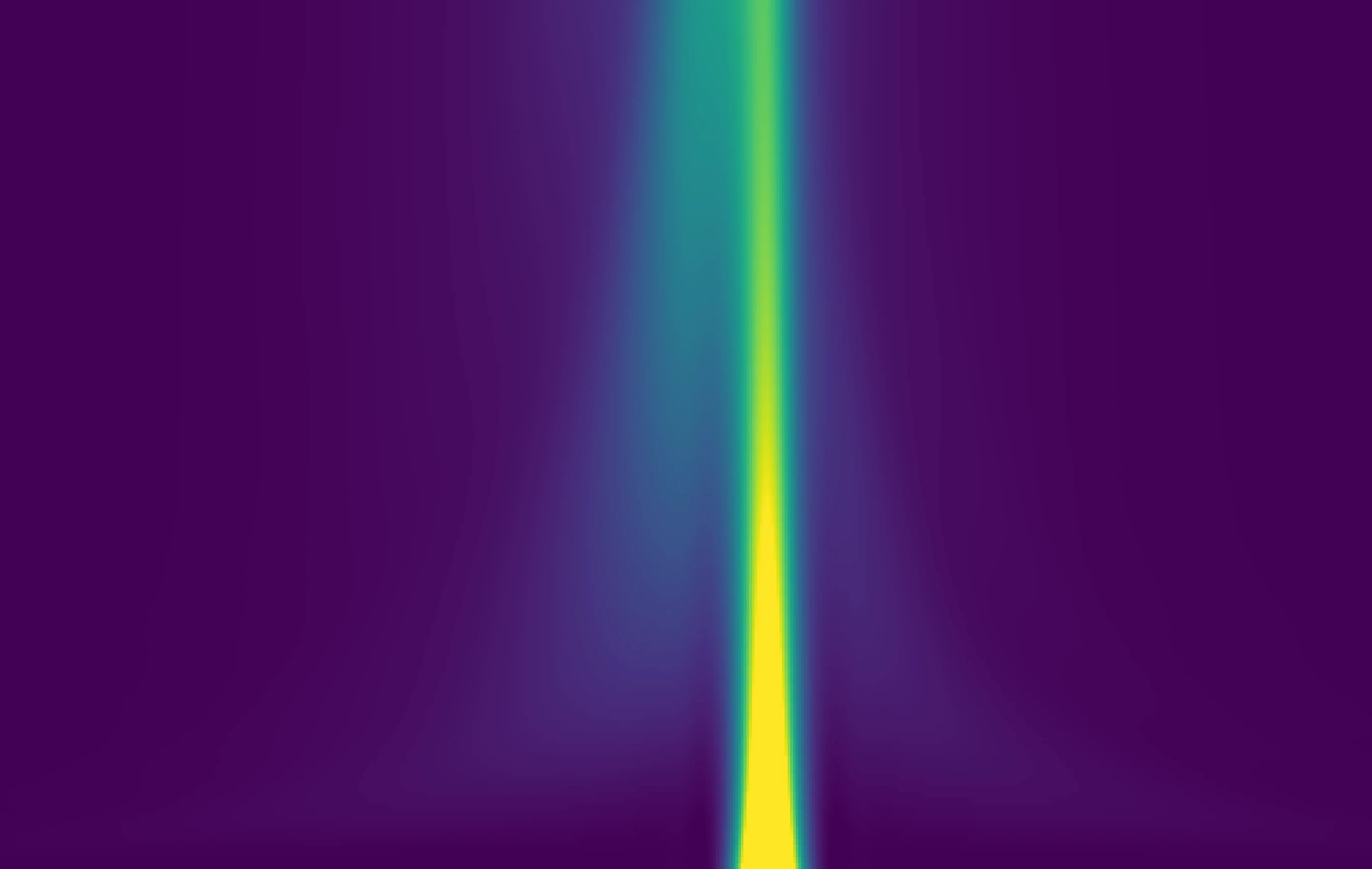
In the macroscopic world we know, any motion inevitably decays: friction, a dissipative process that scatters energy, intervenes. But quantum reality has surprises in store. The phenomenon of superfluidity, known for instance in helium at ultra-low temperatures, allows a liquid to flow without viscous resistance, as if it had forever forgotten about losses. For a long time, it was almost an axiom that such behavior is impossible in a one-dimensional system — a chain of particles lined up in a row. However, a recent experiment has turned these ideas upside down.
Physicists placed a single impurity atom in a line of ultracold atoms, arranged like beads strung on an invisible thread. A vivid analogy fits here: imagine pushing one bead through tightly packed neighbors. In the ordinary world, friction, heat, and disorder would arise. But in the quantum version, a free gap instantly forms ahead of the moving atom, and the chain closes just as quickly behind it — without the slightest hint of resistance. This dissipation-free sliding persisted even at supersonic speeds.
The most unexpected result concerned the initial impulse. Intuition suggests: the slower the push, the sooner the particle should get stuck. In reality, the opposite was observed: the slower the initial push, the longer the deceleration phase lasted before the motion settled into uniform, dissipation-free sliding. But in the end, the motion always became infinite and required no energy input. In the ordinary world, friction generates heat and disorder — entropy; here, there is not a hint of a thermodynamic cost for motion. This discovery promises devices capable of transmitting information with absolutely no loss, opening a new chapter in low-temperature physics and quantum technologies.
If water could flow without friction, a thrown stone would create eternal ripples, and Water in a river would never stop.