How Stellar Blur Gives Away Dark Energy express
Light from a distant star, after passing through air and telescope lenses, loses its sharpness, like looking at a streetlamp through wet glass. Astronomers call this blur the telescope's "fingerprint": each instrument has its own, and you need to know it down to the smallest detail.
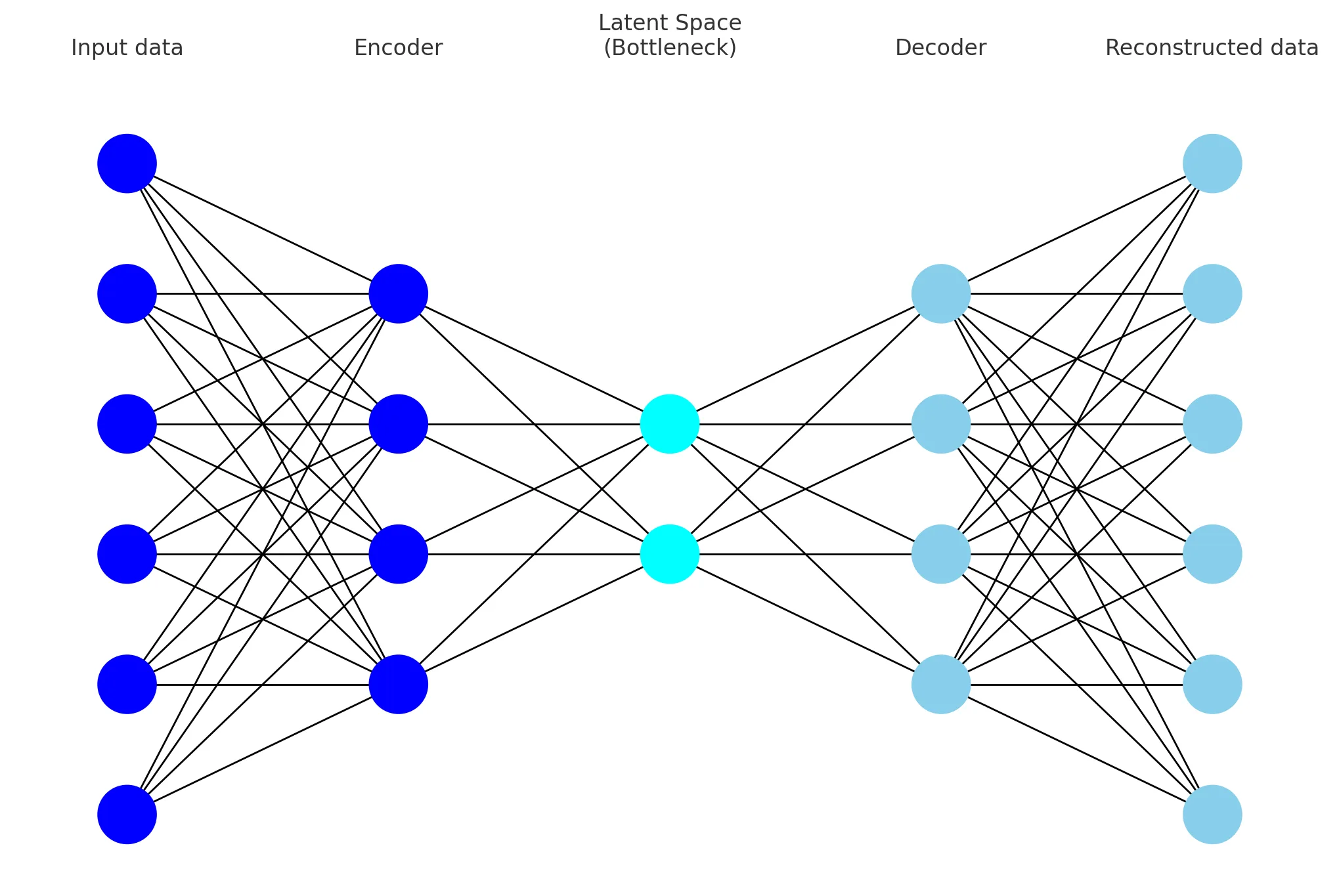
Previously, this "fingerprint" was captured piecemeal: each light-sensitive chip of the camera was processed separately, and the overall picture lost coherence. Now, a neural network learns from thousands of star images from the Subaru Telescope and reconstructs the blur across the entire field of view, like a restorer piecing together a fresco from surviving fragments.
This matters for the big picture: from barely perceptible distortions in the shapes of distant galaxies, scientists calculate how fast the universe is expanding. The more precise the blur measurement, the fewer errors in those calculations. The new method is being prepared for a future sky survey that will capture millions of stars every night.
Original abstract
as written by the authors arXiv:2602.15780
We present the development of a data-driven, AI-based model of the Point Spread Function (PSF) that achieves higher accuracy than the current state-of-the-art approach, "PSF in the Full Field-of-View'' (PIFF). PIFF is widely used in leading weak-lensing surveys, including the Dark Energy Survey (DES), the Hyper Suprime-Cam (HSC) Survey, and the Vera C. Rubin Observatory Legacy Survey of Space and Time (LSST). The PSF characterizes how a point source, such as a star, is imaged after its light traverses the atmosphere and telescope optics, effectively representing the "blurred fingerprint'' of the entire imaging system. Accurate PSF modeling is essential for weak gravitational lensing analyses, as biases in its estimation propagate directly into cosmic shear measurements -- one of the primary cosmological probes of the expansion history of the Universe and the growth of large-scale structure for dark energy studies. To address the limitations of PIFF, which constructs PSF models independently for each CCD and therefore loses spatial coherence across the focal plane, we introduce a deep-learning-based framework for PSF reconstruction. In this approach, an autoencoder is trained on stellar images obtained with the Hyper Suprime-Cam (HSC) of the Subaru Telescope and combined with a Gaussian process to interpolate the PSF across the telescope's full field of view. This hybrid model captures systematic variations across the focal plane and achieves a reconstruction error of $$3.4 \times 10^{-6}$$ compared to PIFF's $$3.7 \times 10^{-6}$$, laying the foundation for integration into the LSST Science Pipelines.
Earth's atmosphere blurs starlight just as water blurs pebbles at the bottom of a stream: the deeper you look, the more the image shimmers.
In the series "The Expanse," astronauts adjust telescope images on the fly — without an accurate blur model, their maps of distant worlds would be useless.