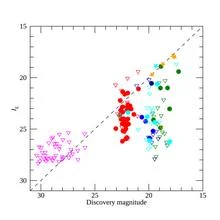
The Zwicky Transient Facility (ZTF) is a wide-field astronomical survey that scans the entire northern sky every two nights using a large-format camera mounted on the Samuel Oschin Telescope at Palomar Observatory. Its primary mission is to discover transient events—objects that appear, brighten, fade, or move—such as supernovae, tidal disruption events, and near-Earth asteroids. By providing a continuous, high-cadence survey of the sky, ZTF acts as a cosmic sentinel, alerting astronomers to fleeting phenomena that would otherwise be missed.
History
ZTF is the successor to the Palomar Transient Factory (PTF) and began its survey in 2018. It is named after Fritz Zwicky, a Caltech astronomer who pioneered the systematic search for supernovae and other transients in the 1930s.
How it works
ZTF uses a 47-square-degree field of view camera, one of the largest in the world, to capture wide swaths of the sky in a single exposure. The telescope rapidly slews between positions, taking hundreds of images per night. Sophisticated software then compares new images to reference images of the same sky region, automatically flagging any differences—these are the transient candidates. These candidates are immediately published as alerts, allowing other telescopes worldwide to follow up on the most interesting events.
In practice
ZTF's alerts enable rapid follow-up observations of transient events, contributing to studies of dark energy, gravitational wave counterparts, and the discovery of new astronomical objects.
Fun fact
ZTF generates tens of thousands of alerts per night, and its data has been used to discover over a thousand supernovae in its first few years of operation.
Beyond Neptune's orbit lies an ocean of icy islands that has remained nearly unchanged for four billion years. These islands, known as trans-Neptunian objects, hold the recipe for planet formation. Until recently, astronomers could only see the large ones, while the small, city-sized ones stayed invisible.
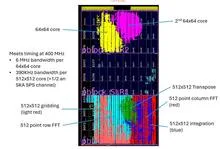
A radio telescope with thousands of antennas is like a giant ear that hears the whole sky at once. But an ear cannot draw a picture: signals from every pair of antennas must be multiplied, and in an array of ten thousand elements there are already fifty million pairs. A classical correlator does exactly that, and its complexity grows as the square of the number of antennas.
The hunter of ancient light, the James Webb Telescope, aimed its mirrors at a tiny patch of sky and caught a strange beacon. The object, with the working name beacon_1420-$$5253_{4770}$$, flashed and faded. At first, it was logged as a candidate for the most distant galaxy, as if we were seeing it just 300 million years after the big bang.
Long-period radio transients (LPTs) are a mysterious class discovered only recently. Their pulses last minutes or hours, and their nature was completely unknown. ASKAP J1745-5051, caught by the Australian telescope ASKAP, became the first to get a full explanation.
The universe is like a layered cake, and our layer (stars, planets, and people) is just one of many. In a neighboring layer, which physicists call the hidden sector, processes are boiling away. This work describes one such process: a first-order phase transition, where matter abruptly changes state, like water turning into ice.
A distant lamp shines through uneven glass. The glass bends the rays, and instead of one flame on the wall, several appear — some brighter, some fainter. In much the same way, a massive galaxy bends the light of an exploded star. There was one explosion, but the images show four glowing points.
On old photographic plates from the 1950s, astronomers found hundreds of thousands of brief flashes. Brightness measurements confirmed they weren't defects but real events linked to solar activity.
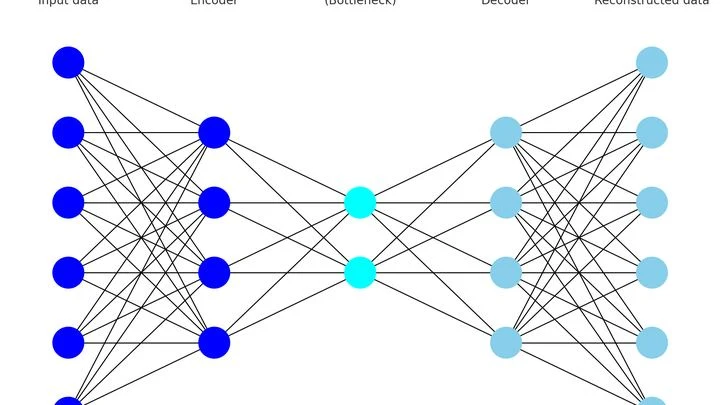
To spot a dim star above a brightly lit city, astronomers subtract one image from another — removing the glare of streetlights. They do the same with living neurons: their faint flashes drown in noise, but if you subtract everything unchanging, only they remain.
Two faint embers circle each other in the dark so closely that one begins to tear glowing chunks off the other. That is the picture of the system ZTF J1239+8347, caught by the Zwicky Transient Facility telescope.
Light from a distant star, after passing through air and telescope lenses, loses its sharpness, like looking at a streetlamp through wet glass. Astronomers call this blur the telescope's "fingerprint": each instrument has its own, and you need to know it down to the smallest detail.
Dark matter is like an invisible glue that holds galaxies together. It emits no light, but if its particles collide, gamma rays can flash. Scientists hunted for such flashes in dwarf galaxies — small stellar clusters with lots of dark matter and almost no ordinary matter.
Tuning a piano is delicate work. Strike one string, and its neighbors resonate. A silicon chip with crystal defects, being prepared for quantum computing, behaves similarly.
In a silicon carbide (SiC) crystal, there are special spots — silicon vacancies. There, an electron behaves like a tiny magnet with four states.
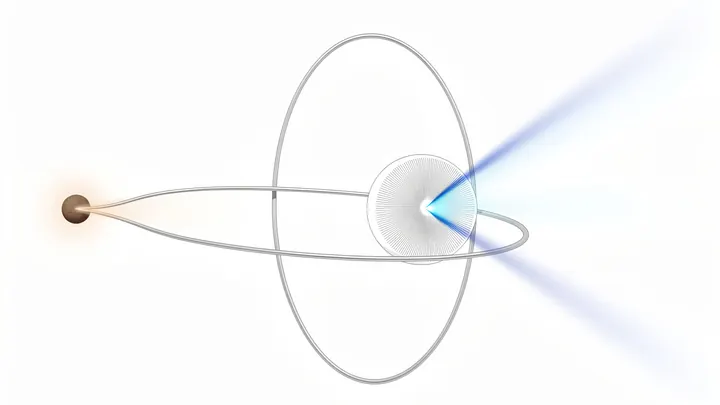
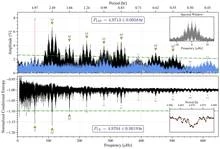
Four hours and fifty-eight minutes. With a rhythm like a metronome, something passes in front of the white dwarf ZTF J1944+4557, dimming its light by a third, sometimes almost by half.
In Euclid's deep fields, stars flare up that were not in any catalog. A telescope built to map dark matter has worked like a camera trap: one frame, and a cosmic explosion is already on record.
A firefly blinks for one ten-billionth of a second somewhere above the Siberian taiga. Seeing such a thing is impossible, but the TAIGA-HiSCORE array, spread across a valley in the Tunkinsky district of Buryatia, tried to catch exactly such flashes — not from insects, but from the depths of space.
Deep in the Siberian taiga, there are a hundred light traps: each about the size of a small table, but together they cover a square kilometer. At night, these traps gaze at the sky, catching faint flashes of light born when cosmic particles slam into the atmosphere. The setup is called TAIGA-HiSCORE, and it usually works as a giant "eye" for such particles.
Every night, an invisible sentinel hangs over the Andes. The GOES-12 satellite, and later its successor GOES-13, watches Earth from an altitude of 36,000 kilometers, recording how the mountains breathe clouds. For five straight years, it tracked where the sky stayed clear and where it got wrapped in cotton.