The Sun Pulls Electrons Back, Yet They Still Escape express
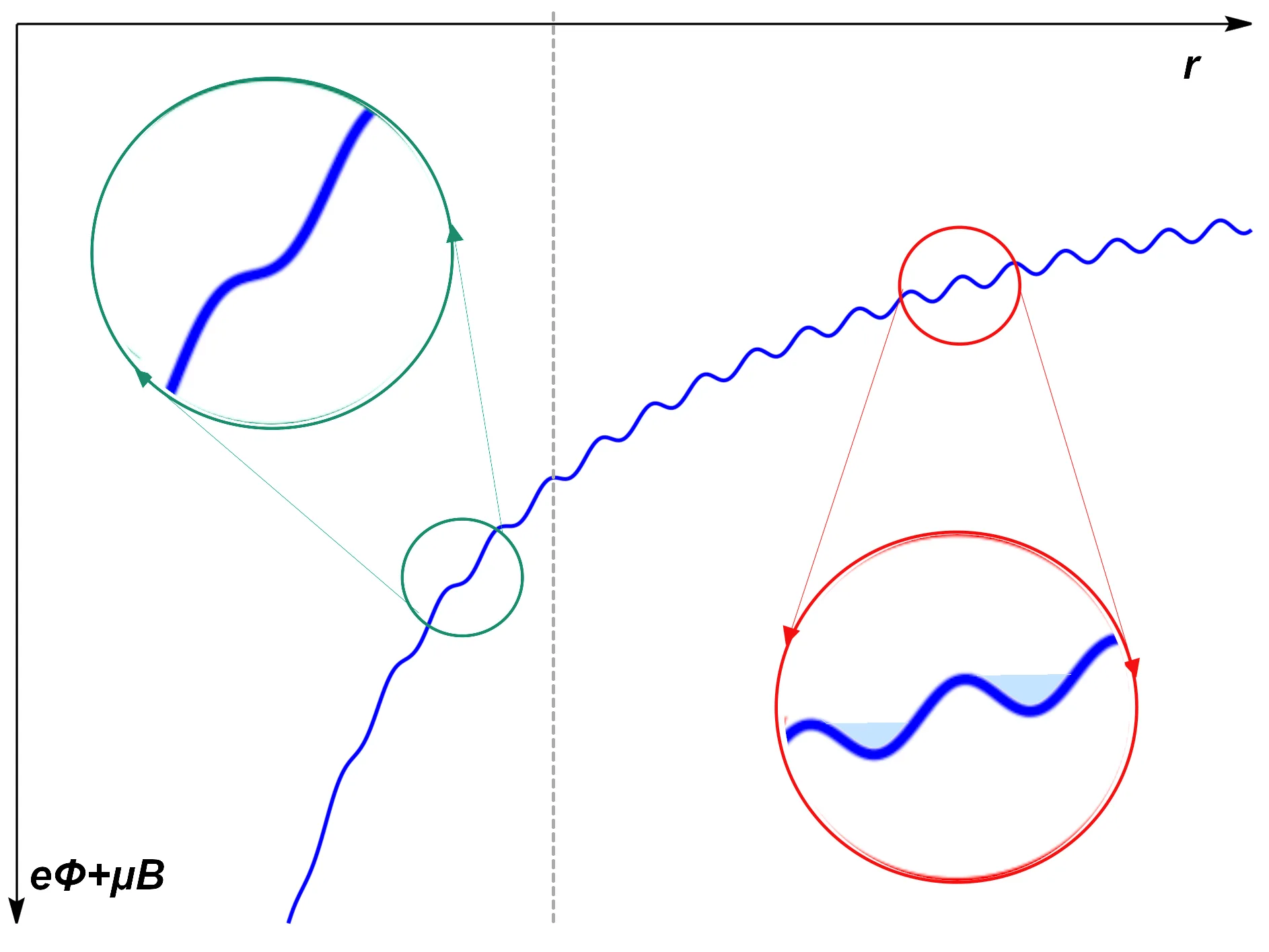
The Sun constantly emits a stream of charged particles — the solar wind. Among them are many electrons, some of which fly back toward the Sun. But observations show that fewer electrons return than expected. Previously, scientists thought the Sun's electric field, which slows particles down, was to blame.
New research offers a different explanation. In the solar wind, the magnetic field constantly fluctuates, creating small magnetic traps. These are like pockets that move along with the wind. An electron that falls into such a pocket cannot immediately return to the Sun. It escapes, but quickly falls into the next pocket. In this way, particles lose energy and remain in the wind's flow.
The scientists calculated that the measured energy boundary of electrons shows only the depth of one pocket, not the entire electric field of the Sun. In reality, the field could be several times stronger. This changes our understanding of how the solar wind accelerates. Trapped electrons form the bulk of the wind, and the electric field plays a larger role than previously thought.
So the Sun, like a shepherd with invisible pockets, holds some of its electrons in the wind's flow. And now we better understand why the solar wind is the way it is.
Original abstract
as written by the authors arXiv:2602.16221
This paper re-evaluates the relationship between the observed sunward electron cutoff energy and the depth of the Sun's global electrostatic potential. It investigates whether taking into account the effects of local traps formed by magnetic fluctuations provides an alternative explanation for the observed electron deficit. The fluctuations of the highly variable interplanetary magnetic field form a series of shallow magnetic mirror traps that move at approximately the speed of the solar wind. The study investigates the dynamics of electrons as they move outward against an attractive solar electrostatic potential and interact with these traps. By following the motion of the electrons using first-principles calculations, we assess the effect of the traps on the velocity distribution of the particles. Electrons that escape the local trap continue to lose energy as they move outward until they are eventually captured by subsequent traps, preventing them from returning to the observer as sunward-moving particles. We derive a mathematical expression for the cutoff velocity, defined as the limit beyond which particles can no longer overtake the outer endpoint of a local trap. It turns out that the observed cutoff energy characterizes only the local potential drop within a trap, rather than the total depth of the Sun's potential well. The true potential well can be significantly deeper, scaled by the ratio of the radial distance from the Sun to the trap size. Furthermore, electrons captured by these moving traps contribute to the formation of the solar wind core population. The Sun's electrostatic potential is a more significant factor in solar wind acceleration than previously interpreted from cutoff data. The interaction between electrostatic deceleration and moving magnetic traps provides a new framework for understanding the origin and behavior of the solar wind core electrons.
The solar wind blows at about 400 kilometers per second — a thousand times faster than the strongest hurricane on Earth.
In Arthur C. Clarke's novel "Solar Wind," a sailboat moves under the pressure of light, but in reality, the wind consists of particles that behave much more cunningly than science fiction writers imagined.