Underground Hunt for Invisible Matter express
Deep in the Italian Apennines, under a thick layer of rock, sits a crystal that catches every decay of radioactive americium. Americium emits gamma rays with an energy of 59.5 kiloelectronvolts, like a very sharp bell that always sounds the same. If axions, hypothetical dark matter particles, were flying through the crystal, that bell might occasionally change its tone just a bit. Scientists from the RadioAxion experiment listened to this bell for months.
Axions are one of the main hopes in the search for dark matter. They are ultralight particles that barely interact with ordinary matter but could slightly influence radioactive decay. The idea is that if axions fill our galaxy, their flux might modulate the decay rate of americium with a certain periodicity, like a tide that alternately strengthens and weakens the sound of waves. The sodium iodide detector recorded each gamma quantum and logged the exact time.
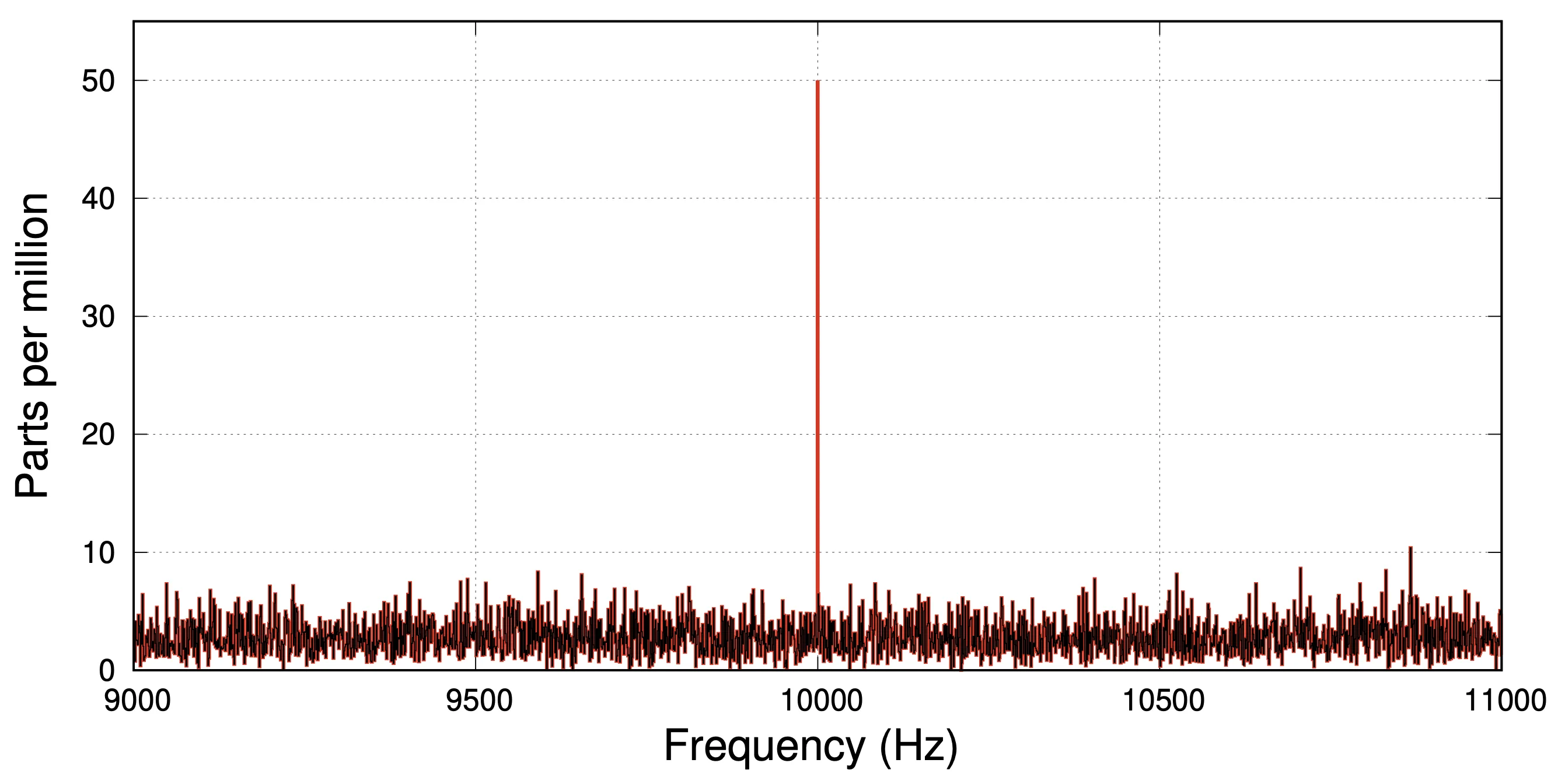
The result was quiet: no periodicity in the decay was found. But this is not a failure; it narrows the search. The measurements allowed new constraints on the so-called axion decay constant in the mass range from $10^{-21}$ to $10^{-9}$ electronvolts. For comparison, the electron mass is about half a million electronvolts. An axion, if it exists, is billions of billions of times lighter than an electron.
The team now plans to improve the detector and extend observations. Each month of silence is a new boundary on the map of the invisible world. The underground crystal keeps listening, and perhaps one day its bell will fall out of rhythm.
Original abstract
as written by the authors arXiv:2602.18392
We report first results from RadioAxion, an underground experiment searching for axion dark matter through periodic modulations of radioisotope decays. We monitor the $$\alpha$$ decay of $${^{241}}$$Am via its $$59.5$$ keV $$\gamma$$ line using a NaI detector installed at the Gran Sasso Laboratory, where cosmic-ray-induced systematics are strongly suppressed. We present the measured spectra and the corresponding time-series analysis. No evidence for a periodic modulation is observed. From these data we derive constraints on the axion decay constant in the axion mass range from $$10^{-21}$$ to $$10^{-9}$$ eV.
Americium-241 is used in ordinary smoke detectors: its alpha particles ionize the air, and smoke disrupts the current, triggering the alarm.
In Liu Cixin's novel "The Three-Body Problem," dark matter is mentioned as an invisible substance that may interact with ordinary matter only gravitationally — scientists are still looking for ways to catch it directly.