The Elusive Lightweight Black Hole: Key to Dark Matter? express
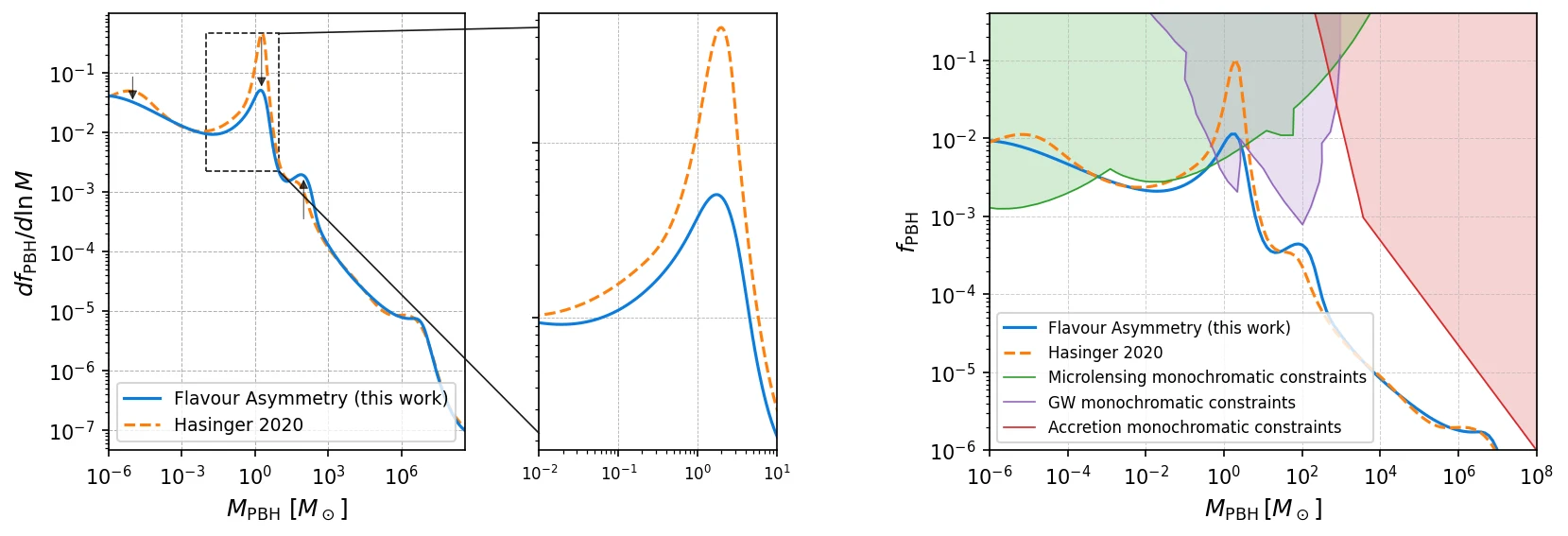
The gravitational waves detectors LIGO and Virgo picked up a deep rumble — the aftermath of two invisible objects merging. Their combined mass turned out to be less than the Sun's. Stellar evolution doesn't produce such lightweight black holes: a dying star doesn't collapse into such a tiny finale.
This signal has revived Stephen Hawking's hypothesis of primordial black holes — clumps of matter born in the first moments after the Big Bang, described by the Standard Model of physics. If this detected pair really is such relics, they could be part of dark matter, the invisible glue that holds galaxies together. Calculations allow that at least 4% of dark matter consists of such objects.
Here's the twist: a half-solar-mass black hole is just a couple of kilometers across: you could walk around it in half an hour, yet its pull is stronger than a star cluster's. The signal S251112cm is still being studied, but the lack of a visible flash is typical for black holes. Confirmation would open a direct path from spacetime ripples to solving the universe's composition.
A black hole with half the Sun's mass has a radius of about 1.5 kilometers, such an object could fit into a small town center, but would pull in everything around it with monstrous force.