Dark matter annihilation is a hypothetical process in which dark matter particles, which do not interact with light and ordinary matter except through gravity, collide with each other and transform into standard model particles — the familiar particles that make up atoms, light, and radiation. This process is central to many theories of dark matter, because it offers a way to detect dark matter indirectly: if dark matter particles can annihilate, they would produce gamma rays, neutrinos, or charged particles like electrons and positrons that we could observe with telescopes and detectors. The idea is especially attractive for weakly interacting massive particles (WIMPs), a leading dark matter candidate, which would have been abundant in the early universe and might still annihilate in dense regions like the centers of galaxies or the Sun.
History
The concept emerged in the 1980s alongside the development of the WIMP hypothesis, when theorists realized that a weakly interacting massive particle with the right properties could both explain the observed dark matter abundance and produce detectable annihilation signals. The idea gained prominence with the rise of indirect detection experiments in the 1990s and 2000s, though no definitive signal has been confirmed.
How it works
In particle physics, annihilation occurs when a particle meets its antiparticle, and their combined mass-energy is converted into other particles. For dark matter, the mechanism depends on the particle's nature: if dark matter is its own antiparticle (like the Majorana fermion), two dark matter particles can annihilate directly; if not, a particle and its antiparticle are needed. The annihilation typically produces a pair of standard model particles — for example, a quark-antiquark pair or a lepton-antilepton pair — which then decay or fragment into stable particles like photons, protons, electrons, and positrons. The rate of annihilation depends on the dark matter density squared, so it is strongest where dark matter clumps, such as in galactic halos or in the gravitational well of the Sun, where captured dark matter could accumulate.
In practice
Dark matter annihilation is the target of indirect detection experiments like the Fermi Gamma-ray Space Telescope, which searches for gamma rays from dark matter-dense regions, and neutrino telescopes like IceCube, which look for neutrinos from the Sun's core.
Fun fact
If dark matter annihilates in the early universe, it could have produced enough positrons to explain the observed abundance of antimatter in cosmic rays, a signal that has been tentatively linked to the PAMELA and AMS-02 experiments.
Buried in Antarctic ice, there's a detector the size of a cubic kilometer. It doesn't catch light but ghostly particles — neutrinos. Yet sometimes, a different beast might flash through: a pair of muons born together and flying apart in a wide fan. No known particle of ordinary matter can paint that pattern.
Dark matter is the invisible scaffolding of the universe. It's there, we know from the motion of stars and galaxies, but what this scaffolding is made of remains unknown. One guess is ultra-light particles similar to axions. They barely interact with ordinary matter, yet occasionally they do get involved.
Imagine a green beam that, passing through an ingenious optical setup, twists into a three-dimensional funnel of light — an optical vortex. At its heart, like in the eye of a hurricane, the intensity drops to zero. It is there that photons disappear.
Dark matter is the invisible scaffold that holds galaxies together. But how did it come to be? The standard answer: particles of dark matter once stopped colliding and "froze out" in the amount we see today. However, there's a trickier path — UFO, or ultra-fast freeze-out.
Here, everything is like coffee that cools down and then heats up again as you carry it through a cold corridor.
A large underground tank of liquid xenon waits for a rare event — a nudge from a dark matter particle. Normally, gravity is too weak to notice such a nudge. But if space has hidden dimensions, everything changes: at tiny distances, gravity suddenly strengthens, and the chance of catching an elusive particle grows.
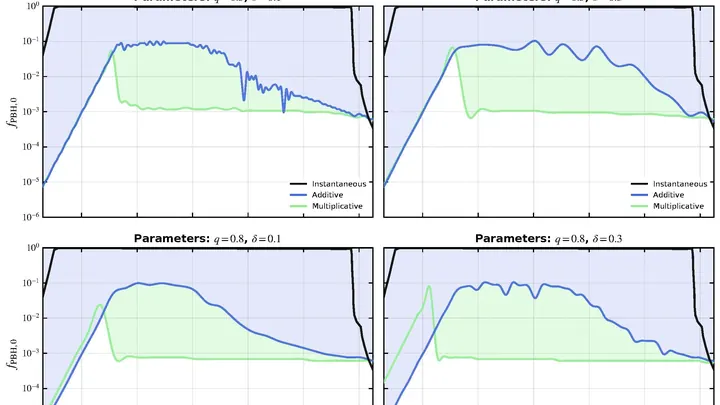
In the kitchen cupboard sits a jar of sugar. If you shake it, the grains will spread almost evenly — no need to place each one with tweezers. In much the same way, tiny black holes could have appeared in the first moments after the Big Bang. Their mass is like that of an asteroid, their size smaller than an atom.
An old photograph taken at the moment of the universe's birth has been carrying its light to us for nearly 14 billion years. This snapshot is the cosmic microwave background, the cooled echo of the Big Bang. It captures the tiny inhomogeneities from which galaxies later grew.
Dark matter is the invisible scaffolding that keeps galaxies from falling apart. Back in the 1970s, Vera Rubin showed that without it, stars on the outskirts would fly away like a carousel without its bolts. Ever since, scientists have been hunting for the particles that make up dark matter.
Two electrically charged spheres attract each other with a certain force. If you replace their charges with magnetic poles, a spring scale shows exactly the same force. Black holes, it turns out, behave the same way — except instead of springs, the fabric of spacetime itself does the work.
A drummer stays silent, but from the pauses you can tell where he didn’t hit. Similarly, physicists built an image by catching not light, but moments of absolute darkness. The picture emerged from silence.
In the experiment, they shone light from an ordinary lamp onto the object.
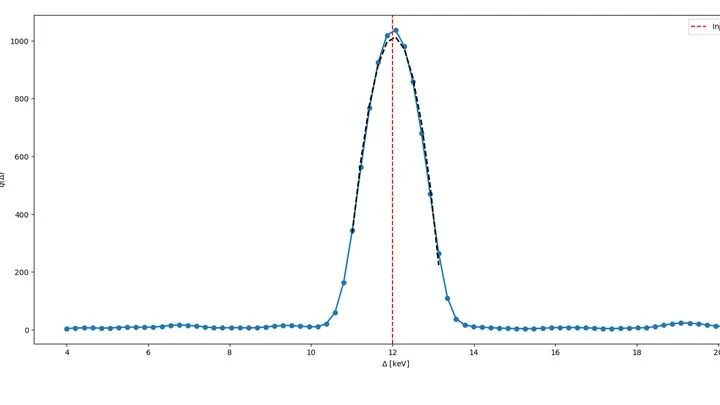
A gamma-ray spectrum looks like a picket fence: each line is the precise energy a nucleus released as a photon. But sometimes ghosts appear in that fence — faint lines shifted by the same amount from the main ones. Such a shift could mean that part of the energy went into creating a light particle we cannot yet see directly.
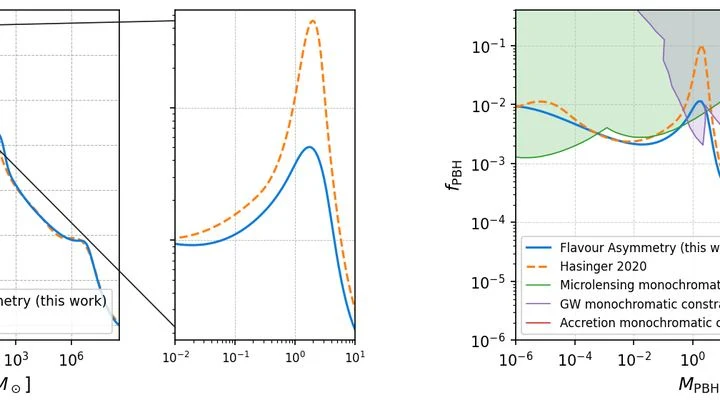
The gravitational waves detectors LIGO and Virgo picked up a deep rumble — the aftermath of two invisible objects merging. Their combined mass turned out to be less than the Sun's. Stellar evolution doesn't produce such lightweight black holes: a dying star doesn't collapse into such a tiny finale.
In a particle accelerator, the anti-lambda particle is a rare guest. It is born on the fly, lives for a tiny fraction of a second, and usually decays on its own. But sometimes it manages to collide with an ordinary proton, and then a whole shower of light particles is born: kaons, pions.
The antiproton is a mirror twin of the proton: same mass, but negative charge. When it approaches an atomic nucleus, the particles can annihilate, turning into radiation.
Dark energy and dark matter are the invisible conductors of the cosmos. Usually considered independent, new research proposes seeing them as dance partners. The lead — dark energy — changes the mass of dark matter particles. Like a dancer who lifts and lowers their partner, dark energy increases or decreases the weight of dark matter.
Dark matter is an invisible substance that holds galaxies together but emits no light. Catching its particles is like trying to hear a whisper in a noisy hall. Ordinary detectors only pick up loud impacts, while weak signals get drowned out by background noise.