Light from a Single Molecule express
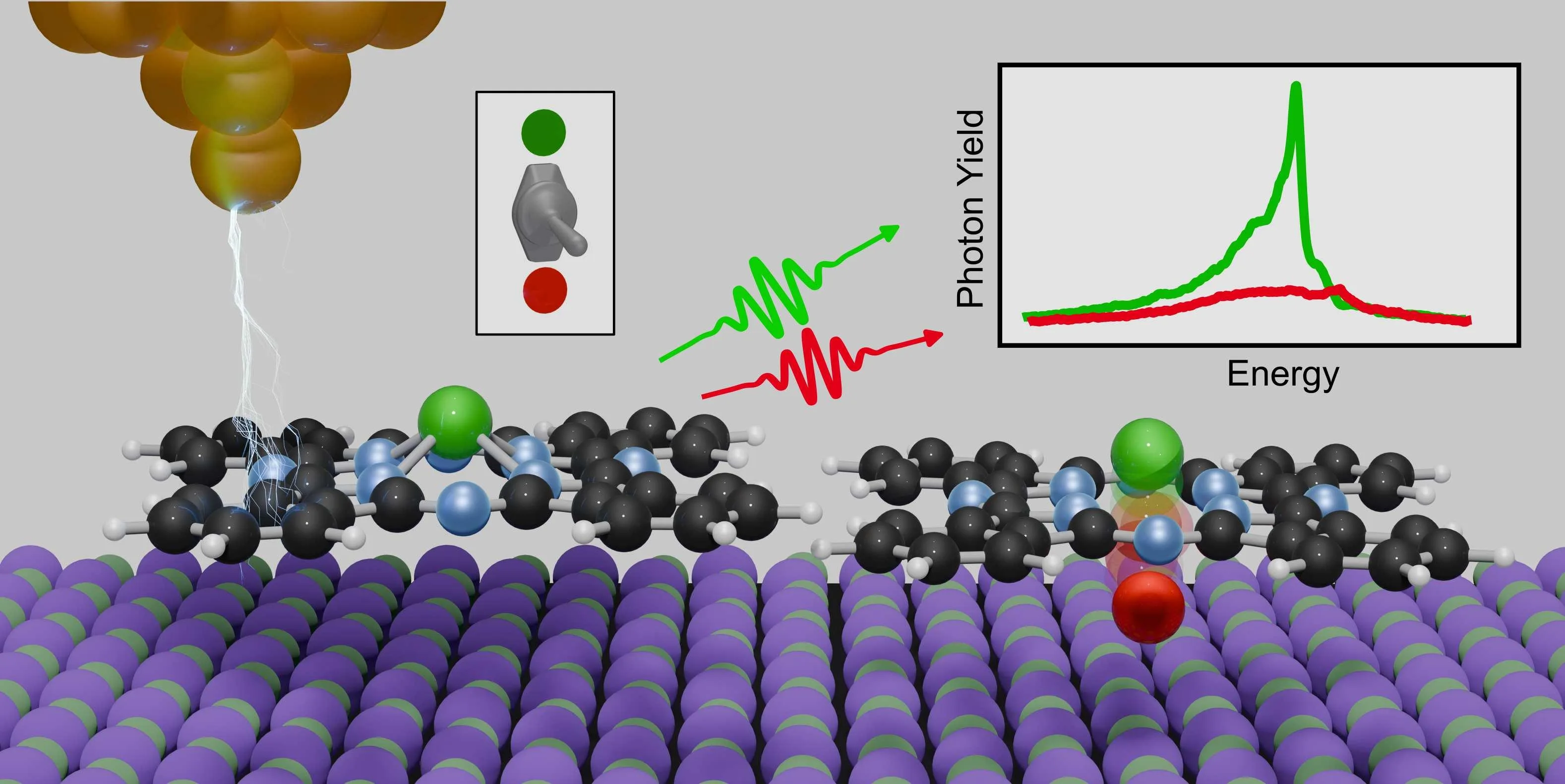
A glowing dot the size of a molecule. Run a current through it, and it flashes like a tiny lightbulb. That's what the experiment with dye molecules on a thin salt film looks like.
When current enters a molecule, one electron hands it energy. The molecule immediately gives that energy back, as light. It's like a swing: give it one push, and it rocks and then stills. But the molecule doesn't just glow steadily; its light flickers because the molecule itself vibrates. Those vibrations show up in the light spectrum, like notes that sound along with the main melody.
This isn't just a pretty experiment. If we can learn to control the light of a single molecule, we could build optical circuits just a few atoms across. Such circuits could be used in quantum computers and ultrasensitive sensors.
The dye molecule in this experiment is smaller than the wavelength of the light it emits, like a radio transmitter the size of a dust speck broadcasting on long wavelengths.