Dark Excitations on Clean Graphene express
A layer of graphene on silicon carbide is like a perfectly flat table onto which you need to carefully place fragile molecules. Any speck of dust or imperfection spoils the picture: molecules settle crookedly, and their quantum properties vanish. The researchers developed a cleaning method that restores the surface to a purity comparable to deep vacuum. Examination with an electron beam showed that atoms on graphene arranged into an impeccable lattice.
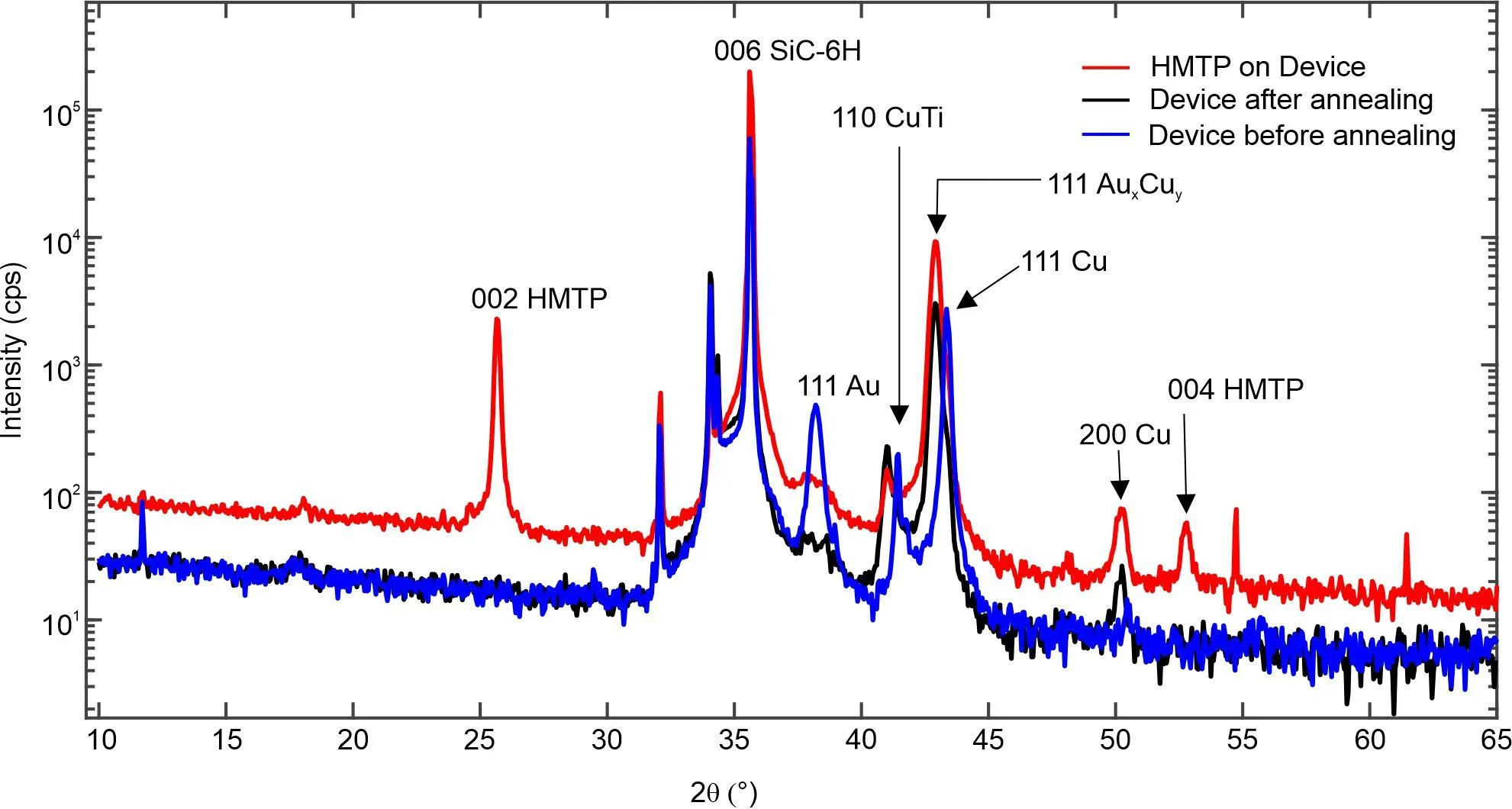
Onto this clean table, they deposited HMTP molecules — organic compounds that interact strongly with light and vibrations. Due to the symmetry of the molecular crystal packing, their ground energy state splits into two: bright and dark. The bright one quickly emits light, while the dark one lives long — energy is trapped inside like water in a sealed bottle. According to calculations, it is the dark states that dominate light emission: they slowly release energy through molecular vibrations.
To understand how energy flows within the molecular layer, the scientists combined three methods: they measured electric current under light, sample luminescence, and molecular vibrations. Calculations based on these data showed that energy first goes into the dark state, and only then into light. This is like a train that takes a detour instead of a direct route: it takes longer, but without losses.
This approach, combining industrial graphene technology with molecular precision, opens the way to creating solid-state quantum devices. Dark excitations can store information longer than bright ones, and thus become the basis for quantum computer memory.
Dark excitations got their name because they do not emit light directly: their energy can only be seen indirectly, through heat or faint glow.
In the series 'The Expanse', quantum computers use exotic states of matter for instantaneous computations — dark excitations could be a real step toward such science fiction.