The Disorder That Gives Birth to an Insulator express
A superconductor carries current without loss, like a perfectly smooth road where cars glide with no friction. But what if you scatter rocks and potholes across that road? Scientists decided to find out by adding disorder to a superconducting material just one atom thick.
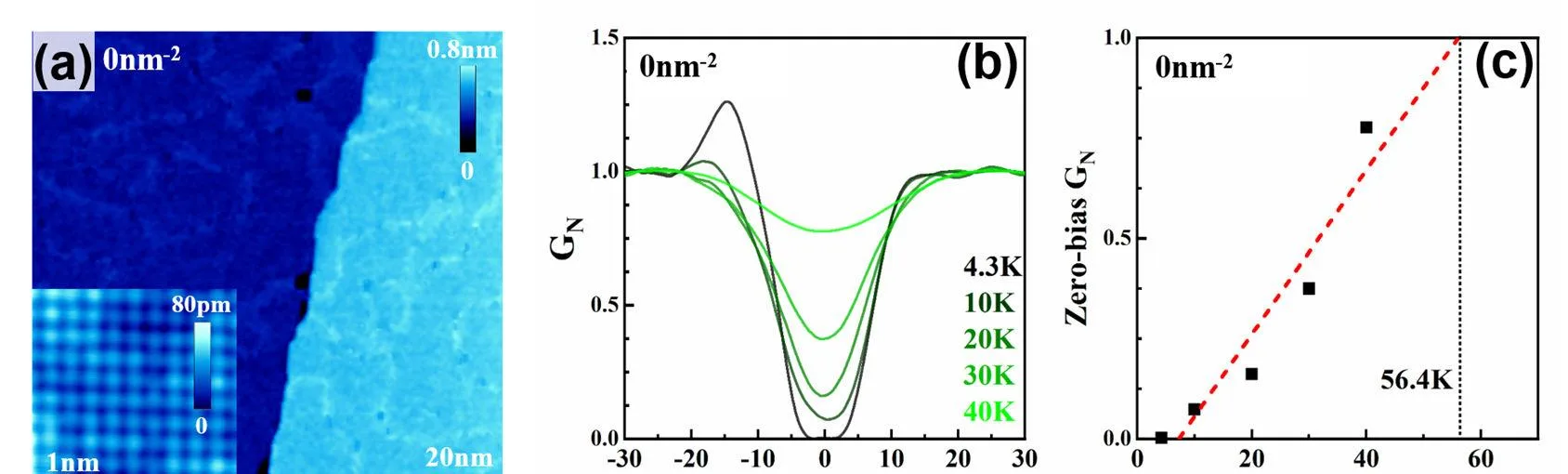
They took an ultrathin layer of a compound of iron, tellurium, and selenium — a superconductor at temperatures higher than many others. Then they sputtered tiny iron clusters onto the layer, creating disorder. Using a scanning tunneling microscope, which probes the surface with a needle, the scientists tracked how the electrons' behavior changed.
At first, the superconductivity weakened, and the material became an insulator — current stopped flowing. But the most intriguing part: even in the insulator, electrons remained bound in pairs, just as in the superconductor. These pairs, called Cooper pairs, couldn't move freely because of the disorder, but they didn't break apart.
This discovery shows that the transition from superconductor to insulator doesn't always spell the end of a quantum state. Disorder can actually strengthen the coupling between electrons, creating new phases of matter. Such knowledge could be useful for building electronics that operate at low temperatures and for understanding high-temperature superconductors.
The superconductor studied is just one atom thick, making it a nearly two-dimensional world where quantum effects are especially strong.
In Peter Watts's novel Blindsight, materials with unusual quantum properties are described that change their behavior with the slightest structural tweaks.