Trembling Jets of Black Holes express
A garden hose blasts a powerful stream of water. If you pinch it or give it a jerk, the stream starts to writhe like a snake, and spray flies everywhere. Something similar happens with the giant plasma jets that black holes shoot out. These jets are twisted by magnetic fields and can lose stability, starting to wobble.
Scientists studied a stellar-mass black hole — an object several times heavier than the Sun, compressed to the size of a city. Radio telescopes picked up bursts of radiation repeating at an almost constant rhythm — such oscillations are called quasi-periodic. At the same time, not only the brightness of the radio waves changed, but also their polarization (the direction of oscillation of the electromagnetic wave). Brightness and polarization behaved like a seesaw: when one goes up, the other goes down.
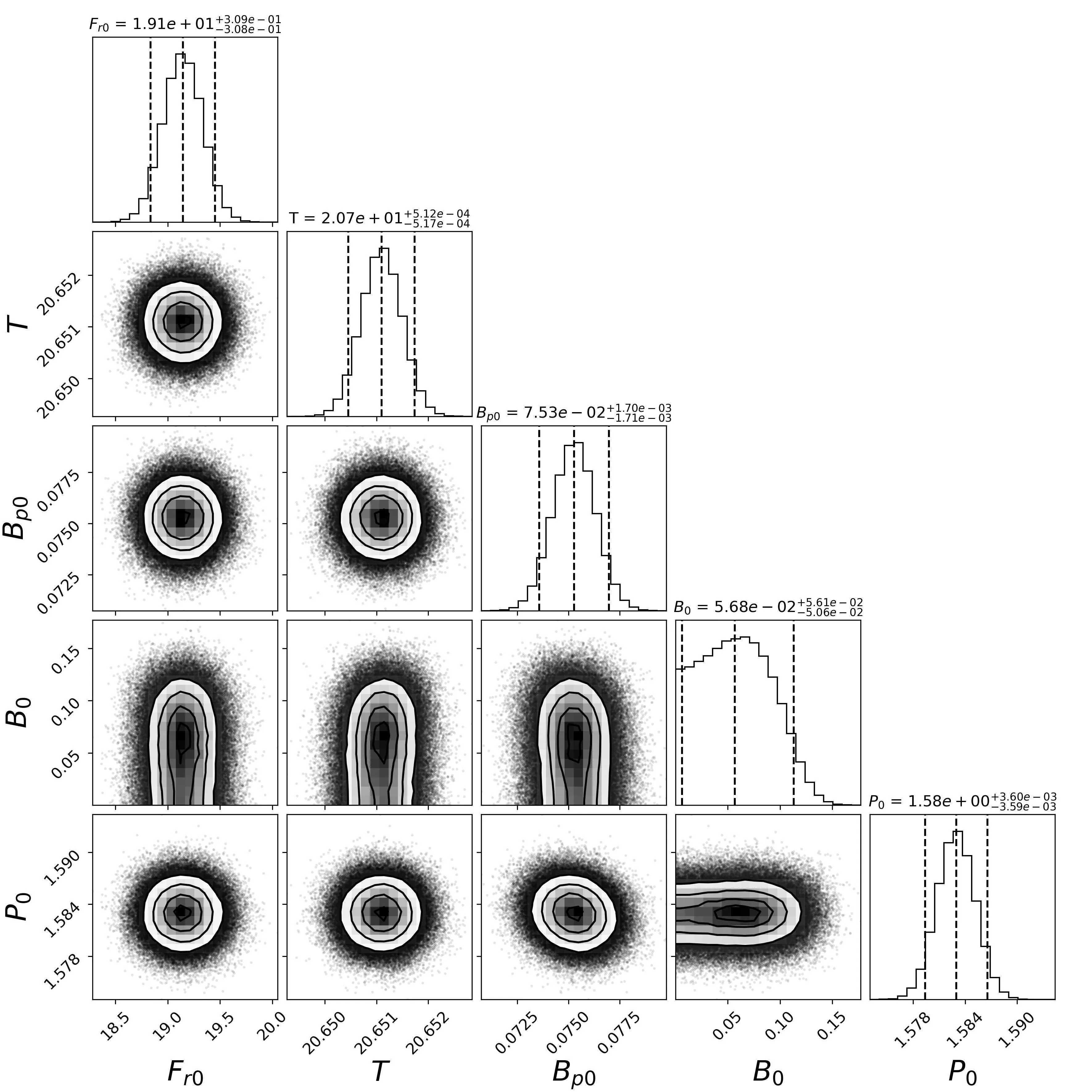
A computer model showed that all these oddities are explained by a kink instability — a wave that runs along the jet and makes it sway. Such a wave arises when the magnetic field inside the jet is twisted too tightly, like an overtwisted rubber band. Because of it, the jet compresses in some places and expands in others, changing both brightness and polarization. This discovery provides a new tool: by observing the rhythm of flickering, we can peer into the very heart of a black hole and understand how its magnetic field is structured.
Original abstract
as written by the authors arXiv:2603.06294
The dynamics and instability of the magnetized jets connected to jet acceleration are complicated and are not yet well understood. Quasi-periodic oscillations (QPOs) as special timing features in black hole systems can directly probe dynamics and structure of accreting and outflow materials. Recently, GHz-band radio polarization oscillations in a stellar-mass black hole are reported, and the physical origin is unclear. We propose that the QPOs in both radio flux and linear polarization will be connected to kink instability in relativistic magnetized jets. The simulations are performed to fit the observed curves of radio flux and linear polarization modulations, in addition, the kink instability model well explains the anti-correlation between flux and linear polarization. These polarized QPOs provide evidence for kink stability in relativistic jets, a phenomenon of significant theoretical importance for understanding the magnetic field configuration near the black hole, as well as for particle acceleration in jets.
Jets from black holes can be longer than our Galaxy, and particles in them are accelerated to nearly the speed of light.
In the movie 'Interstellar', the black hole Gargantua is shown with a bright accretion disk, but its jets were left out of the frame — yet they might be the key to interstellar travel.