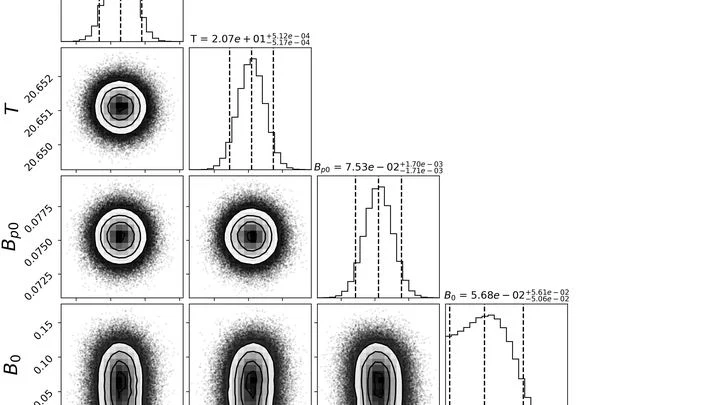
Rhythm, in the context of astrophysics, refers to the regular, repeating pattern of events—most notably the periodic flares observed in X-rays and gamma-rays from celestial objects like magnetars. These cosmic rhythms are not mere curiosities; they are direct probes of extreme physics. The periodicity of a magnetar's pulses, for instance, encodes information about its rotation, magnetic field strength, and the processes occurring in its ultra-dense crust. When a black hole tears apart a star, the resulting accretion disk can exhibit quasi-periodic oscillations, revealing the dynamics of matter spiraling into the abyss. Even in the microscopic world, rhythms matter: a tiny model of a heart can catch arrhythmias on sub-microsecond timescales, and molecules can 'dance' when their internal connections are broken, showing that rhythmic behavior is a universal principle from the quantum to the cosmic scale.
How it works
The mechanism behind these rhythms varies by context. In magnetars, the periodic X-ray flares are often linked to the star's rotation: hotspots on the surface sweep past our line of sight like a lighthouse beam, producing regular pulses. In other cases, the rhythm arises from oscillations in the star's crust or magnetosphere, triggered by starquakes or magnetic reconnection events. For black hole systems, the rhythm can stem from orbital motion of matter in the accretion disk or from pressure waves traveling through the disk. In biological or molecular settings, rhythms emerge from feedback loops or coupled oscillators, where the timing of one event influences the next, creating a stable, repeating pattern.
In practice
In medicine, analyzing cardiac rhythms helps diagnose arrhythmias, and in astrophysics, pulsar timing is used for precision tests of general relativity and as a galactic-scale clock.
Fun fact
The rhythm of a magnetar's X-ray pulses can be so precise that it rivals the accuracy of atomic clocks, making these dead stars some of the most reliable timekeepers in the universe.
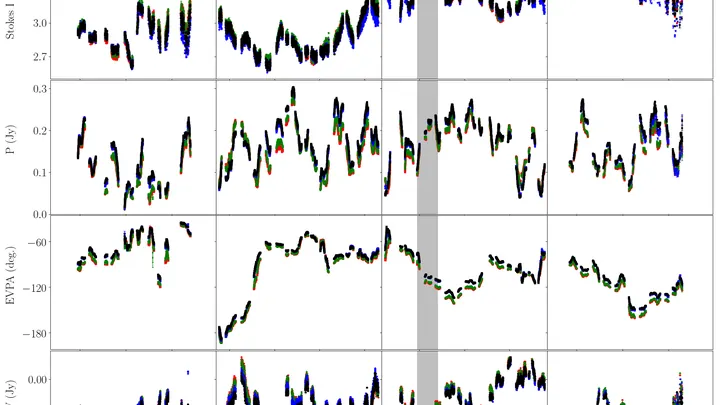
For over a century, astronomers puzzled over the capricious behavior of RR Lyrae stars: their brightness periodically waxed and waned with unpredictable amplitude, like a lighthouse with a faulty mechanism. The Blazhko effect, discovered in 1907, taunted scientists for decades.
Since their discovery in 2007, fast radio bursts (FRBs) have teased astrophysicists with their elusive nature. These millisecond signals arrive from distant galaxies and carry colossal energy: for an instant, they radiate as much as the Sun does in a month.
Gas falling into a black hole spirals inward like water down a drain. In this flow, magnetic loops constantly form and pop — somewhat like solar flares, but far more powerful. Each loop is a tiny magnet living its own life. When many of them are present, they start to influence each other: their north and south poles attract and repel in turn.
A figure skater glides across the ice, gradually approaching the center of the rink. A slight twist of the torso, and the smooth spiral breaks, the trajectory becomes unpredictable. Something similar happens when a small black hole with its own rotation (spin) falls toward a giant black hole.
At the center of the Milky Way lies the supermassive black hole Sagittarius A*. It is four million times more massive than the Sun, but by cosmic standards it behaves quietly: it only occasionally flares up when it swallows a clump of gas.
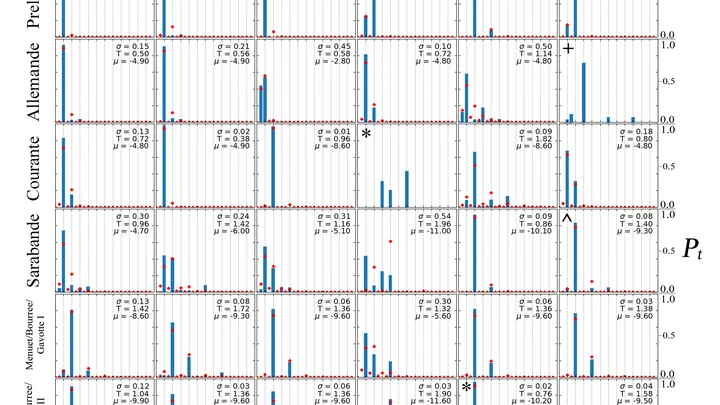
Music relies on repetition: we expect the beat to return, like a chorus coming back. But if you repeat the same thing for too long, it gets boring. The composer seems to walk a tightrope between the familiar and the unexpected.
Scientists translated this balance into the language of physics.
Above the Sun's surface hang long ribbons of glowing gas — streamers. They look like giant harps stretched across the corona. When a wave runs along such a ribbon, it trembles and bends like a string after being plucked.
For a long time, it was thought that only a very fast ejection of material, one traveling at more than 500 kilometers per second, could launch such a wave.
A garden hose blasts a powerful stream of water. If you pinch it or give it a jerk, the stream starts to writhe like a snake, and spray flies everywhere. Something similar happens with the giant plasma jets that black holes shoot out.
In the center of galaxy J2344 five years ago, a black hole tore apart a star, and now scorching gas bubbles there — a cosmic “stew pot”. Every 12 hours, giant X-ray bubbles rise in it, and on their ascent, super-hot splashes lasting 5–30 minutes appear.
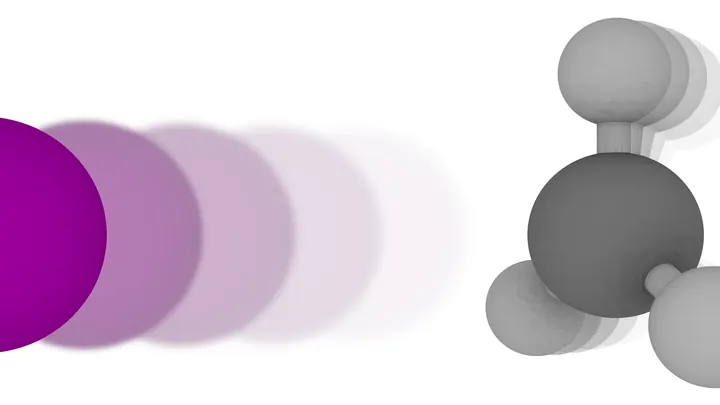
A chemical bond is like a stretched spring between atoms. When it's snapped, the molecular fragments fly apart, but they don't freeze: they keep vibrating, like a plucked string. That's exactly the vibration a team of researchers caught when they broke a methyl iodide molecule with an ultraviolet laser.
The pulsar in the Crab Nebula blinks like a lighthouse: every 33 milliseconds it sends out a radio pulse, and it does so with the precision of atomic clocks. But sometimes its rotation stumbles: the star suddenly speeds up slightly, as if something inside it is shifting.
Astronomers have been wrestling for years with the mystery of fast radio bursts — ultra-short yet incredibly powerful radio signals from distant galaxies. Some flash repeatedly, like beacons with an irregular rhythm, while others are detected only once, leaving behind nothing but questions.