The Light That Gives Away Symmetry express
In a dark room, an atom and light are locked together in a mirrored box. The box is so small that the atom cannot simply release light: they constantly exchange energy, like two dancers who never let go of each other's hands. Such ultrastrong coupling changes the rules of the game: energy levels rearrange, and light escapes not in the usual single packets but in whole constellations.
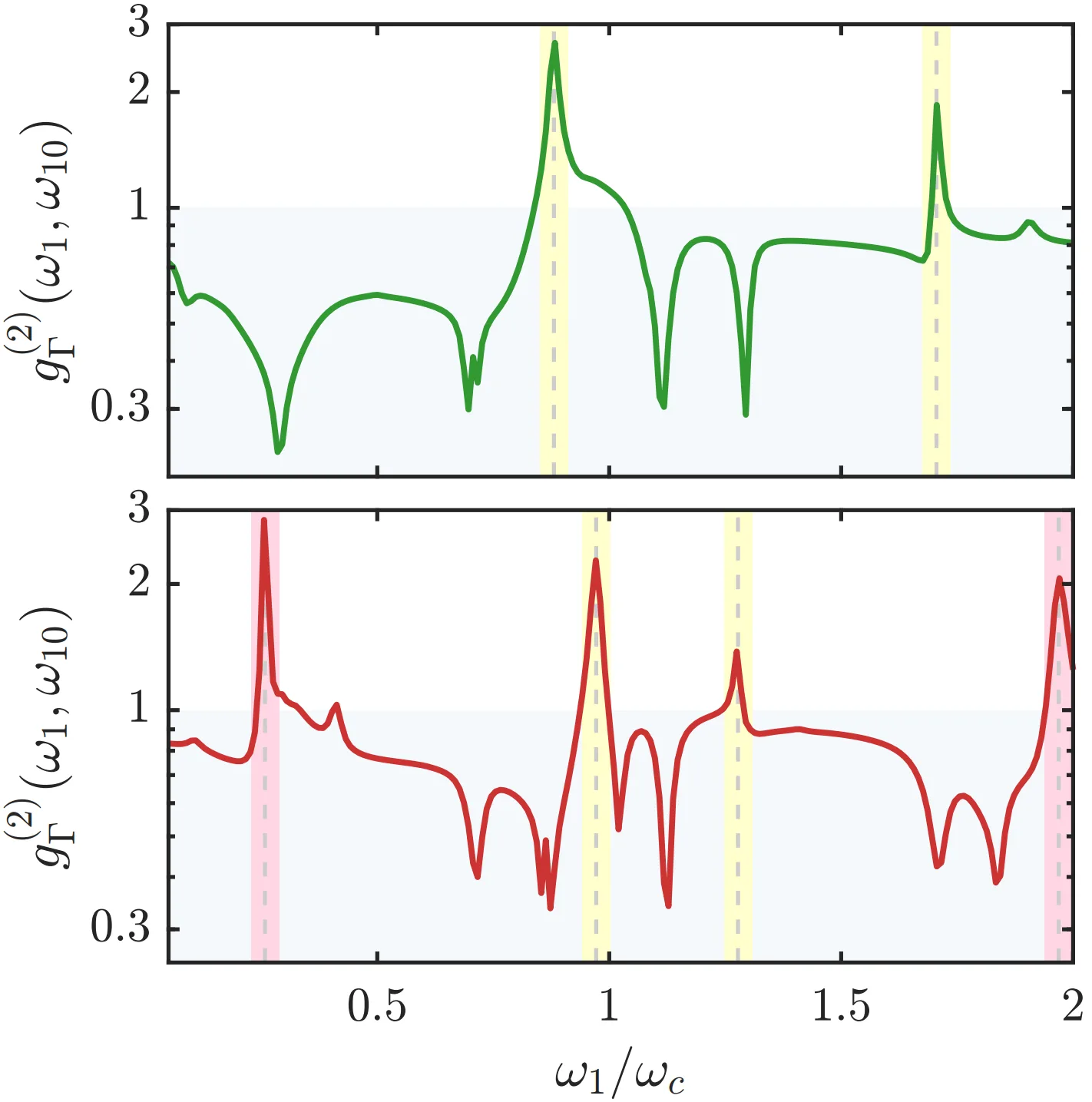
Scientists set up detectors that distinguish photons by color and watched how often single photons, pairs, or triples arrived. It turned out that single photons tend not to appear together: this is called antibunching. But photons of different colors love to arrive in pairs and triples, especially when the symmetry of the system is broken. Symmetry here is like a mirror reflection: as long as it holds, certain transitions are forbidden; if you break it, new channels open up, and correlated photons pour out much more frequently.
This is not just a pretty picture. Frequency-resolved photon correlations are a sensitive tool that can reveal fine details of light-matter interaction. Such sources of photon pairs and triples are needed for quantum communication and precision measurements, where it is crucial that photons arrive in concert, like musicians in an orchestra.
The box with an atom and light turned out to be more than a toy. It shows how complex light behavior emerges from simple symmetry rules, and how, by tweaking those rules, we can control the birth of photons.
In ultrastrong coupling, the interaction energy between atom and light is a significant fraction of the atom's own energy, as if two people held hands so tightly that their steps became perfectly synchronized.