Hydrogen from Algae: A Green Light for Clean Energy express
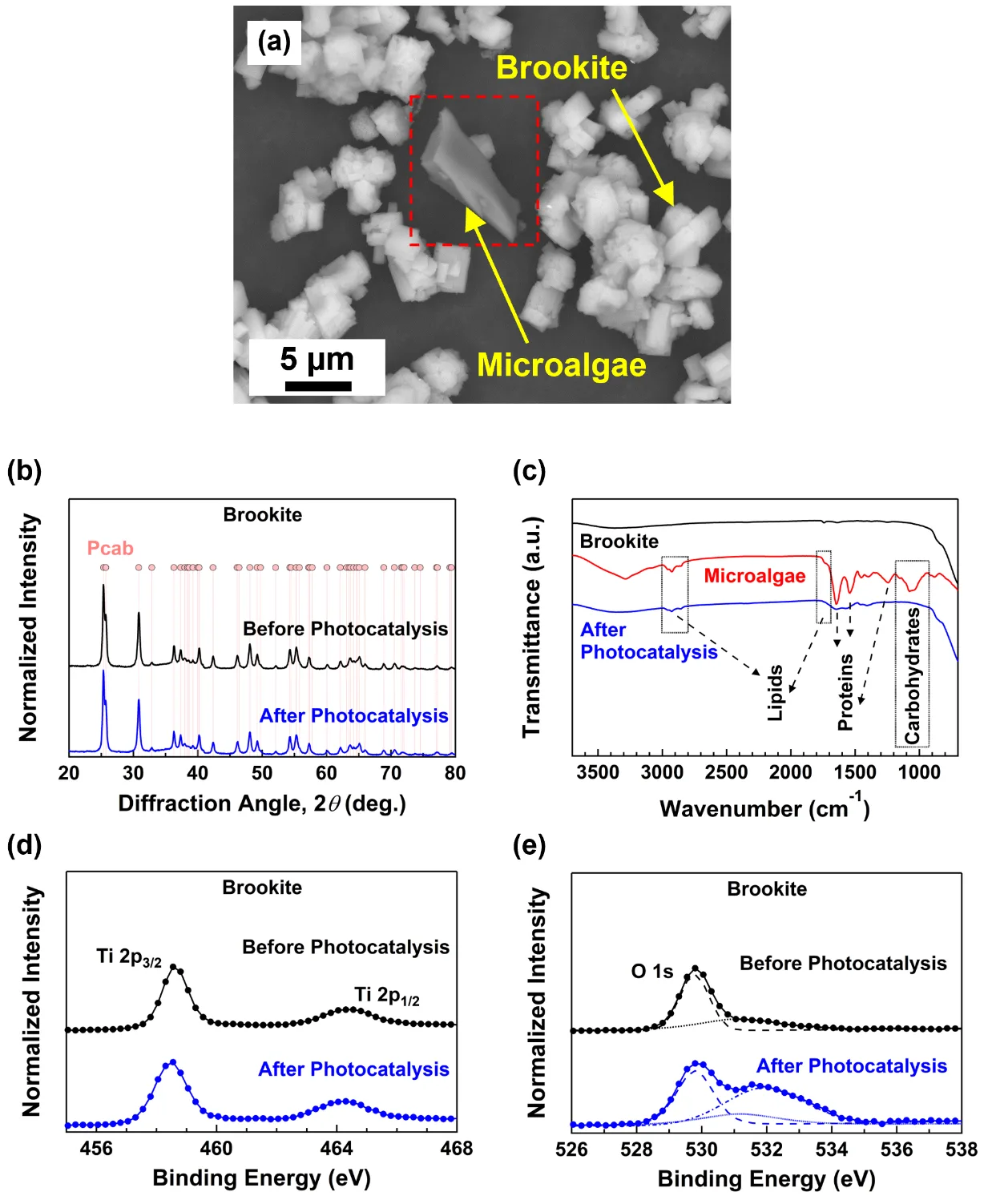
Conventional solar panels convert light into electricity, but here light splits water into hydrogen and oxygen. Hydrogen is a clean fuel, but the process is slow. To speed it up, helper substances that donate electrons are added. Often this is alcohol, but it's a shame to waste it. In the new work, microalgae, tiny organisms that already live in water and absorb carbon dioxide, played the role of the helper.
Algae were mixed into a powder of titanium oxide (a white pigment familiar from paints and toothpaste), which acts as a photocatalyst: it captures light and triggers the reaction. Under light, the algae donate electrons, helping to split water into hydrogen and oxygen. The algae themselves are destroyed in the process, but they don't go to waste: they turn into methane and carbon monoxide — also useful substances. Under optimal conditions, hydrogen production reached 0.99 mmol per gram per hour, and with the addition of platinum as an accelerator—3.2 mmol per gram per hour. This is 13 times more than without algae.
This approach kills two birds with one stone: we get green hydrogen for energy and at the same time convert algal biomass into fuel gases. And during the cultivation of the algae themselves, they absorb carbon dioxide from the air, making the cycle also a way to capture CO2. Instead of burning alcohol or using pure chemicals, we use a living material that grows on its own in the light and cleans the atmosphere.
Original abstract
as written by the authors arXiv:2603.24924
Microalgae are an abundant bioorganic material source and play a significant role in life on Earth by conducting photosynthesis for carbon dioxide (CO2) capture and its conversion to oxygen (O2). In this study, a combination of microalgae as a negative-CO2-emitting sacrificial agent with the traditional photocatalytic water-splitting process using brookite TiO2, as a model photocatalyst, is introduced as a new strategy to maximize green hydrogen (H2) production while converting microalgae to valuable products, like methane (CH4) and carbon monoxide (CO). The process, under optimal conditions, produces up to 0.990 mmol/g.h of H2 without cocatalyst addition and 3.200 mmol/g.h with platinum (Pt) cocatalyst, which is 13 times higher than the production rate without microalgae. The strategy of using microalgae in photocatalysis has high potential in green H2 production, as it not only eliminates valuable hole sacrificial agents, like alcohol, but also produces other useful compounds, like CH4 and CO. Moreover, this sustainable process contributes to CO2 capture and conversion during microalgae cultivation.
Microalgae produce about half of all oxygen on Earth — more than all forests combined.