Vortex Waves Sharpen the Picture express
An ordinary camera captures light reflected from objects and builds a picture from it. But if the object is hidden behind an obstacle or does not reflect light, radio waves come to the rescue: they pass through walls and fog, and a computer reconstructs the image from scattered signals. The problem is that a clear picture requires many different signals, which means a wide frequency band — expensive and inconvenient.
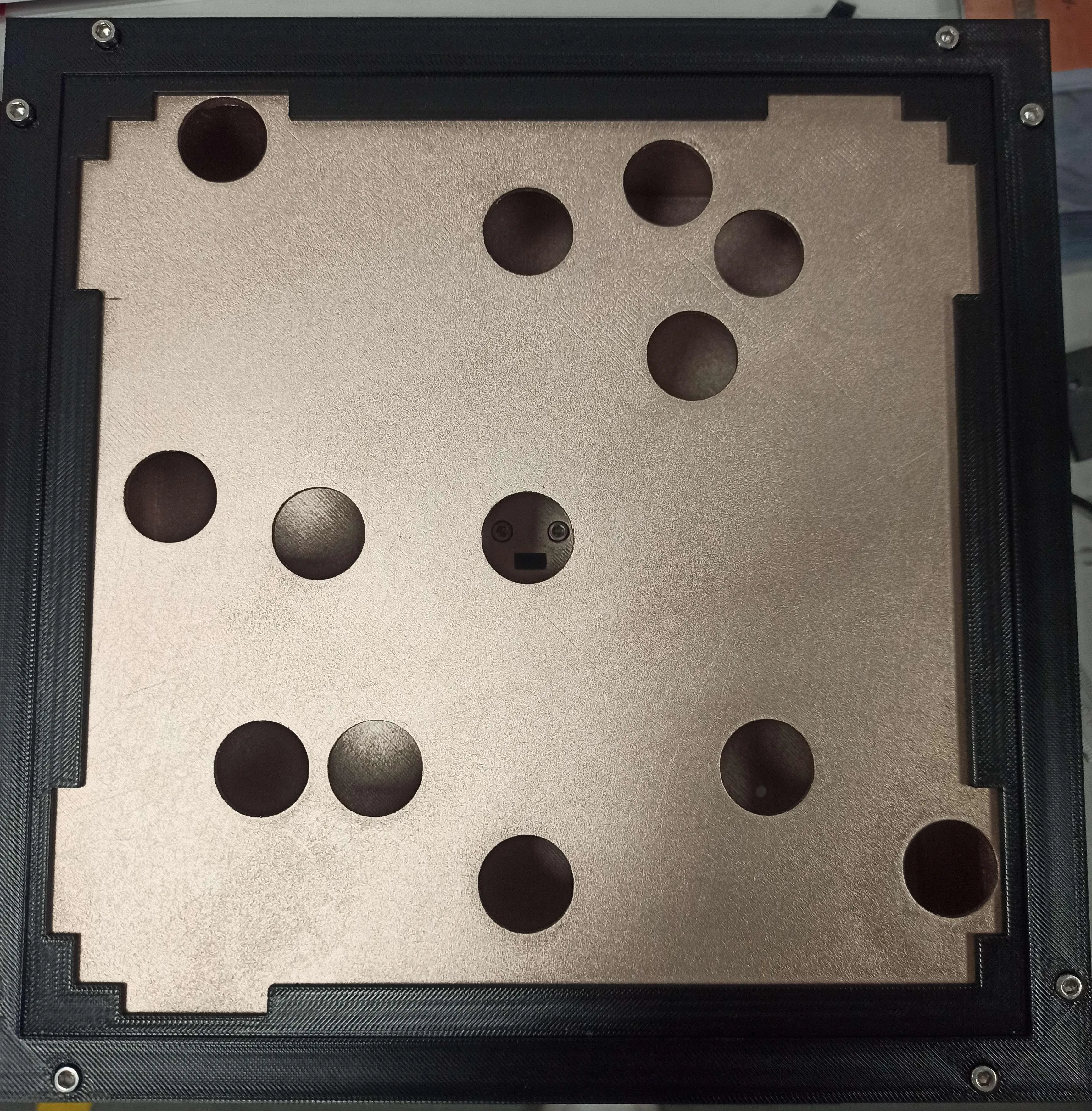
Researchers proposed twisting radio waves, giving them orbital angular momentum. Such a wave does not move like a flat sheet but like a corkscrew, screwing into space. Each 'turn' is a new way to illuminate the object, providing additional information for the computer. In the prototype, waves are generated inside metallized 3D-printed cavities, and special dielectric lenses impart the desired rotation.
The result surprised them: the system with vortex waves was able to reconstruct images of complex objects using only one-eighth of the previous frequency bandwidth. For simple targets, there is a gain, but not as large; for distributed targets made of many small details, without vortices the picture did not come out at all. It is as if an artist, instead of a hundred different paints, took a dozen but applied each stroke at a new angle, and the canvas turned out no worse.
This approach could make radio imaging systems cheaper for security, medicine, and even archaeology. Instead of bulky scanners with a wide frequency band — a compact device with smart signal processing. The vortex helps see the invisible at lower cost.
The orbital angular momentum of radio waves is analogous to the Earth's rotation around the Sun: the wave not only moves forward but also 'spins' around its axis of propagation.