A Molecular Magnet with a Dual Personality express
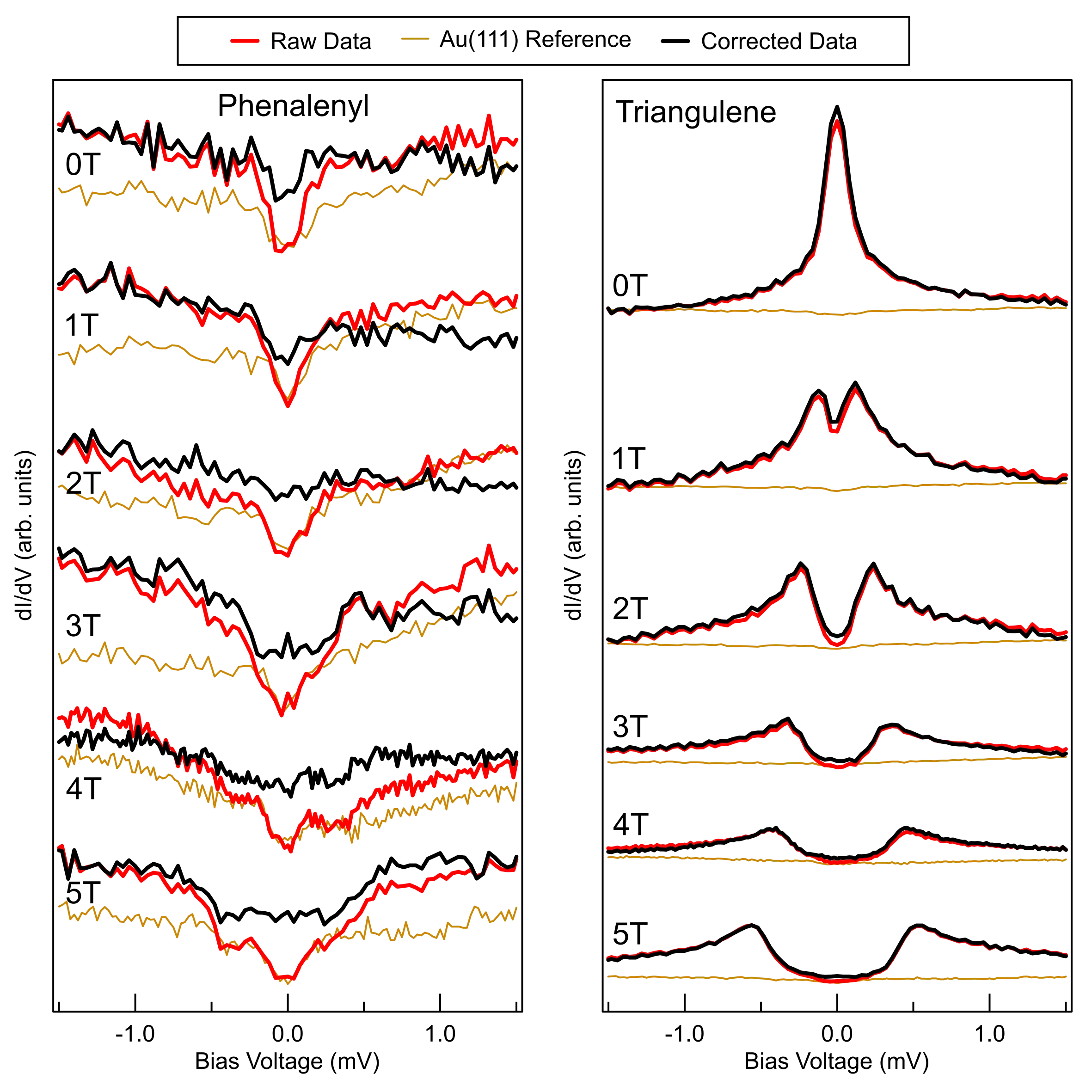
A tiny magnet, made from just two molecules, was placed on a metal surface, and it behaved like a temperamental conductor. Normally, electrons in a metal move in a coordinated way, like a crowd on an escalator. But when cooled significantly, this order breaks down, and the motion becomes unpredictable. It's precisely this kind of behavior that was captured in the new experiment.
Stochastic fluctuations of the spins in the molecule cause the metal's electrons to rearrange. Instead of a single simple regime, two emerge at once: one resembles an enhancement of magnetism, the other a partial suppression of it. Their combination gives rise to a special state that theorists call a singular Fermi liquid. It's as if an orchestra were playing two scores simultaneously, and both could be heard.
The setup of two triangular molecules, spin units with different magnetic moment magnitudes, provides physicists with a precise tool. By changing the distance between the molecules or the composition of the substrate, one can switch the system between different quantum regimes. This is a step toward controlling matter at the atomic level, where the familiar laws of electricity cease to apply.
The triangular molecules used in the work are called triangulenes. Their shape is no accident: it forces the electron spins to align in a particular way, creating a clean magnetic moment without unwanted impurities.
In Greg Egan's novel 'Schild's Ladder', materials with exotic quantum properties are described, created by precise molecular assembly. The new work shows that such constructs are becoming a reality.