How to Measure the Invisible Halo of the Lightest Nucleus express
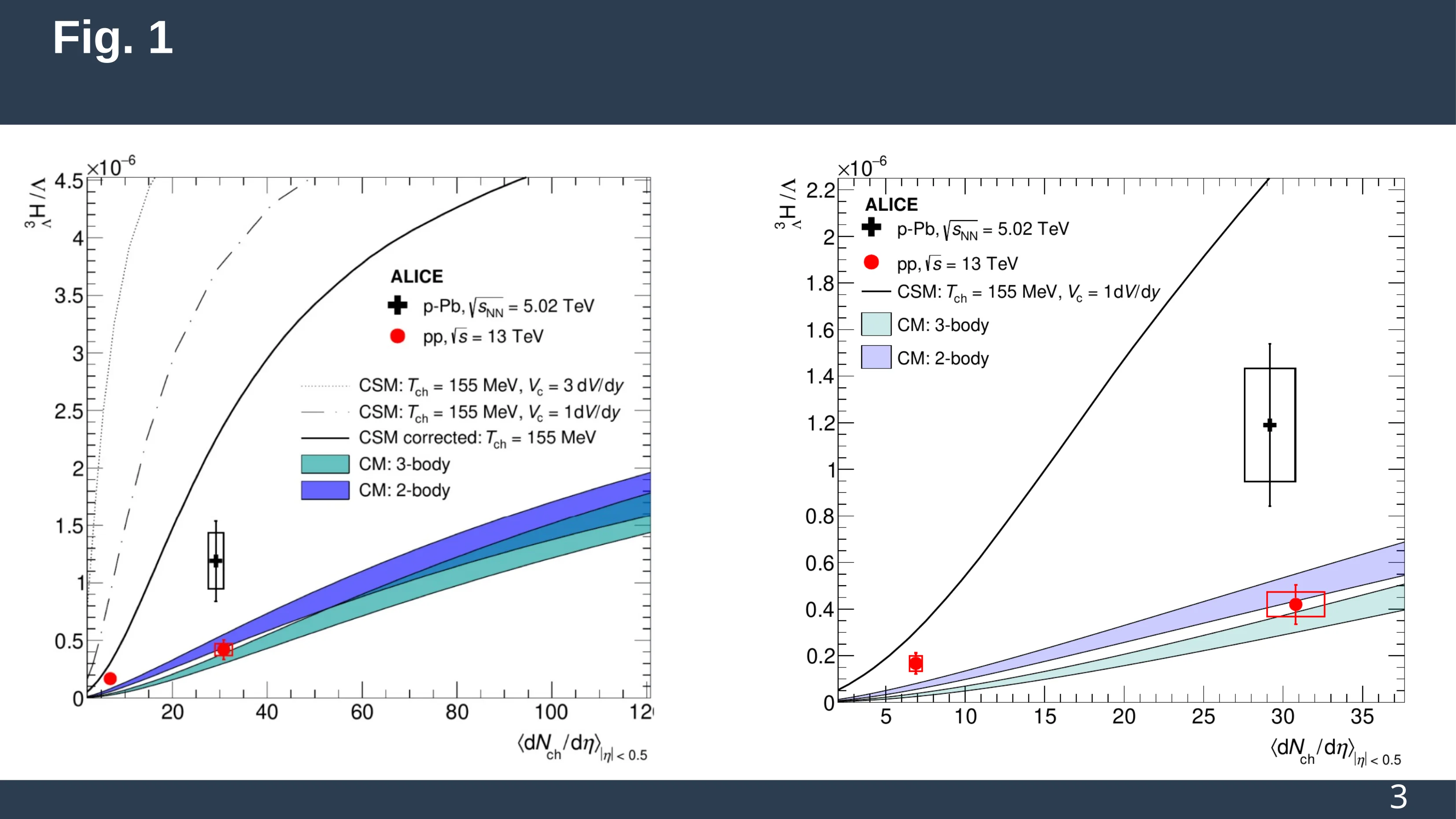
If an atomic nucleus is a family, then in an ordinary helium house live two protons and two neutrons, holding hands tightly. Now imagine that one family member is an oddball who loves to wander far from home. That's exactly what a hypertriton looks like: at the center, an ordinary pair (a proton and a neutron), and around them, at a large distance, roams a hyperon — a particle with a strange quark inside.
Scientists had long been unable to catch this "stretched" atom: hyperons live for infinitesimal fractions of a second and decay immediately. But at the Large Hadron Collider at CERN, for the first time, they managed to see the birth of a hypertriton in proton collisions. It turned out that the hyperon sits about 9.5 femtometers from the nucleus center. A femtometer is a billionth of a millimeter, but for an atomic nucleus, that's a huge distance, like a person holding onto a house with a rope several blocks long.
Such a loose structure is not just a curiosity. Inside neutron stars, where matter is compressed to the limit, hyperons may appear in huge numbers. Knowing how they bind to ordinary particles helps physicists better understand what the densest matter in the universe is made of. And it's also a rare case where particle collisions at a collider help study not the particles themselves, but how they assemble into tiny but real atomic nuclei.
Original abstract
as written by the authors arXiv:2604.07949
The interaction between nucleons and hyperons - baryons containing a strange quark - is key to understanding the properties of dense nuclear matter, such as that expected in the interior of neutron stars. Direct scattering experiments are hindered by the short lifetime of hyperons, prompting the study of hypernuclei - bound states of nucleons and hyperons - as an alternative approach. The lightest known hypernucleus, the hypertriton ($$^3_{\Lambda}$$H), is a weakly bound state composed of a proton, a neutron and a $$\Lambda$$ hyperon, and is believed to exhibit a halo-like structure with the $$\Lambda$$ being loosely bound to a deuteron core. Based on the first measurement of hypertriton production in proton-proton collisions at the CERN Large Hadron Collider (LHC), its halo structure is confirmed. A successful description of the hypertriton production yield within the nuclear coalescence framework enables an estimation of the $$\Lambda$$ separation from the deuteron core as $$9.54^{+2.67}_{-1.11}$$ fm.
The hyperon in a hypertriton is so far from the center that if the proton and neutron were the size of peas, the hyperon would be flying at the distance of a football field.