A Stellar Trail in the Milky Way's Halo express
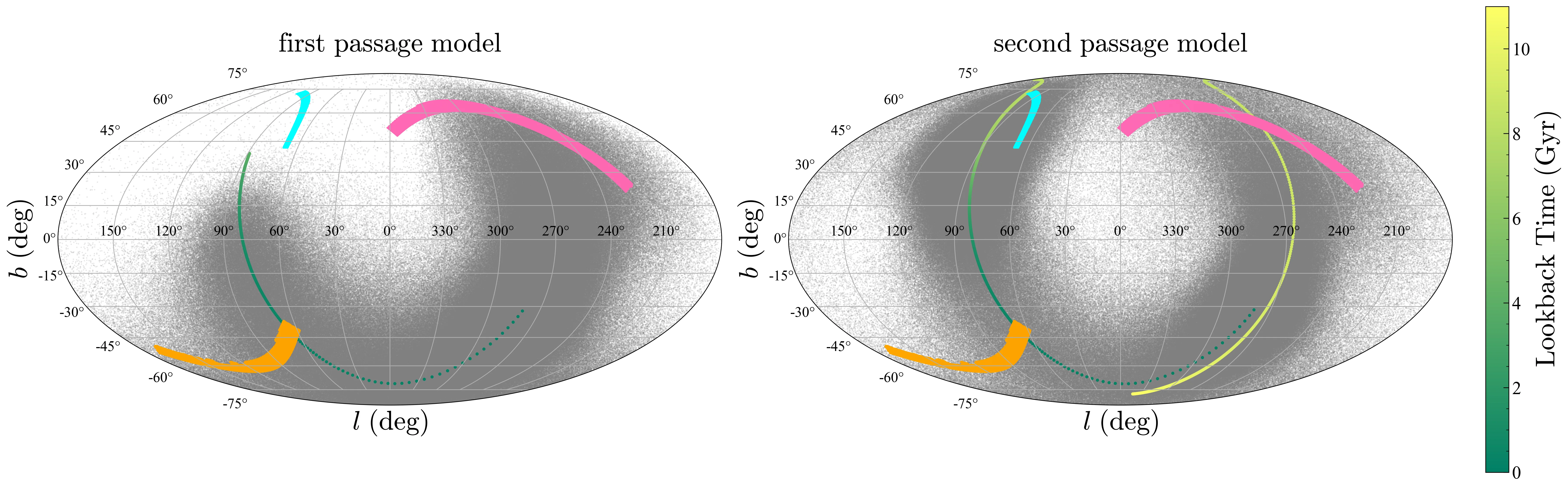
On the outskirts of our Galaxy, far beyond the familiar stellar disk, the Subaru Telescope has spotted something unexpected: a scattered cloud of stars spanning an area of one hundred square degrees across the sky. It's like finding a trail left by a guest in your backyard — except the guest was the Large Magellanic Cloud, a dwarf satellite galaxy of the Milky Way.
The stars in this cloud are too faint to see with the naked eye, but there are many of them, and they are clustered together not by chance. Scientists compared their positions with computer models of how the Large Magellanic Cloud's gravity could have 'stretched' stars out of our Galaxy, much like a tide pulls water out of a bay. It turns out that the observed patch matches where such a 'tidal tail' should be if the Cloud has already made one loop around the Milky Way about seven to eight billion years ago.
For now, this is just a hypothesis based on the positions of stars on the sky. To confirm it, we need data on the velocities and chemical compositions of these stars. Then we can say for sure where they came from and how long they have been traveling. Such stellar streams are like glowing threads that let us read the history of gravitational interactions in our Galaxy.
The Large Magellanic Cloud is visible to the naked eye from the Southern Hemisphere, and it is slowly approaching the Milky Way — in a few billion years, they may merge.