A Laser That Sees Both Shape and Composition express
A conventional lidar is like an artist who paints a landscape but sees only gray shadows. It measures distances to each point accurately, but can't tell whether it's looking at rock, wood, or plastic. To learn the composition, you need a spectrometer — a separate device that works slowly and can't keep up with a fast scanner.
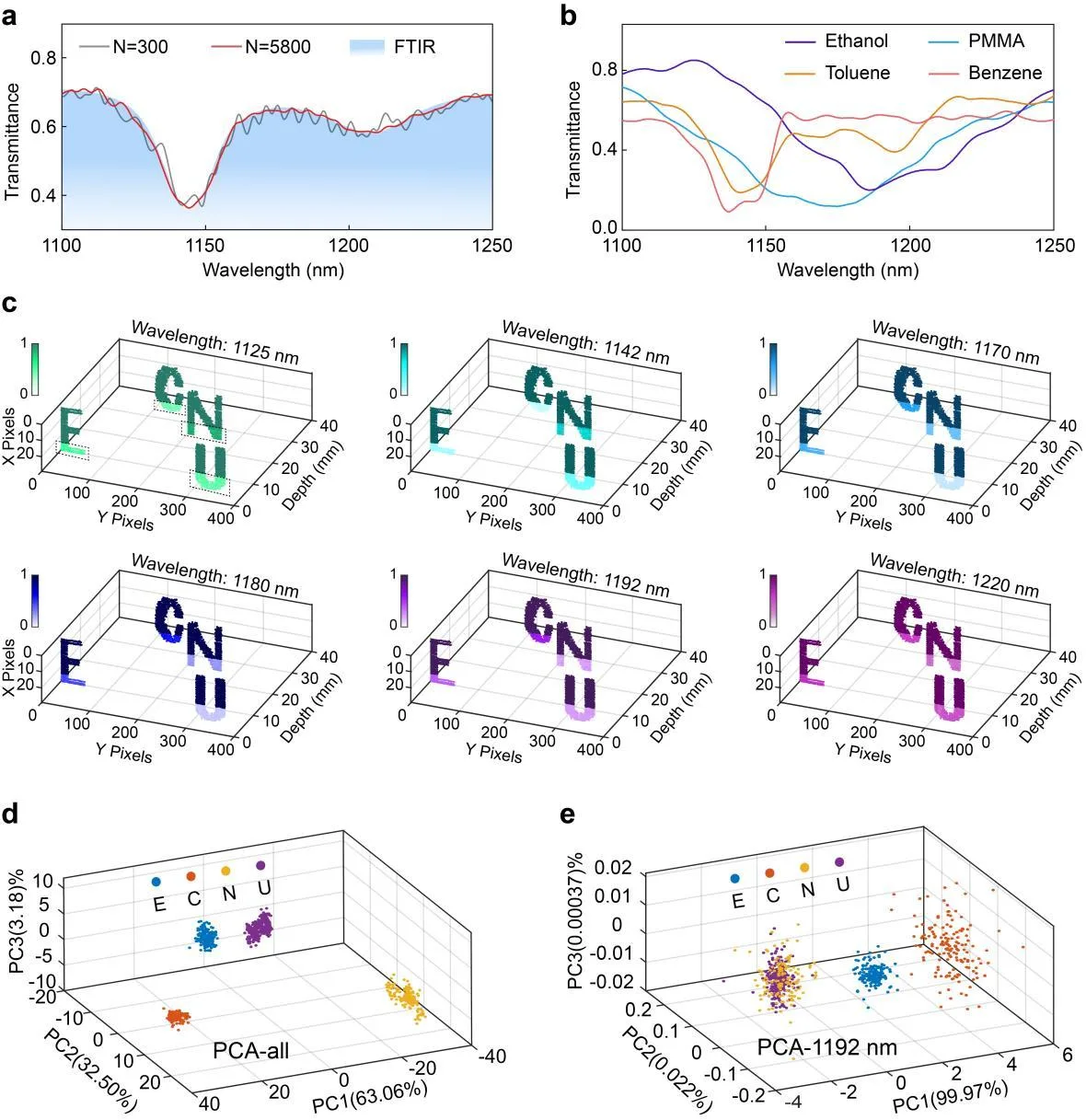
The new system takes a different approach. Instead of a single laser with one wavelength, it uses a broadband source, like white light, which mixes all colors at once. The laser emits random pulses, and each pulse carries its own set of colors. The reflected light is captured by just one detector — not a camera with millions of pixels, but a single point. That might seem insufficient, but here's where coding comes into play: each pulse is assigned a unique pattern, and from the detector's response, both shape and color are reconstructed.
The speed is staggering: 60.5 million lines per second — imagine an artist sketching an entire skyscraper in an instant. With a resolution of 0.02 millimeters, you can spot a scratch on a coin. And the spectrum, with a resolution of 1.4 nanometers across a range of 1100–1250 nanometers, reveals which molecules are present at each point. The same instrument builds a 3D map and tells you whether it's looking at a plant leaf, a piece of metal, or an oil droplet.
Practical applications are already within reach. In precision agriculture, the device could apply fertilizer only where it's needed. In factories, it could instantly check the quality of parts. And in environmental monitoring, it could track the composition of emissions or the health of forests. All without bulky spectrometers or lengthy measurements.
The artist from our earlier analogy has finally gotten paints: now it doesn't just outline contours: it paints a full-color picture of the world, quickly and with unprecedented detail.
The spectrum in the 1100–1250 nanometer range falls in the near-infrared, which the human eye can't see, but many materials have distinctive 'fingerprints' there — for example, you can tell dry soil from moist soil.