How a Computer Learned to Measure Growing Organoids express
A biologist looks through a microscope at dozens of tiny cell spheres — spheroids. From these, miniature organ-like structures will later grow. The task is similar to a baker's job of checking whether the dough has risen evenly in each mold. Only here, instead of molds, there's a nutrient medium, and instead of dough, there are living cells. They cluster together on their own, and one experiment can yield a great many of these clusters.
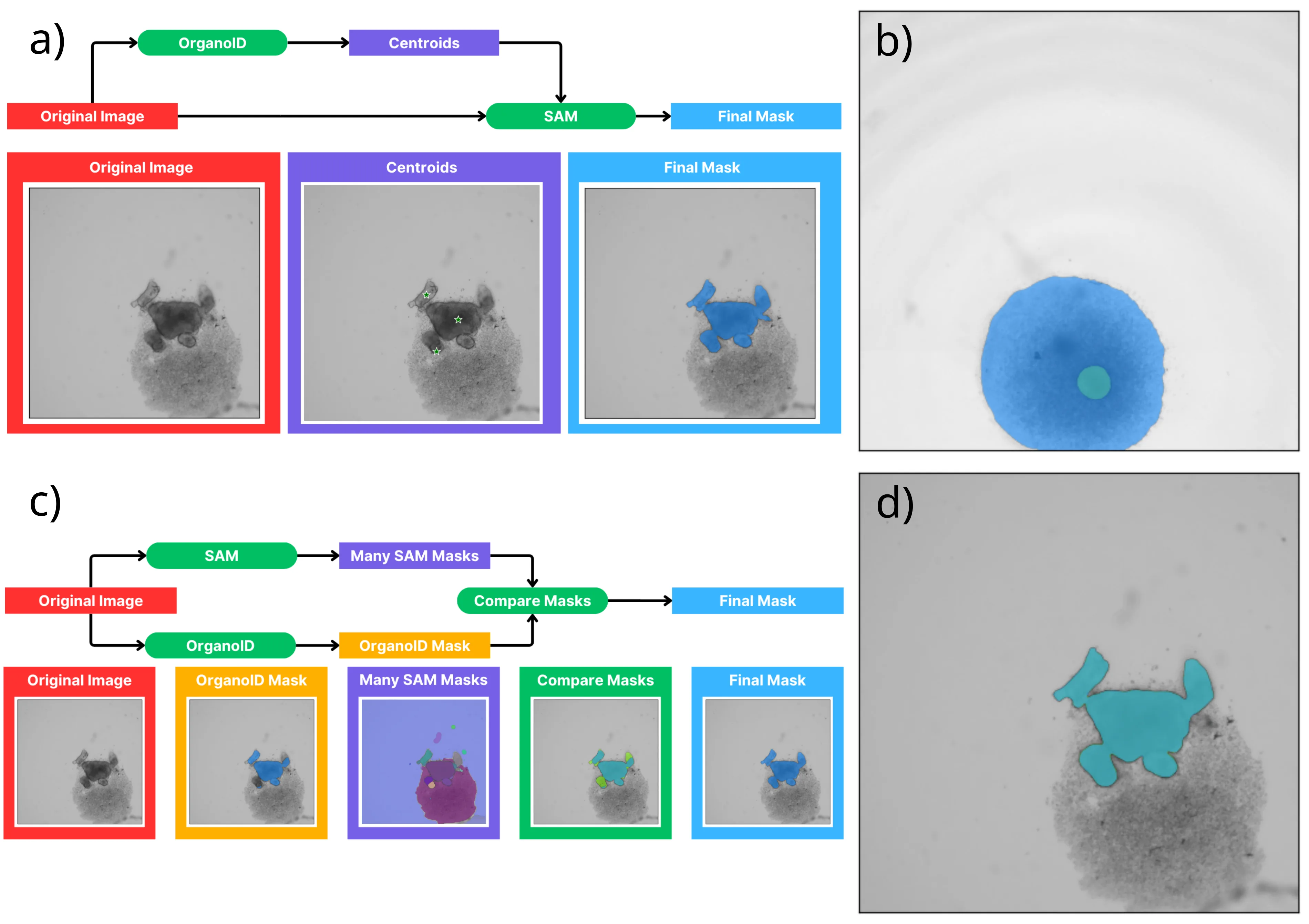
Previously, scientists manually outlined each sphere in images to measure its size and shape. This is time-consuming, tedious, and depends on who does the outlining: two people might draw the boundaries slightly differently. The authors of the new study decided to hand this routine over to a computer. They took the powerful universal model Segment Anything (SAM)—a sort of "Swiss Army knife" for segmenting objects in any image, and combined it with a tool specifically tailored for analyzing biological spheroids. The result is a hybrid that doesn't require lengthy retraining.
Tests showed that none of the existing tools, when used alone, performs consistently well across all images. But the new composite method delivers consistently accurate results for nearly all images — even the toughest ones where spheres clump together or lose clarity. Moreover, its accuracy is comparable to how two different people would outline the same sphere. Only the computer does it in seconds, not hours.
Now biologists have a fast and reliable "automatic measurer." It doesn't get tired or argue with colleagues about where to draw the line. Observing the development of mini-organs will become easier, and drug discovery and disease research a bit faster and more precise. Thus, the routine fiddling with contours gives way to live observation of how cells themselves build tiny organs.
Cell spheroids, from which organoids are grown, resemble an early embryo in shape and behavior at the very first stages of development, the cells also "negotiate" and self-organize without external commands.
In the movie "Blade Runner," artificial organs are created in test tubes — modern organoids can't yet replace a real liver, but they already help test drugs without animal experiments.