Computer Vision cs.CV

74 articles

Image processing, computer vision, pattern recognition, and scene understanding.

articles

Where Does the Boundary Lie: Algorithm Finds Groups by Gaps in Data
Imagine a border river that separates two countries. On one bank live one group of people, on the other, another. The boundary between them is not always obvious: in some places the river is wide and calm, in others narrow and turbulent. But it is exactly where the current changes abruptly that the border becomes most noticeable.
How to Make Images Taken in Different Languages Get Along
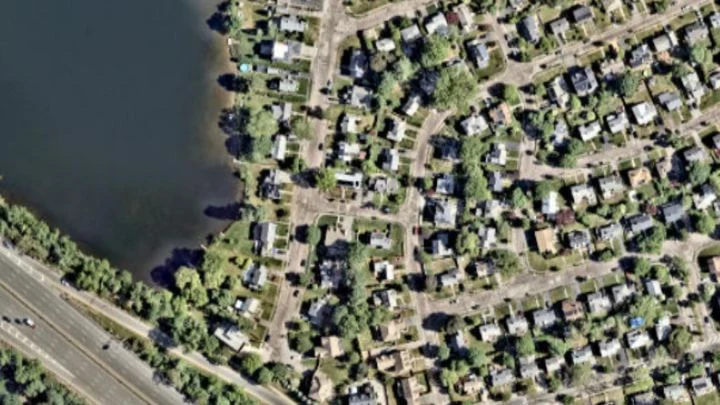
Two images of the same place: one taken in the morning from a drone, the other in the evening from a satellite. The first shows shadows from trees, the second shows glints on the water. It's like two accounts of the same event in different dialects: the words are similar, but the grammar is different.
Attention Cubes for Weather Forecasting
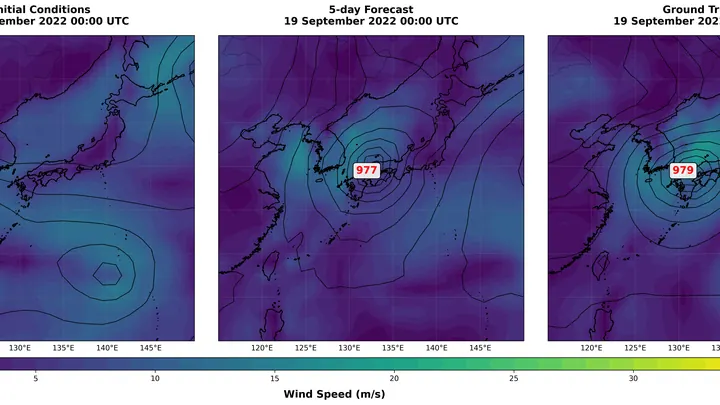
A meteorologist looks at a map where clouds gather in flocks, like birds before a storm. Each spot on the radar could be a future downpour or just noise. Earth system forecasting is like trying to assemble a puzzle with thousands of pieces that keep changing shape.
SFANet: a translator that hears both words and intonation
A translator at negotiations picks up not only the words but also the tone in which they are spoken. If they focus only on vocabulary, they might miss sarcasm or fatigue in the voice. If only on intonation, they could mistranslate the details of the contract.
Machine Learning2026-01-011 minarXiv:2601.00192express
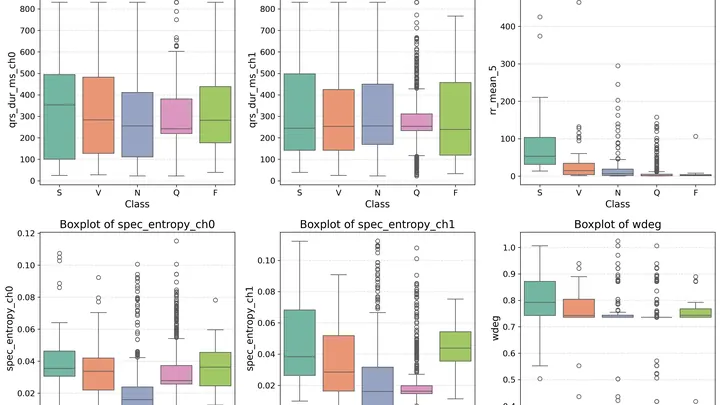
The Heart Under a Microscope: A Tiny Model Catches Arrhythmia in Half a Microsecond
An electrocardiogram is like a musical score, where each note is a heartbeat. A doctor hears the melody and spots the off-notes — arrhythmia. But listening to the score for hours is tiring, so a smart monitor is placed by the patient's bedside.
q-bio.TO2026-01-041 minarXiv:2601.01315express
How the Bladder Squeezes Without Paint
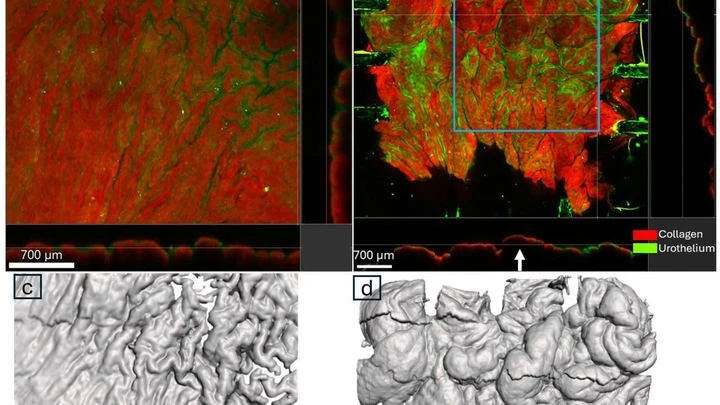
The bladder wall is not a rubber balloon. When the organ empties, its surface wrinkles like crumpled paper, and tension varies from place to place. Previously, to measure this, researchers dotted the tissue with marker spots. But the paint itself changes how living tissue behaves, like an extra layer of tape on a balloon. The new method skips the paint.
Machine Learning2026-01-111 minarXiv:2601.07035express
How MRI Predicts Chemotherapy Response in Glioblastoma
Glioblastoma, a brain tumor, is a tricky foe: in some patients, the drug temozolomide works, while in others it barely helps. The difference often lies in a small stretch of DNA — the MGMT gene. If this region is chemically switched off (methylated), the tumor is worse at repairing its cells, and the drug hits harder.
Medical Physics2026-01-231 minarXiv:2601.17165express
Testing X-rays with sound
A doctor looks at a breast image to find a suspicious lump. If the picture is beautiful and smooth, but the lump has vanished from it, such an image is of little use. This is exactly the problem faced by researchers who developed a new way to test software for photoacoustic tomography.
Computer Vision2026-01-242 minarXiv:2601.17504express
Brain Tumor on Scans: Where Certainty Ends
Brain tissue on a scan looks like a stormy sky: bright patches, dark hollows, blurred edges. The tumor hides among these patterns, and the doctor needs to outline its contour to plan surgery or radiation. One MRI mode highlights edema, another the tumor core, a third dead areas.
Medical Physics2026-01-261 minarXiv:2601.18219express
Diagnosis Without Lenses: Breast Cancer Seen Through Shadows
In a dark room, on a table, sit a laser pointer, a piece of glass with tissue, and an ordinary phone camera. Light passes through the sample, and the image shows not cells but a pattern of bright and dark stripes, like the shadow of leaves on a wall.
Image Processing2026-01-271 minarXiv:2601.19743express
A Heart Under a Clear Dome
An echocardiogram is like a window into the engine room: you can see the chambers contracting and relaxing. The key question is how much blood the heart pumps out with each beat. Doctors calculate this by hand, and two specialists can differ by 10–15%. A computer could be more precise, but typical neural networks are like black boxes: they give an answer but don't say how.
Computer Vision2026-02-141 minarXiv:2602.13712express
AI Finds Worm Eggs in a Drop of Fluid
In a tropical village, a lab technician peers through a microscope eyepiece, hunting for tiny worm eggs in a drop of fluid. The work is monotonous, the eyes tire, and it's easy to miss a parasite. Yet the outcome determines whether a person gets treatment. A new approach hands the search to a neural network that understands both text and images.
Brain Folds Tell Tales of Dementia
Every human brain is covered with folds, much like a fingerprint: each with its own unique pattern. In dementia, this pattern changes, but for two similar diseases, Alzheimer's and dementia with Lewy bodies, the changes are nearly indistinguishable to the eye. Doctors need a reliable way to separate them, because the treatments differ.
Machine Learning2026-02-261 minarXiv:2602.23146express
Weather in Every Backyard
The weather on the next street can differ from yours: cooler by the river, hotter over asphalt, windier between buildings. A regular forecast misses this: its grid cell is the size of a city, not a backyard.
Stellar2026-03-051 minarXiv:2603.06712express
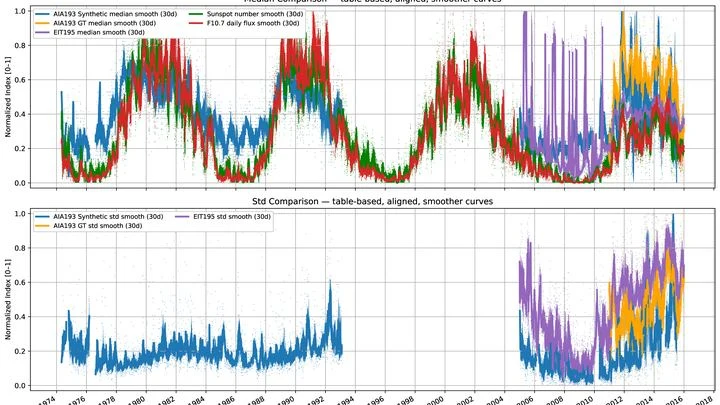
Solar Flares: Forecasting with Confidence
Solar flares — sudden energy releases on the Sun — can knock out satellites and power grids. Previous models often either cried wolf or missed a real blow. The fix: attach a reliability estimate to every prediction.
Computer Vision2026-03-061 minarXiv:2603.06522express
An Ultrasound Image That Spots the Unseen
A doctor stares at a gray-white smudge on the screen. It's the face of an unborn child. One shadow in the right place, and you can plan surgery in time. But not everyone sees that shadow: cleft lip or palate is rare, and a young specialist might go years without ever spotting one.
The Brain Learns by Making Neurons More Alike
A chef's knife and a peeler each handle different tasks, but when a cook learns a new recipe, they often grab the same knife for everything. The brain seems to do the same when mastering a new skill of distinguishing patterns. In the experiment, monkeys trained for weeks to tell apart barely noticeable differences in complex patterns.
Computer Vision2026-03-151 minarXiv:2603.14503express
Neural Network Learns to See Dark Matter
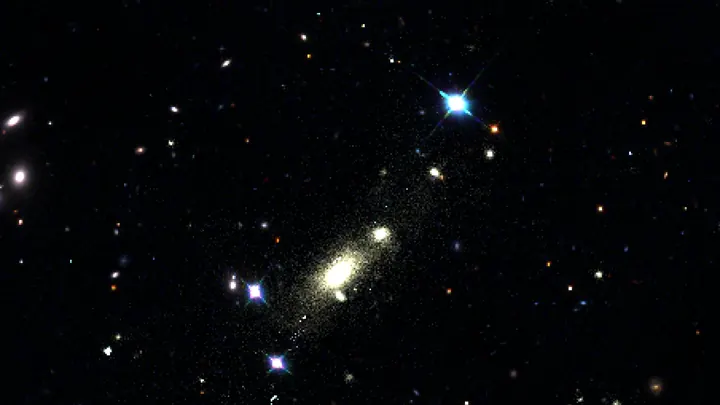
Images of distant galaxies are riddled with curved arcs and smears — light warped on its way to us. This effect, predicted by Albert Einstein, acts like a giant funhouse mirror: a massive galaxy cluster distorts the images of background sources.
Astronomy Teaches Us to See the Invisible in the Brain
To spot a dim star above a brightly lit city, astronomers subtract one image from another — removing the glare of streetlights. They do the same with living neurons: their faint flashes drown in noise, but if you subtract everything unchanging, only they remain.
Machine Learning2026-03-222 minarXiv:2603.21284express
Weather forecast on a single GPU
Weather forecasting is like trying to predict where a rock will roll down a slope, knowing the shape of every bump and the force of the wind. Make a mistake at the start, and a week later that error grows into a full-blown storm. In the past, accurate forecasts required massive computers and days of computation.
Climate Puppet Theater: How a Neural Network Brings a Tropical Wave to Life
Over the warm waters of the Indian Ocean, every six to eight weeks, a vast wave of moist air gathers. It moves eastward at a pedestrian pace—about five meters per second—and takes forty to ninety days to circle half the planet.
Galaxies2026-03-291 minarXiv:2603.27741express
How AI Watches Over Cosmic Bubbles
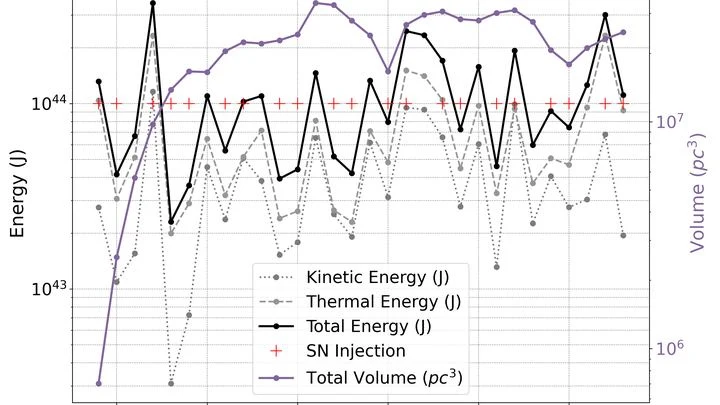
Superbubbles are cosmic giants, akin to soap bubbles, but instead of soap film, they contain rarefied interstellar gas, and they're inflated not by a breath but by a series of supernova explosions. In computer simulations, they behave like living things: they grow, cool, and move. But until now, we couldn't precisely trace their boundaries.
A Virtual Brain Chooses the Right Treatment
The brain of a person with Parkinson's disease works like an orchestra where the conductor either freezes or waves the baton off-beat. Medications don't help everyone, so doctors turn to stimulation — weak electrical pulses that restore the rhythm.
Instrumentation2026-03-312 minarXiv:2603.29660express
Automatic Galaxy Classification from Radio Data: The STRADAViT Method
Modern radio telescopes generate millions of images of distant galaxies every night — giant star systems bound by gravity. Manually sorting such a volume of data is impossible.
Computer Vision2026-04-042 minarXiv:2604.03710express
How Graphs Find Melanoma on Your Skin
A mole on your skin looks like a mosaic of colored pieces. Each piece is a small patch of the image where color and texture barely change. Such pieces are called superpixels. If you connect them with lines, you get a network that looks like a subway map: stations are the pieces, and lines are the connections between them. The weight of each line shows how strongly two pieces are related.
cs.MM2026-04-102 minarXiv:2604.14216express
How to Predict the Outcome of Brain Surgery
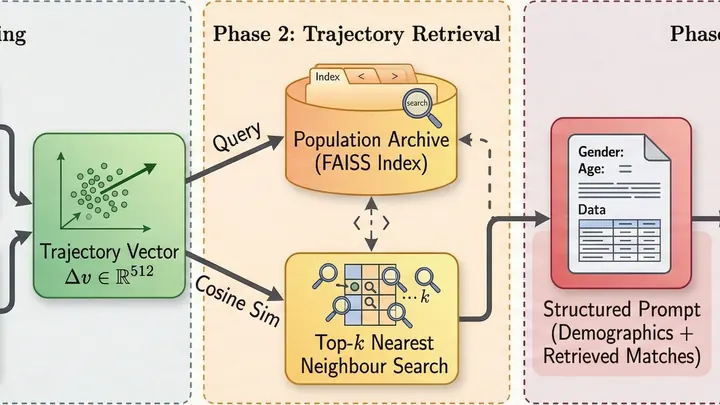
When medications fail to control epilepsy, doctors may suggest surgery: removing the brain region where seizures originate. But predicting whether it will help a particular person is tricky. Pre-surgery MRI scans show only the current state, not how the brain will change after the intervention. The new approach works like a librarian searching for similar medical histories.
Machine Learning2026-04-131 minarXiv:2604.11773express
The Crystal Finds Its Own Axis
In a lab where crystals are studied, a technician stares at a screen covered in bright spots and slowly rotates the sample, trying to get the spots to form a symmetric pattern. It's like tuning an old radio: you turn the knob until the static gives way to a clear signal. Now, a machine can turn that knob. Scientists have created a program that learns to align crystals without any knowledge of how those spots work.
Quantum Physics2026-04-182 minarXiv:2604.16953express
Body Heat as a Clue: A Quantum Look at Breast Cancer
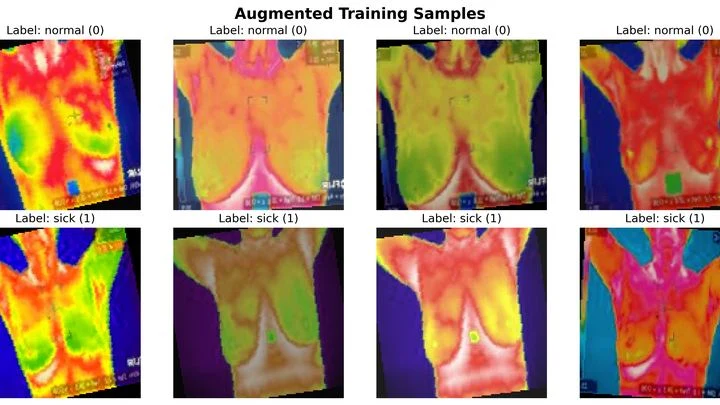
The hot air above asphalt shimmers, betraying the heated surface. Medical thermography works in a similar way: the skin over a tumor is often slightly warmer than healthy skin — by just fractions of a degree. Computer programs try to catch this difference and determine whether it's dangerous.
Computer Vision2026-04-231 minarXiv:2604.21573express
Histology Predicts Genes
A microscopic image of tissue is like a city map: streets, houses, parks. An experienced eye can tell a lot about a neighborhood from such a map. But what if you could predict from the map which houses are noisy today and which are quiet?
Computer Vision2026-04-251 minarXiv:2604.23137express
Two Eyes Are Better Than One: How a Neural Network Learns to See Tumors
A doctor studies a brain scan: somewhere in the tangle of tissue, a tumor is hiding. One glance picks out small spots and edges, another takes in the overall shape and location. A person combines both, but across hundreds of scans that gets tedious. A new program does the same thing automatically.
Computer Vision2026-04-252 minarXiv:2604.23435express
Knee X-rays: AI explains its diagnosis
An X-ray of a knee with osteoarthritis looks like a road map where the roads have narrowed and bumps have grown along the shoulders. Doctors look at this map and assign a grade from zero to four — how worn out the joint is. The problem is that two experienced specialists often see the map differently: one gives a three, the other a four.
Machine Learning2026-04-251 minarXiv:2605.00876express
AI learns to look like a doctor
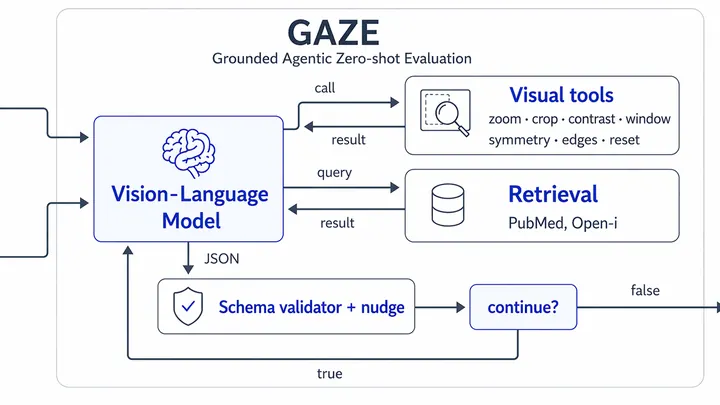
A doctor rarely makes a diagnosis from a single quick look at a scan. They peer, zoom in, compare with an atlas, flip through articles. Until recently, neural networks worked differently: see the image, immediately produce the text. The authors of the new study decided to give the model time and tools.
Image Processing2026-04-261 minarXiv:2604.23675express
Optical Tomography Gets Simpler and More Accurate
Light passing through a turbid medium like milk or living tissue scatters in all directions. Reconstructing where light was absorbed more strongly is like guessing the shape of a fallen object from a puddle on the asphalt. Optical tomography solves this problem, but usually requires large computational resources.
Computer Vision2026-05-042 minarXiv:2605.03053express
How a Computer Learned to Measure Growing Organoids
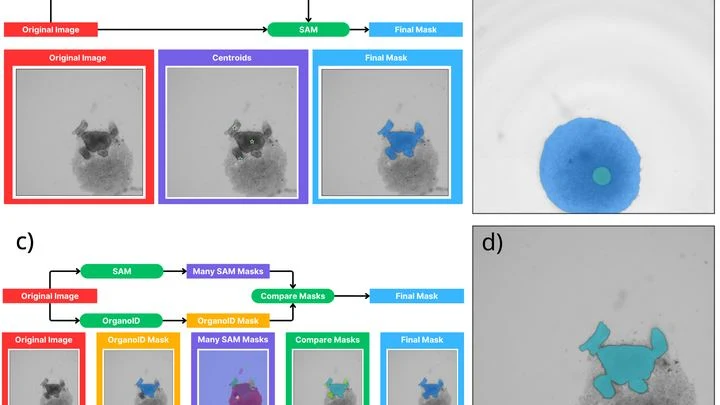
A biologist looks through a microscope at dozens of tiny cell spheres — spheroids. From these, miniature organ-like structures will later grow. The task is similar to a baker's job of checking whether the dough has risen evenly in each mold. Only here, instead of molds, there's a nutrient medium, and instead of dough, there are living cells.
Computer Vision2026-05-221 minarXiv:2605.24273express
How to Track Down an Invisible Fugitive from Space
The MethaneSAT satellite scans for leaks of метана — a gas that's invisible but packs a powerful planetary warming punch. Its "nose" is a спектрометр, a device that spots the subtlest color changes in light passing through the atmosphere — the telltale sign of methane.
Medical Physics2026-05-231 minarXiv:2605.24609express
How a neural network spots flaws in MRI scans
A proofreader checks a manuscript before it goes to print. They don't know every possible mistake, but they know exactly what flawless text looks like. Spotting a strange symbol or a blurred word, they immediately circle it in red. That's roughly how the new program for checking medical images works.
Cosmology2026-05-302 minarXiv:2606.00803express
How to See the Invisible Web of the Cosmos
Through the ripples on the water, pebbles at the bottom of a pool look shifted and warped. In a similar way, the gravity of invisible dark matter bends the light of distant galaxies — a phenomenon known as weak lensing.
Stellar2026-06-071 minarXiv:2606.08652express
The Helium Decipherer: How to Read the Sun’s Invisible Past
The solar corona (the outer atmosphere of the Солнца, heated to millions of degrees) glows in ultraviolet light, but these rays are absorbed by the air and never reach Earth. Direct images of the corona from space have only been available since the 1990s.
Computer Vision2026-06-201 minarXiv:2606.22112express
Neural network spots the 'raisins' in a superalloy
Engineers create an alloy for solar concentrators by adding hard particles — like raisins in dough, to help it hold its shape under extreme heat. Too big a raisin and the material cracks. Previously, scientists manually counted these particles on microscope images.
Computer Vision2026-06-242 minarXiv:2606.26279express
How the Brain Shares Experience Between Tasks
The brain doesn't learn every task from scratch: it transfers experience from one activity to another. But how do you know which tasks are truly related? Neuroscientists came up with a clever trick: let an artificial network "peek" at brain activity during one task and try to predict activity during another. If it works well, the tasks are close.