Fuzzy Probabilities in a Blurry Spacetime express
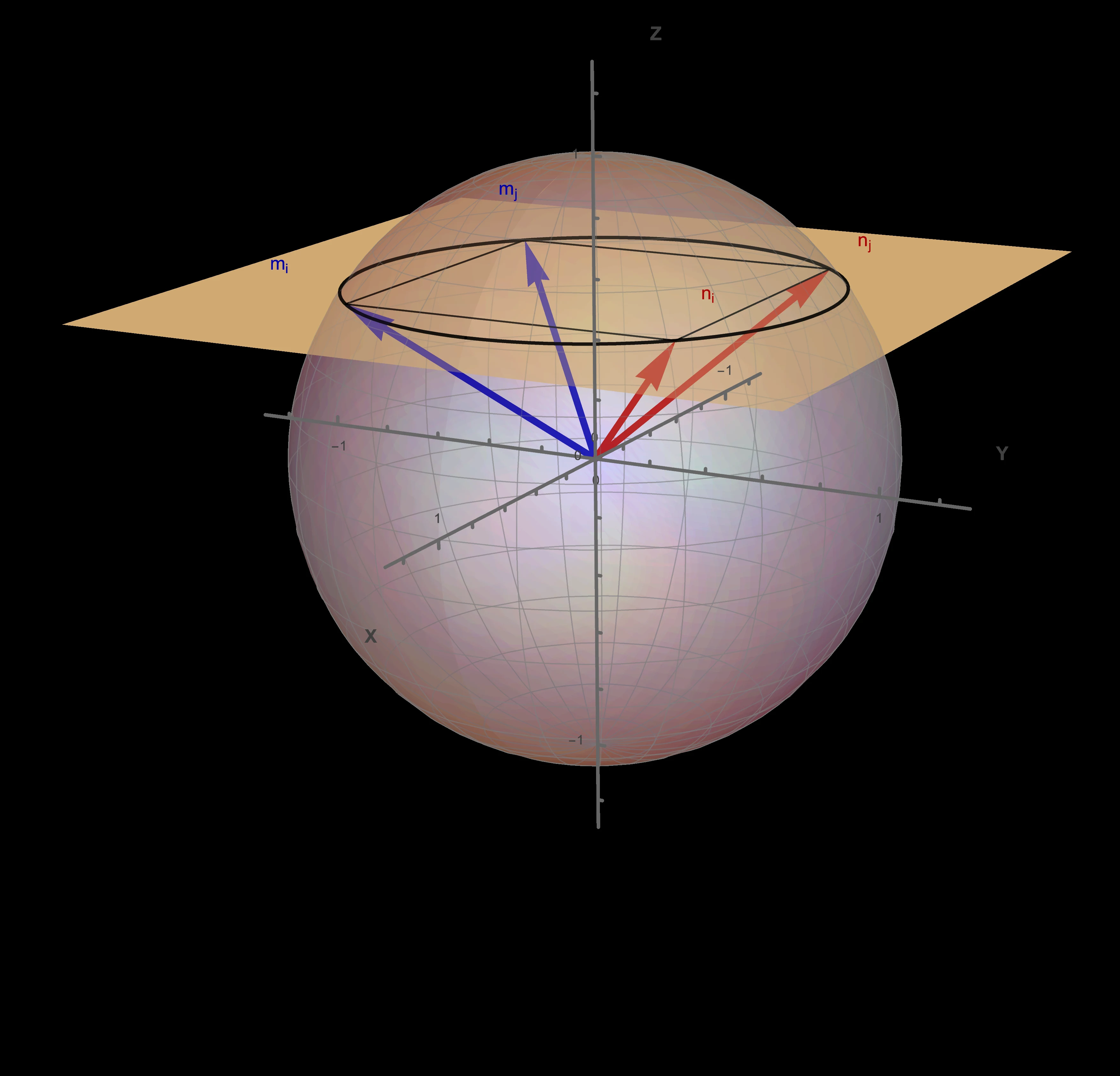
The quantum world is known for uncertainties: for example, you can't measure a particle's position and its speed at the same time. But new research shows that in a 'fuzzy' spacetime, even probability itself — the measure of chance — loses sharpness. A foggy compass doesn't give an exact direction: its needle wavers. Two people with such compasses can never perfectly align their devices. Similarly, in a world churned by quantum foam, observers can't precisely match the orientations of their detectors. Because of the shakiness of space itself, the probabilities of different spin measurement outcomes become interdependent — pinning one down blurs another, like one compass needle jiggling the other. These findings echo [scientist:John Archibald Wheeler]'s ideas about 'quantum foam' spacetime. And the mathematical tool for this description — quantum groups — was created in the 1980s for an abstract problem about deforming multiplication, only later becoming useful for physicists. It turns out that probability fuzziness might be key to uniting quantum mechanics with gravity: the more we pin down one probability, the more disorder (entropy) floods into the others.
The tool that captured probability’s fuzziness — quantum groups — was created in the 1980s for a completely different purpose: mathematicians were exploring how to smoothly deform ordinary multiplication operations. Only later did it turn out that this abstraction fits perfectly for describing quantum foam.