A Spiral at the Heart of a Star express
A figure skater pulls their arms in, and their spin suddenly accelerates. When a massive star exhausts its fuel and its core collapses, something similar happens, but on a cosmic scale. The core shrinks to a city-sized sphere, and if it is spinning rapidly, a peculiar instability can arise. Matter in the newborn neutron star begins to move in a spiral, like water swirling down a drain.
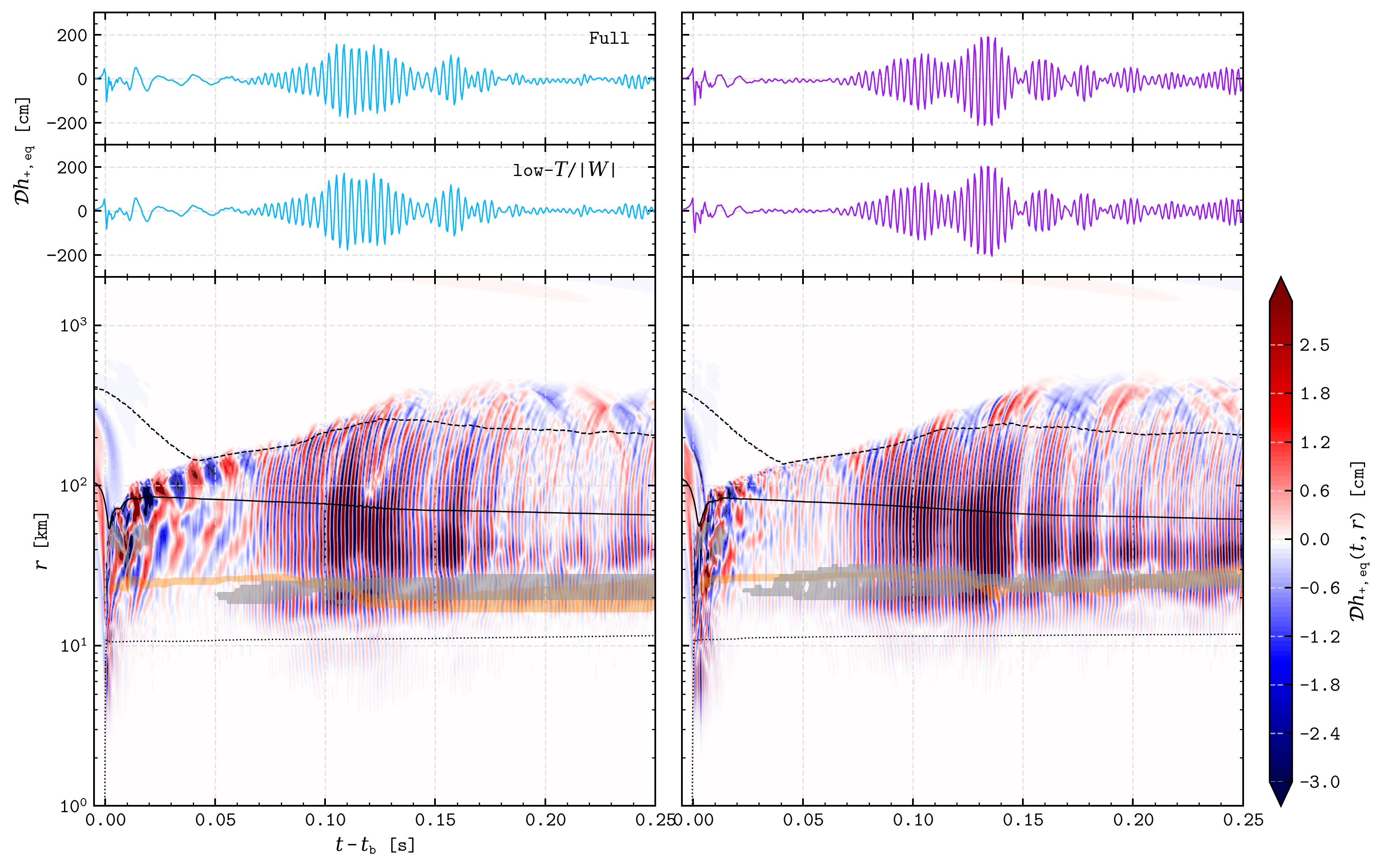
This spiral is not just pretty. It acts like a giant mixer, periodically jolting spacetime and producing gravitational waves (ripples in the fabric of the universe). At the same time, it alters the flow of neutrinos (ghostly particles that barely interact with matter), especially near the star's equator. The scientists ran five simulations of the collapse of a star with a mass of 35 Suns, each time setting a different behavior for the superdense matter. The instability appeared in all cases, but its character changed: the onset time, lifetime, and frequency of gravitational waves depended on how stiff and compact the core was.
If we catch such a signal on Earth, astronomers could look inside a neutron star and understand what it is made of. Previously, we had to rely only on neutrinos; now there is a second, independent source of information. It's like a doctor listening not only to a patient's breathing but also to their pulse — together they give a more complete picture. And so the figure skater's dance, where it all began, turns into a precise tool: the rhythm of cosmic rotation tells us about the hidden depths of matter.
The instability in question is called the low $T/|W|$ instability. It arises when the rotational energy of the star becomes less than a certain fraction of its gravitational energy, and it can turn a neutron star into a source of periodic gravitational waves, similar to the sound of a tuning fork.
In Carl Sagan's novel "Contact," a signal from space turns out to be not just a message but a blueprint for a machine. Here, the frequency of gravitational waves itself is a "blueprint" of the neutron star's interior.