Invisible Beads: Cooling That Doesn't Care About Size express
Two white sheets lie in the sun — one rough, one smooth. Which one heats up less? The rough one scatters light more strongly, so it seems it would stay cooler. But if the coating is made of many transparent glass beads, the logic changes. Light wanders through it like in a thick fog, and at some point it stops noticing individual droplets.
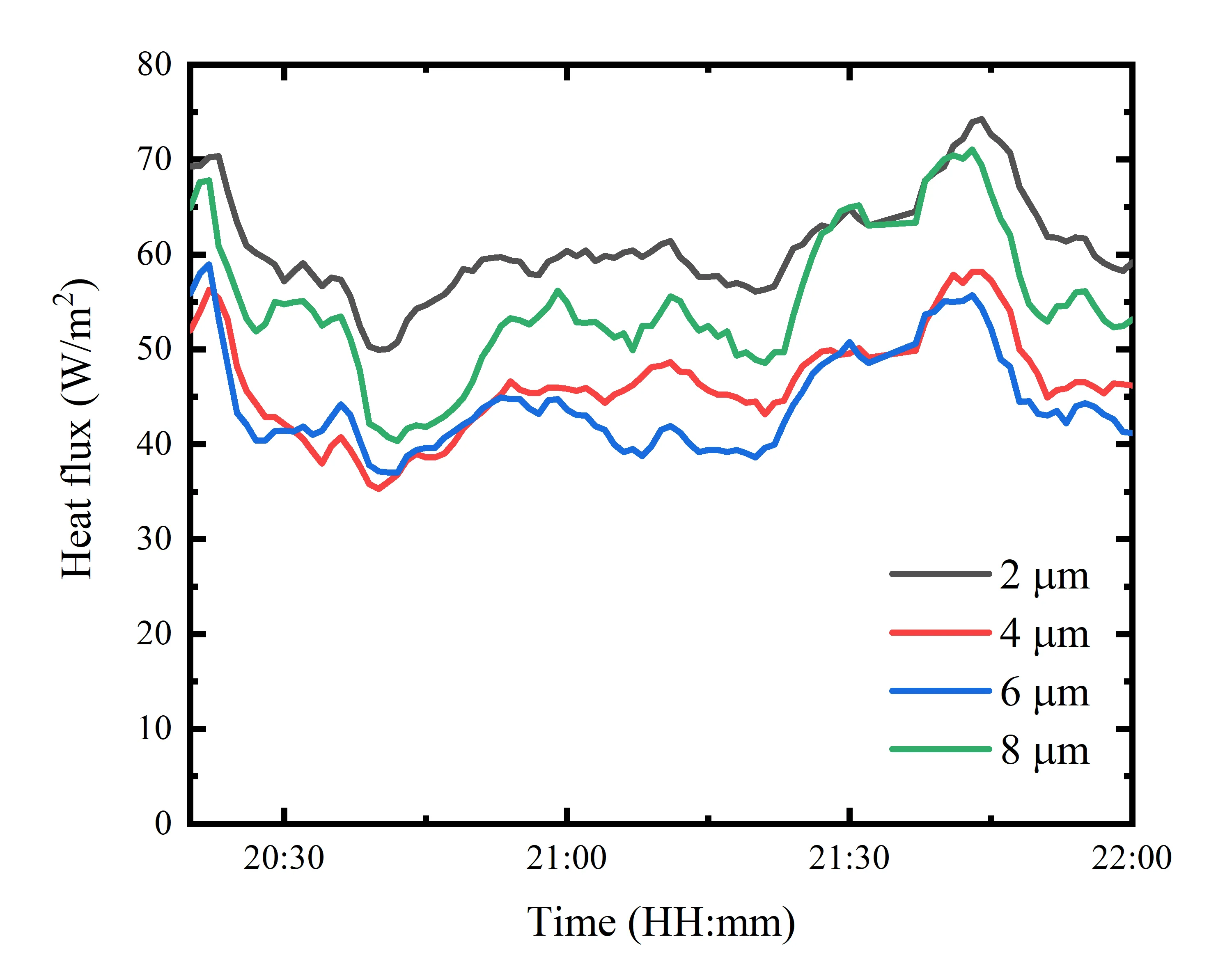
The researchers applied layers of glass microspheres with diameters ranging from 2 to 8 micrometers onto a surface. Such a coating works as a passive daytime cooler: it reflects sunlight and emits heat into space in the infrared range (invisible thermal radiation). When the layer becomes thick enough for light to undergo multiple scattering, the difference in particle size disappears. A thermal camera showed that outdoors, all samples cooled equally — by about 4 degrees below the ambient temperature.
This is like a queue at a narrow passage. If there are few people, each walks at their own pace. But in a crowd where everyone is jostling, individual differences blur — the flow moves as one. So does light in the bead layer: after many collisions, it 'forgets' which bead it first encountered. Therefore, engineers no longer need to pick the perfect diameter: they can use particles that are easier to make or attach to a surface. And the two white sheets from the start of the story no longer seem so different: the coating works equally well no matter what its microscopic relief is made of.
The whitest natural materials, such as the shell of the Cyphochilus beetle, scatter light as efficiently as these coatings, but at a thickness of just a few micrometers — nature manages without thick layers.
In Kim Stanley Robinson's novel '2312', cities on Mercury are cooled by giant 'sunshades'—passive coatings could replace such bulky mechanics.