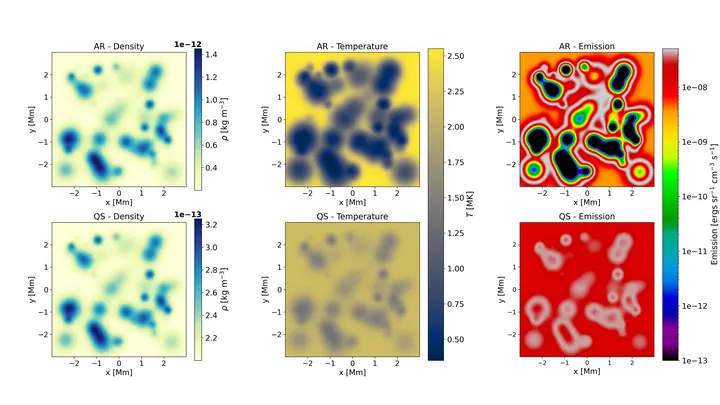
The solar corona is the Sun's outer atmosphere, a tenuous plasma extending millions of kilometers into space. Paradoxically, it is hundreds of times hotter than the Sun's visible surface, the photosphere, which sits below it. The coronal heating mechanism is the physical process that explains how energy is transferred from the Sun's interior to the corona, maintaining its extreme temperatures of millions of degrees. This is not a trivial puzzle: the photosphere is only about 5,500°C, while the corona reaches 1–3 million degrees, defying the intuitive expectation that temperature should decrease with distance from a heat source.
History
The temperature discrepancy was first recognized in the 1940s from spectroscopic observations, but the mechanism remained debated for decades. The term 'coronal heating problem' was coined in the 1970s, and the wave-versus-reconnection debate has been central to solar physics ever since.
How it works
The leading explanation involves magnetic fields generated by the solar dynamo deep inside the Sun. These fields emerge through the photosphere and thread the corona, where they are constantly jostled by convective motions below. This agitation generates two main heating channels: waves and magnetic reconnection. Magnetohydrodynamic waves—such as Alfvén waves—propagate upward along magnetic field lines and dissipate their energy in the corona through turbulence and damping. Alternatively, the twisting and braiding of magnetic field lines builds up stress until they snap and reconnect, releasing stored magnetic energy as heat. Recent observations and simulations suggest that both mechanisms operate, with turbulence playing a key role in transferring wave energy to smaller scales where it can be dissipated.
In practice
Understanding coronal heating is essential for predicting space weather, as the heated corona drives the solar wind that can disrupt satellites and power grids on Earth.
Fun fact
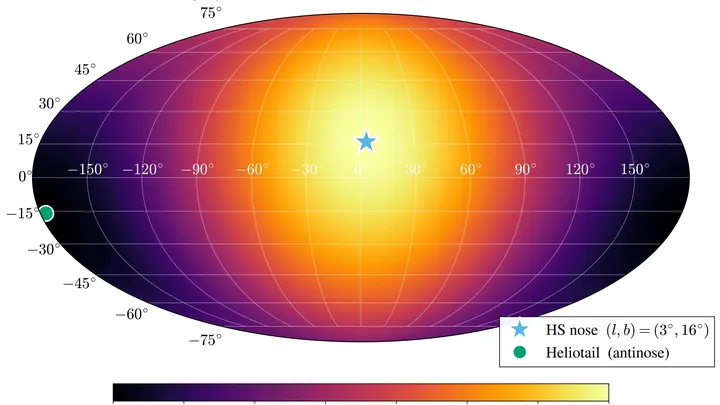
The corona is so hot that it expands into space as the solar wind, which travels at hundreds of kilometers per second and shapes the heliosphere—the bubble of plasma that envelops the entire solar system.
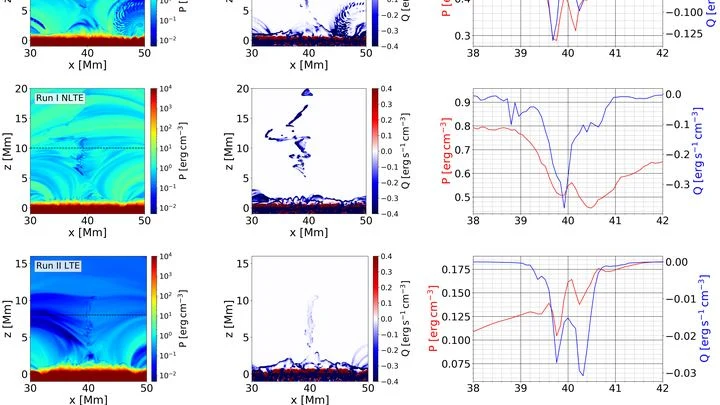
Picture a guitar string stretched between two frets. When you pluck it, a standing wave forms: some points on the string oscillate strongly, while others, the nodes, remain almost still. The chromosphere, a layer of the solar atmosphere sandwiched between the photosphere and the corona, behaves in much the same way.
Water in a tank spins at nearly four revolutions per second, and, as if by magic, a column the size of a dinner table emerges. The vortex lives for dozens of rotations, even though everything around it churns and trembles. Where does such stability come from?
The secret is that the vortex is not isolated.
In a pot on the stove, water starts to churn from the bottom long before the whole thing boils. Bubbles of steam rise from the base even though the burner itself hasn't heated up yet.
The solar wind is a continuous stream of charged particles flowing from the Sun. It has two main components: protons (hydrogen nuclei) and alpha particles (helium nuclei, four times heavier).
The solar wind is a stream of charged particles constantly blown off the Sun's surface, filling the entire solar system. It's not like a steady breeze: it has eddies, gusts, and calm patches. Scientists call this turbulence.
In the solar corona, it rains from time to time — only not water, but plasma. The hot gas cools, clumps into blobs, and rushes downward along magnetic loops, like drops running down invisible gutters.
The solar corona is the Sun's outer atmosphere, heated to millions of degrees. How it gets so hot is still unclear. One candidate is torsional waves: they twist magnetic field lines like a rubber band. Such waves were recently spotted with the new Daniel K. Inouye Solar Telescope.
The solar corona lives its own turbulent life. Magnetic fields here are governed by the motions of the dense surface — the Sun's photosphere — but occasionally they rewrite the magnetic pattern themselves.
The Sun is a giant cauldron where light struggles through a thick layer of scorching matter. On its way out, photons (light particles) constantly bump into atoms and lose energy. How strongly matter holds back light is called "opacity," and it determines how quickly heat escapes.
Iron is one of the main culprits for opacity in the Sun's interior.
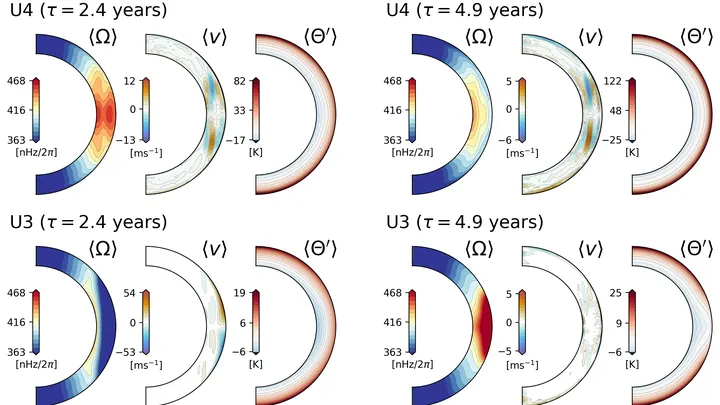
27 days at the equator, 32 at the poles. Five days' difference, and over a year, the equator gains almost a week. A gas ball 1,4 million kilometers in diameter spins like a layered top: each layer moves at its own speed.
A waterfall that doesn't heat up from the fall but freezes — that's roughly how gas behaves as it flows onto a neutron star in an X-ray pulsar when the star shines dimly. Usually, infalling matter is heated to a white-hot glow, but new work shows the opposite.
The cosmological debate is like two craftsmen measuring the same wall but getting different lengths. One uses a tape measure, applying it to nearby landmarks — Cepheids (pulsating beacon stars) and Type Ia supernovae (flashes of dying stars). He finds the wall is stretching at 73.5 arbitrary units.
Active galactic nuclei (AGN) are the universe’s powerhouses: their X-ray coronae blaze millions of times hotter than stellar atmospheres. But what strikes the spark? A ten-day X-ray campaign by the XRISM and XMM-Newton satellites, aimed at NGC 3783, provided the answer: it’s actual thunderstorms.
The Sun is a giant nuclear reactor that continuously sends us light and heat. But it also has another, almost silent postal service: every second, tens of billions of neutrinos, ghostly particles born in the thermonuclear furnace, fly through a square centimeter of your palm. Most of them leave no trace.
A sunspot cools, and above it a dark filament, a prominence, hangs for weeks. Inside it, like a compressed spring, hides the magnetic field. It can be laid out in neat arches, or it can be twisted into a tight rope.
The Sun is a boiling cauldron of hydrogen and helium, where scorching gas is caught in magnetic snares. When invisible ropes reconnect, energy comparable to billions of thermonuclear explosions is released. Where does it go?
Two white sheets lie in the sun — one rough, one smooth. Which one heats up less? The rough one scatters light more strongly, so it seems it would stay cooler. But if the coating is made of many transparent glass beads, the logic changes. Light wanders through it like in a thick fog, and at some point it stops noticing individual droplets.
Using the JWST space telescope, astronomers conducted a chemical analysis of the centaur Chiron, an icy body from the fringes of the Solar System. It turns out its gas activity resembles a layered cake. Carbon dioxide evaporates from the surface, forming a top crust.
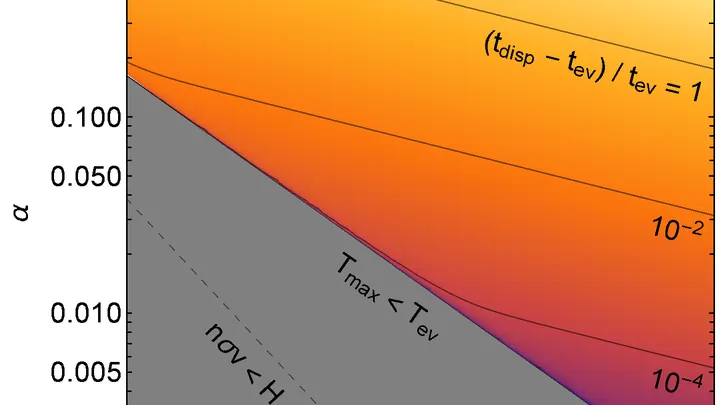
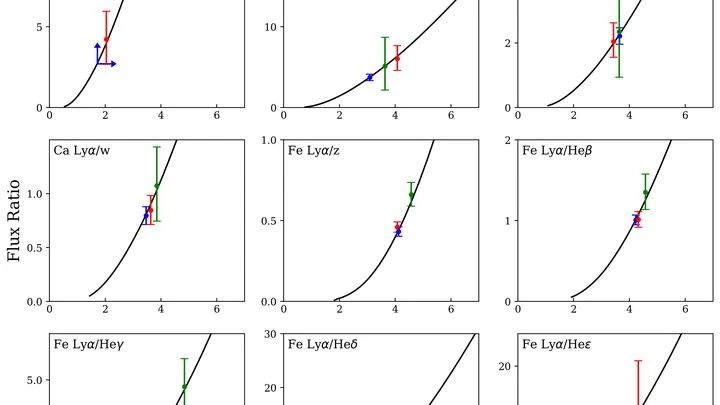
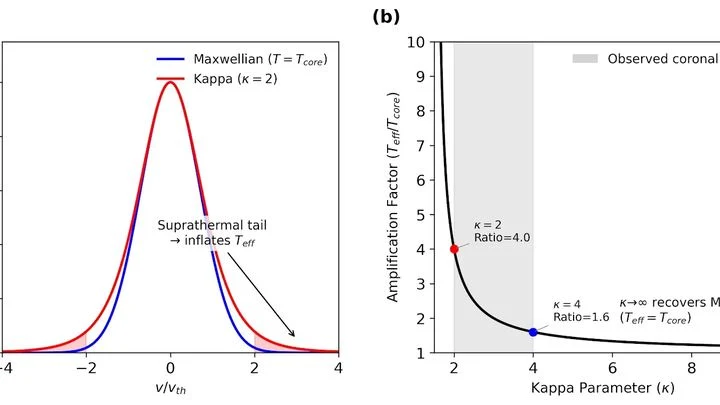
If you stick two identical thermometers into a pot of hot water, they'll both read the same, and we relax, thinking the temperature is measured correctly. But in a rarefied gas heated to millions of degrees, this trick stops working.
In December 2011, Comet Lovejoy boldly raced through the searing corona of the Sun. Right after — a flare. Scientists checked whether the comet could have caused it. The atmosphere of the Sun is threaded with taut magnetic loops, like a drawn bowstring.
A tiny black hole zips through a gas cloud. Instead of swallowing the gas, it heats it up, like an iron left on a damp cloth. Radiation streams from the black hole, creating a hot spot — a region where the temperature is hundreds of times higher than in the surrounding space.
The crown of a huge tree sways in the wind, but the roots and trunk are hidden underground. On the Sun, magnetic fields play the role of such invisible roots. They emerge from the depths, thread through the entire atmosphere, and govern the motion of the hot gas — plasma.
In the scorching solar corona, where temperatures soar past a million degrees, float cold, dense clouds — solar prominences. They hang for weeks, neither falling nor dissolving, like icebergs in a boiling ocean. How they got there is a question that has puzzled astronomers for decades.
A lantern shines through thick fog. Light scatters off water droplets, and the lantern appears blurred. Something similar happens around a black hole: hot gas, like fog, envelops it, while X-rays from the inner parts of the disk struggle through this cloud. Only here, the "droplets" are electrons, and the "fog" itself is called the corona.
A giant cauldron of simmering soup stretches across millions of light-years. This is the atmosphere of the Perseus galaxy cluster — a cloud of scorching gas held together by gravity. Until recently, astronomers thought that in the center of this cauldron, the gas was calmly cooling, ready to condense into new stars.
A stream of scorching gas races away from a star, and suddenly stalls, as if it hit an invisible wall. That's exactly what researchers saw when they tried to reproduce a stellar eruption on a laboratory scale. They used a laser to create a plasma jet and shot it through a magnetic field — first weak, then strong, like that of many stars.
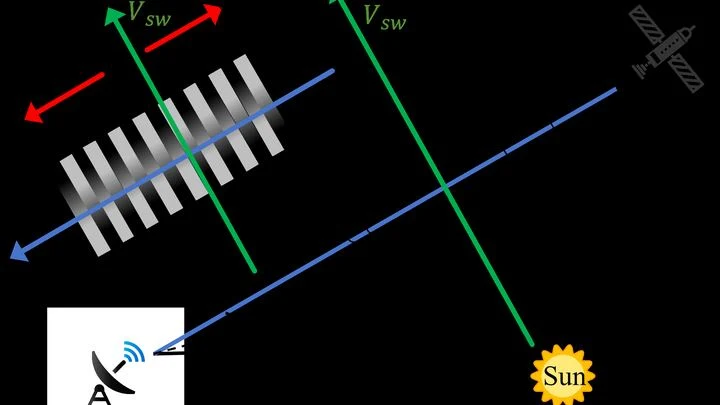
A radio signal travels from Mars to Earth, but on the way it has to push through the invisible "wind" of charged particles blowing from the Sun. This wind, like ripples on water, slightly distorts radio waves.
A gamma-ray burst is a brief but extremely powerful flash of light, born from the merger of neutron stars or the collapse of a massive star. Inside such a flash, plasma flows race at enormous speeds and collide with each other.
A doughnut-shaped magnetic trap holds plasma made of boron and hydrogen. Inside, the temperature rises above one hundred million degrees — hotter than the center of the Sun. At such heat, nuclei collide and fuse, releasing energy.
Radio waves passing through the solar corona, the outer atmosphere of the Sun, are distorted just like the air shimmers over scorching asphalt. This haze is caused by seething streams of charged particles — the solar wind.
The Sun's corona looks like a shaggy dandelion: bright petal-like loops hold hot gas near the surface, while long, tenuous jets escape into space between them. These jets, the heliospheric current sheet, stretch across the entire solar system.
For eight consecutive years, two different methods of measuring the temperature of the solar corona have given different answers. One instrument, a radio telescope in Nancay, sees 600 thousand degrees. The other approach, calculating from how the gas is distributed with height, requires 1.5 million.
If you build a giant blanket around a star, you get a Dyson sphere. It absorbs all the radiation and glows in invisible heat rays. No such sphere has been seen yet, but astronomers know: to find it, look for this thermal glow.
Oxygenic photosynthesis requires splitting water. It's kind of like a water wheel: to make it spin, you need a strong current. Light acts as the current, and light particles are the streams. For red dwarfs, the most common stars, the light is "cool" and weak — the streams barely move the wheel.
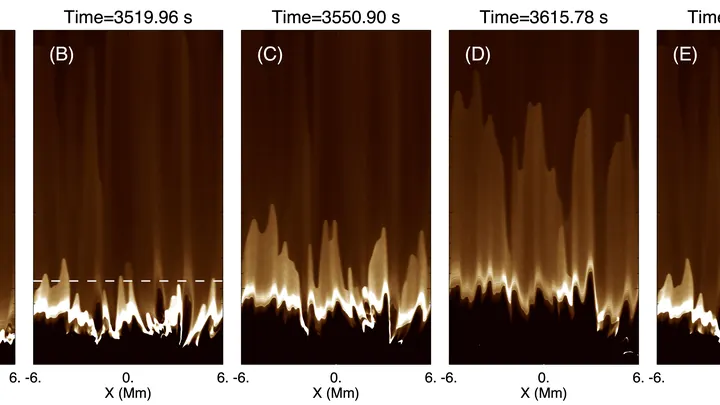
The Sun's surface boils like water in a pot. Hot gas rises, cools, and sinks: that's convection. Magnetic fields churn around, tearing and reconnecting. In this frenzy, spicules are born: narrow plasma jets that shoot thousands of kilometers upward.
An ordinary solar cell does one thing: when the sun shines, current flows. Here, when the sun shines, the current flows differently depending on which side you bring the magnet.
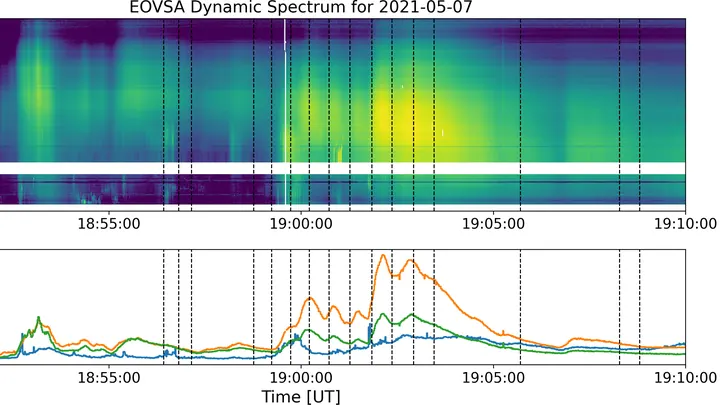
A solar flare is like a giant spring that gets twisted and twisted, and then suddenly snaps. The energy stored in the magnetic field is unleashed into space within minutes, heating plasma to millions of degrees.
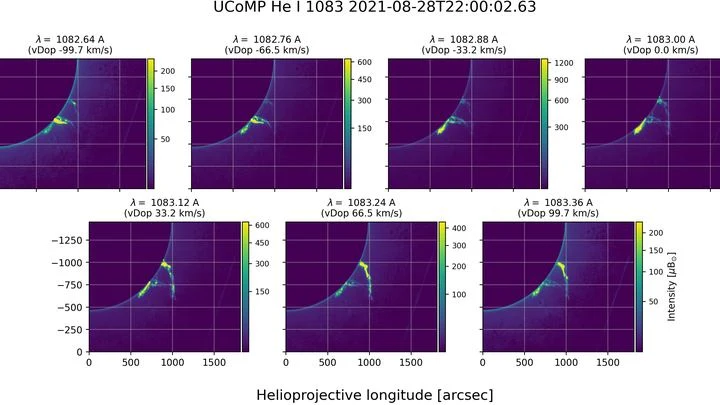
The Sun occasionally hurls enormous clouds of plasma into space — coronal mass ejections. Often tangled within these clouds are prominences: cooler, denser clumps of material. These contain plenty of neutral atoms that shine brightly in specific spectral lines.
The solar corona, the Sun's outer atmosphere, stretches millions of kilometers, yet it's visible only during a total eclipse or with specialized instruments. Typically, we gauge the corona's density by how it scatters white light, but that method relies on simplifications that can skew the results.
A solar flare is like a tightly coiled spring suddenly uncoiling. In the Sun's corona, energy accumulates in the twisted magnetic field, and then it is abruptly released, accelerating particles and heating plasma.