Interstellar Visitor Slims Down Before Our Eyes express
Among the icy chunks hurtling through the void, there are special travelers — interstellar comets. They were born around distant stars and happened to wander into our neighborhood. One of them, 3I/ATLAS, came under the gaze of telescopes as it approached the Sun. Its material, frozen gases and refractory dust, began to evaporate, leaving a glowing tail behind.
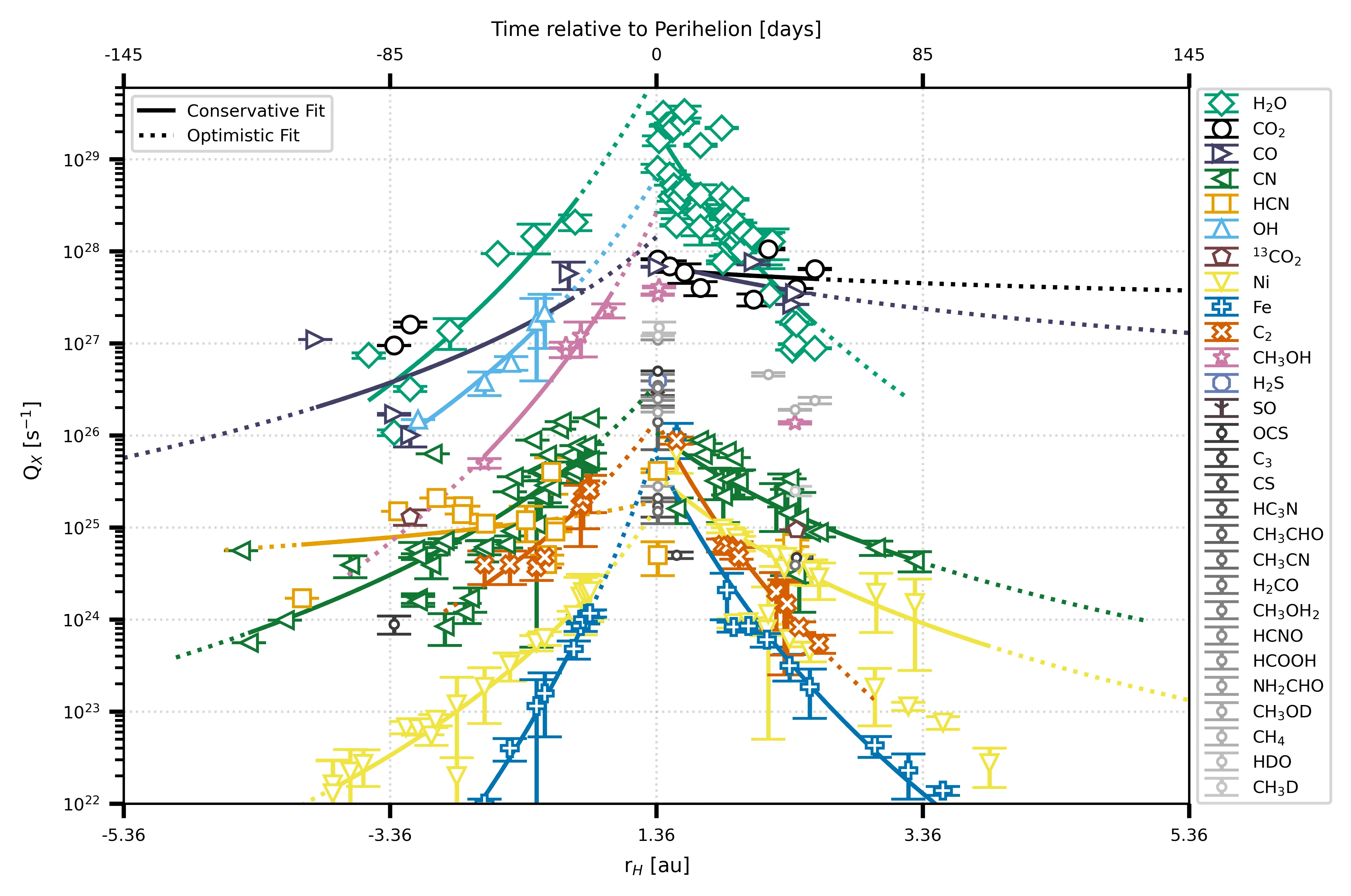
The authors of the study collected all available measurements of how much gas and dust the comet ejected at various times. Then they built a simple model: they imagined the comet as a melting chunk of ice and calculated how much its radius shrank due to mass loss. For gas, they got from 1.3 to 5.5 meters; for dust, more than ten meters, assuming a typical dust-to-gas ratio. All of that is just a thin crust compared to the size of the nucleus.
This method doesn't require looking inside the comet, just tracking its "weight loss" at different points along its orbit. Knowing at what depth certain ices lie, we can understand how the layers in the nucleus are mixed. It's like reading the comet's history through the cross-sections it exposes as it turns its sides to the Sun's warmth.
The interstellar comet 3I/ATLAS was discovered by the ATLAS telescope in Hawaii just a few months before it became visible to amateur astronomers.
In Arthur C. Clarke's novel "Rendezvous with Rama," an interstellar object turns out to be an artificial spacecraft, but 3I/ATLAS is definitely a natural icy chunk.