Cosmic Particles See Through Cargo express
Every second, about a hundred invisible particles, muons, pass through your body. They are born high in the sky when cosmic rays collide with air atoms, raining down on Earth. These particles are so penetrating that they can pass through a multi-story building, but they slightly change direction when they encounter dense material, such as lead or uranium. This property is the basis of muon tomography: a method that lets you see inside a closed truck or a volcano without opening it.
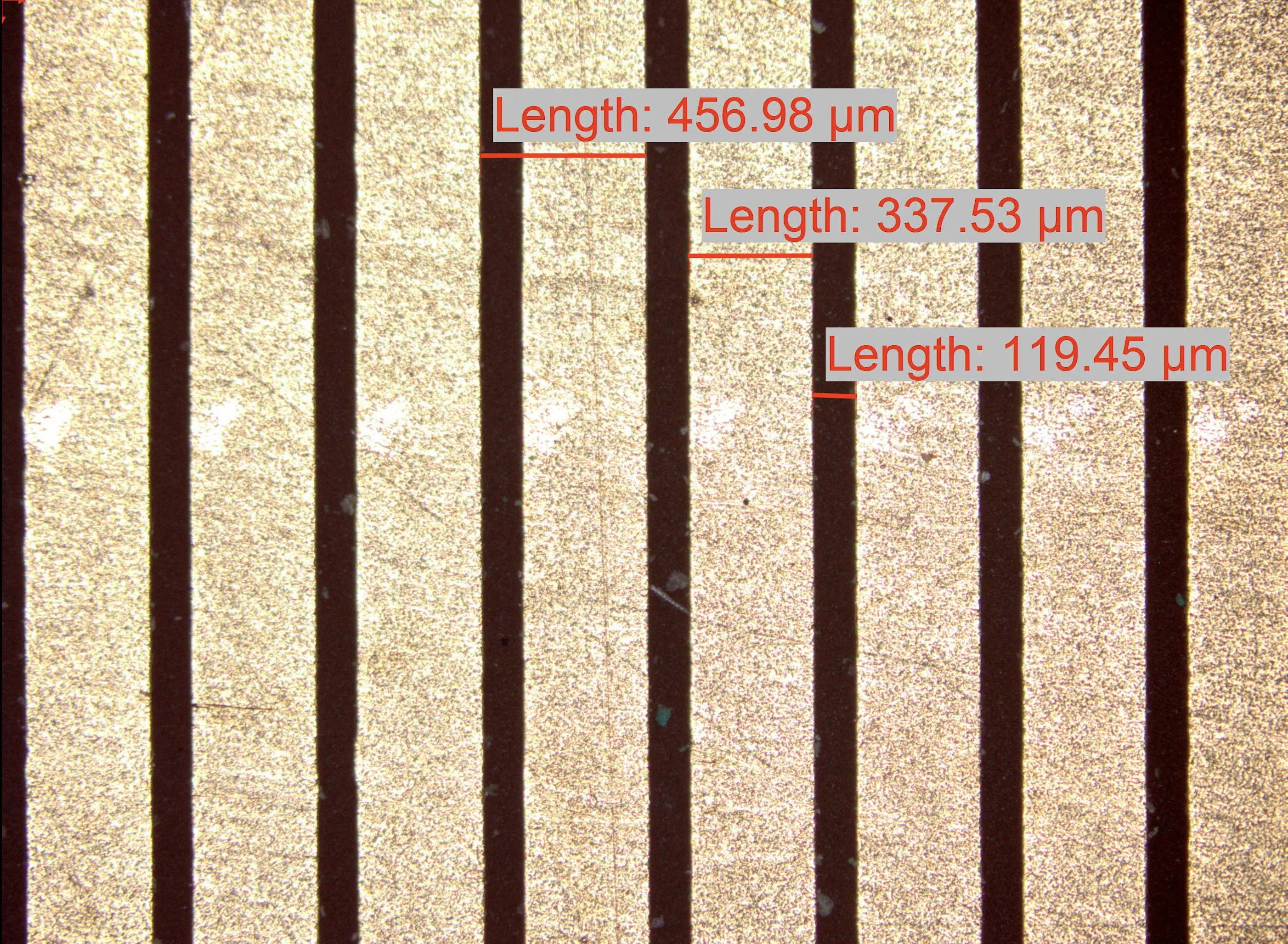
A research group has created a miniature detector for such imaging, based on the gas amplification technology known as Thick-GEM. It works like a sponge: in its pores, a passing particle knocks out electrons, which then trigger an avalanche that amplifies the signal. Usually, such plates are made with micron-sized holes, but here they were enlarged by a factor of 5–20: this simplifies production, makes the device more robust and cheaper, while maintaining accuracy. A plate measuring 4 by 5 centimeters, manufactured at a local facility, underwent a series of tests.
First, the detector was “trained”—different voltages were applied to find the mode where it sees particles best without being overwhelmed by noise. Then, they measured how many muons it catches. It turned out that in both single-layer and double-layer configurations, the device registers 99.5% of all passing particles — an almost perfect counter. Using a narrow beam from an iron-55 source, they determined the spatial resolution: 30 micrometers, which is three times thinner than a human hair.
Such a detector could become the heart of a portable scanner for customs or industry. Instead of bulky X-ray machines — a box that sees hidden cavities and different materials by how muons deflect in their bulk. And all this uses the free rain of cosmic particles that falls constantly.
Original abstract
as written by the authors arXiv:2606.08664
Muography, commonly known as muon tomography, is a passive, non-destructive imaging technique that utilizes naturally occurring cosmic-ray muons to visualize the internal density structures of large, static, or inaccessible objects. In course of developing a small prototype muography system for material identification that relies upon the multiple Coulomb scattering of muons in matter, we explored the possible use of Thick-GEM detector as muon tracking device. It is a 5-20 fold scaled-up version of traditional GEM technology, that has become increasingly popular in recent years, owing to its mechanical robustness, cost-effective production, and excellent position sensing capabilities. A few prototypes of this detector of dimension $$40\,\mathrm{mm} \times 48\,\mathrm{mm}$$ with variation in other design parameters, were manufactured from a local industry. Subsequent to conditioning, detailed characterization of the detectors was performed to validate their suitability in muography applications. To identify the optimal operating region, gain variation was studied under various voltage configurations for both single and double-stage configurations. Experimental measurement of muon detection efficiency across the entire operating range yielded a maximum efficiency of 99.5\% in both cases. Using a collimated Fe$$^{55}$$-source, the best spatial resolution was determined to be 30 $$\mu$$m for both single and double-stage operation.
The muon flux at sea level is about 1 particle per minute per square centimeter. While you read this text, several dozen muons passed through your palm.
In the series “The Expanse,” muon scanners are used to inspect ships for contraband, just as real prototypes already work at borders.