Dark Matter: When a Hit Leaves No Trace express
A billiard ball slams into another. Impact, and the balls scatter. But if the push is not sharp but very gentle, the balls just roll together without bouncing. An atom behaves much the same way when hit by a dark matter particle.
The Migdal effect is what happens when an atomic nucleus gets a sudden kick from a passing particle and, jerking, shakes off an electron, like a rider thrown from a horse. This effect is used in detectors to search for dark matter. But until now it was unclear: what if the kick is too slow? Could the signal be lost?
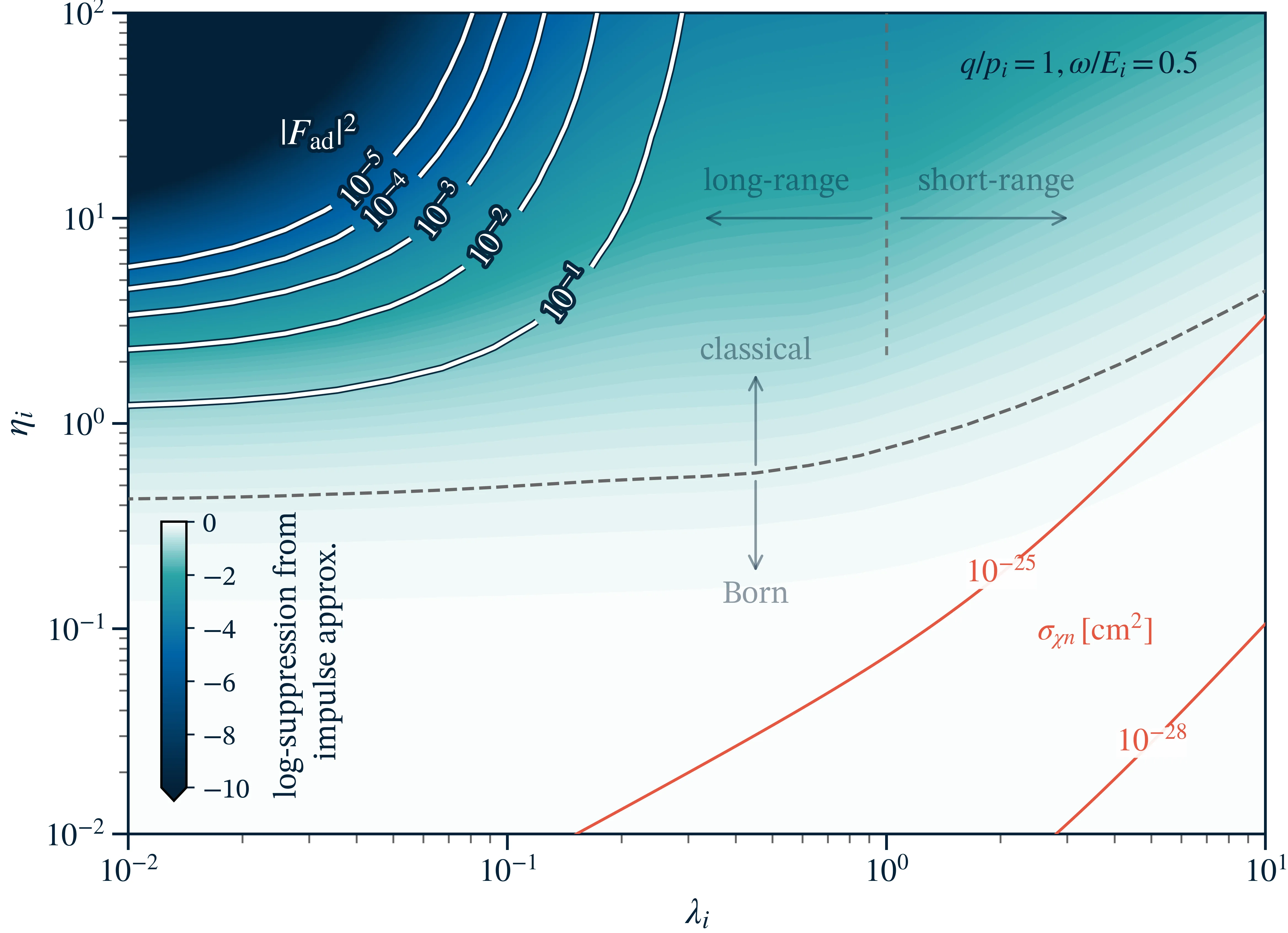
They showed that there is a smooth transition: when the kick becomes very slow, ionization (electron ejection) disappears. It's like pulling a tablecloth off a table: yank it sharply and the dishes stay put; pull it slowly and everything slides along. Physicists call this an "adiabatic crossover." And the good news is that all current dark matter search experiments operate in the regime where the effect is not yet suppressed. So the signal they're looking for is real, not an artifact.
The effect is named after Soviet physicist Arkady Migdal, who described it in the 1940s, but the first rigorous proof for slow collisions has only now appeared.
In Liu Cixin's novel "The Dark Forest," dark matter particles are used as invisible bullets, the Migdal effect could explain how to detect them.