Visitors from the Abyss: How Passing Planets Shaped Earth's Fate express
On the outskirts of the Solar System, thousands of objects the size of a planet lurk. Sometimes their paths cross Earth's orbit. A collision isn't necessary — even a close flyby of such a behemoth can trigger a catastrophe.
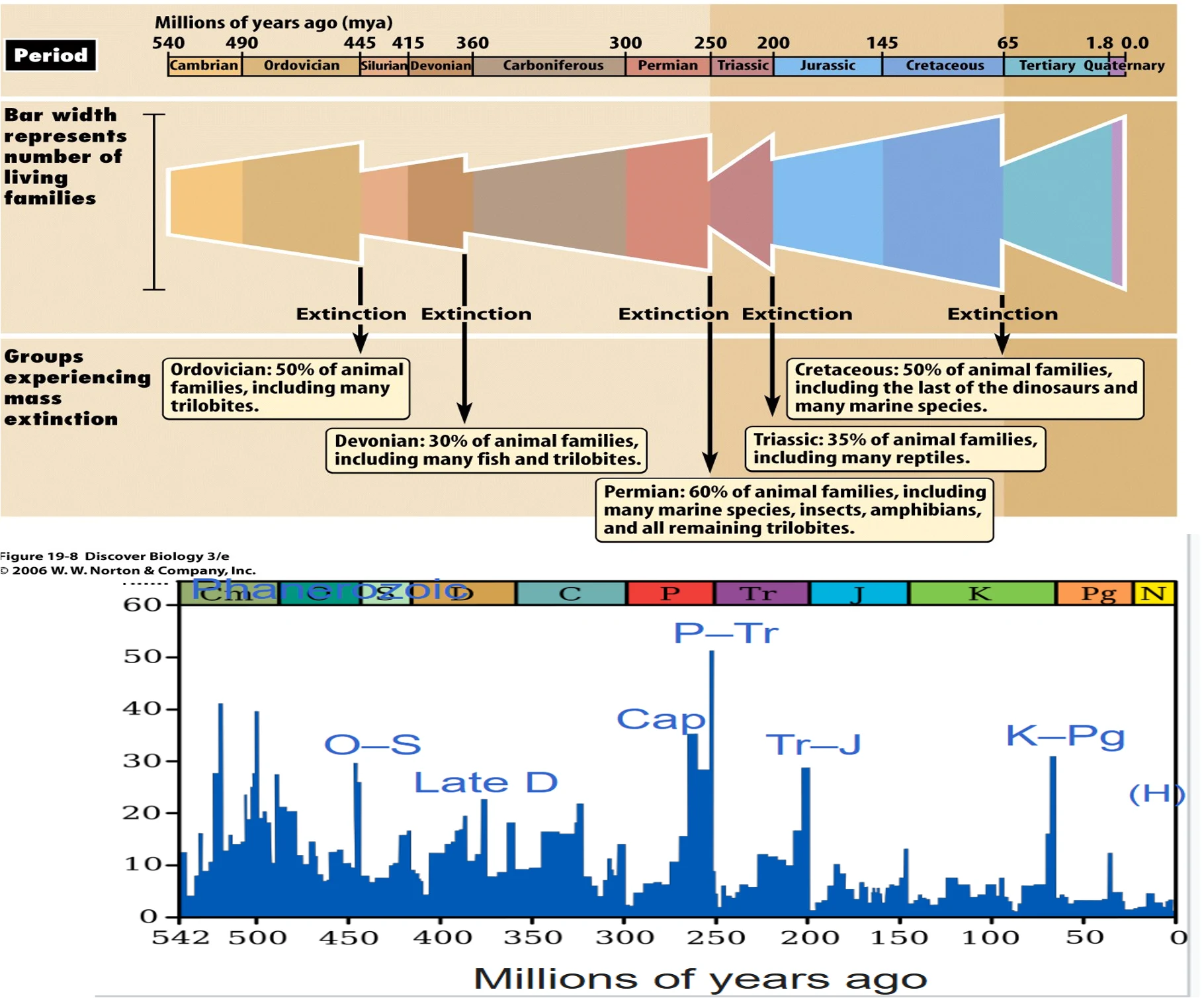
Such events left traces in the rocks: layers of ash and washed-away animals across the globe. The demise of the dinosaurs 66 million years ago might have been caused not only by an asteroid but also by a passing planet. And the Sun itself, over its long life, has snagged such wanderers, briefly intensifying its heat — Earth alternately froze and roasted.
Original abstract
as written by the authors arXiv:2606.17105
Past and recent observations suggest that many planetary mass or dwarf planet objects may exist in the outer Solar System. Gravitational perturbations may occasionally bring some of them into the inner Solar System. The early, rare collision between the early Earth and a Mars sized body is generally invoked to explain the formation of the Moon. More probable than a direct impact, are grazing or near Earth flybys of similar objects. Such passages may have left strong tidal signatures: giant waves, large volcanic episodes, sea regressions, coherent meteor showers, and major climatic perturbations. These mechanisms could have contributed to several major biological mass extinctions over the past $$600$$ million years, as suggested by peculiar correlations in the geological record. Similar events may have occurred several times during the earlier history of Earth. Accretion of mini planets by largest planets and in particular by the Sun may also have occurred many more times over the last four billion years. Possibly producing additional temperature variations on planets and Earth.
Tidal forces knead Io, Jupiter's moon, so relentlessly that it erupts lava nonstop, like a cosmic poker stoking the coals.
In Stephen Baxter's novel "Evolution", a passing neutron star alters Earth's climate and triggers an extinction.