Gravity Without Spacetime express
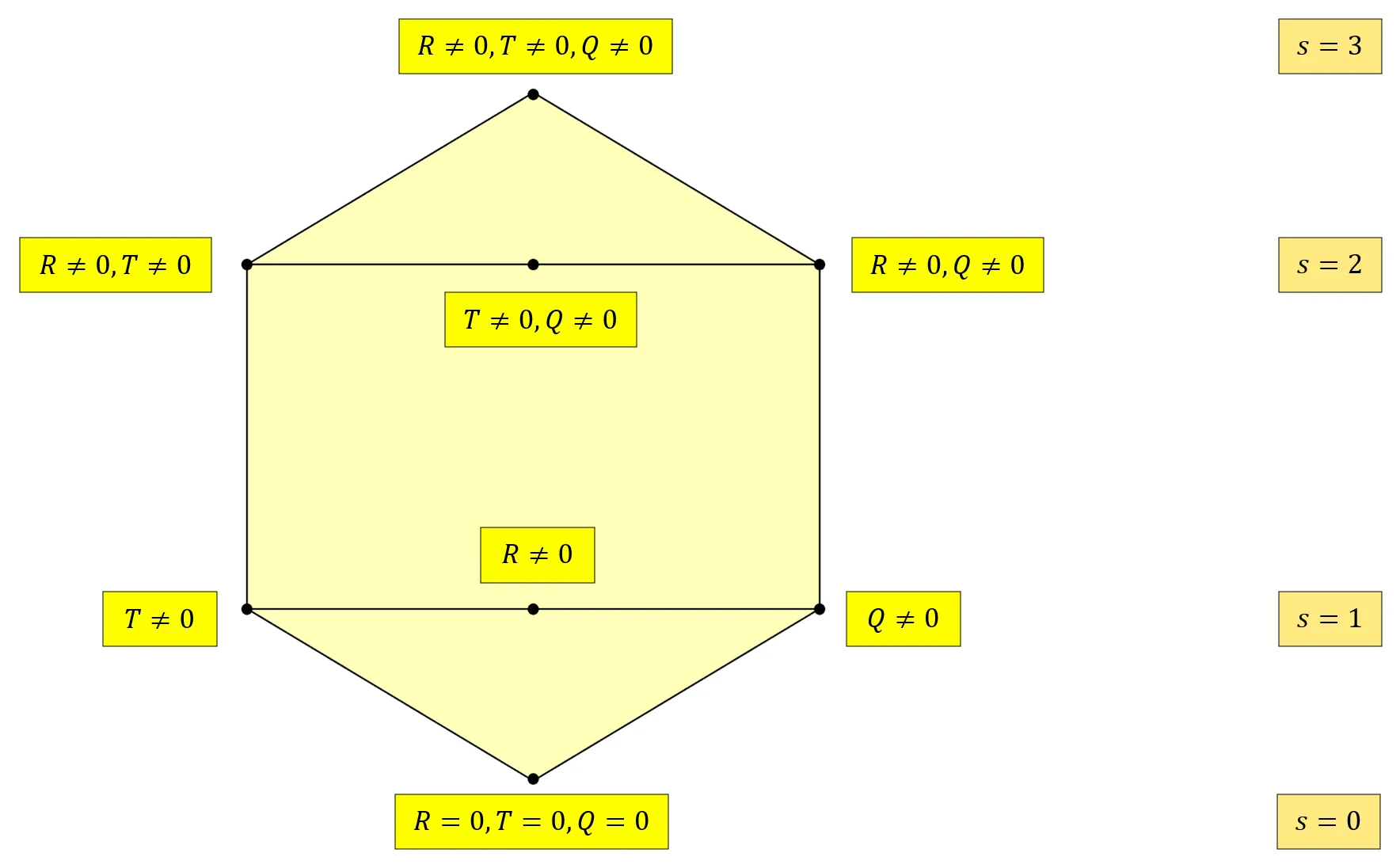
Gravity is usually explained through the curvature of spacetime. Massive bodies press it down like a bowling ball on a stretched rubber sheet. But this approach has two lesser-known twins. In one, gravity arises from torsion (twisting) of spacetime; in the other, from its non-metricity (when lengths and angles change during transport). All three variants yield the same Einstein equations and are called the 'Geometric Trinity of Gravity.'
The authors of the article asked: what was there before spacetime acquired one of these three geometric forms? They proposed a pre-geometric theory — a kind of 'soup' for spacetime. In this soup, there is no metric (a way to measure distances) and no familiar geometry. There are only fields and symmetries, similar to those in Yang–Mills theory. Then, as in the Higgs mechanism, the symmetry spontaneously breaks.
As a result, an effective metric 'precipitates' out of the soup — the very spacetime we live in. Importantly, depending on the choice of gauge (a way to fix extra degrees of freedom), this spacetime can turn out to be curved, twisted, or non-metric. Thus, one and the same deep theory gives rise to all three variants of the Geometric Trinity. It turns out that debates about which geometry is 'more correct' lose their meaning: they are simply different facets of the same whole.
The idea of describing gravity through the torsion of spacetime dates back to Einstein's attempts to unify gravity with electromagnetism in the 1920s.
In Greg Egan's novel 'Schild's Ladder', physicists explore a universe where the very concept of spacetime emerges from more fundamental mathematical structures.