Terahertz resonator boosts superconductivity express
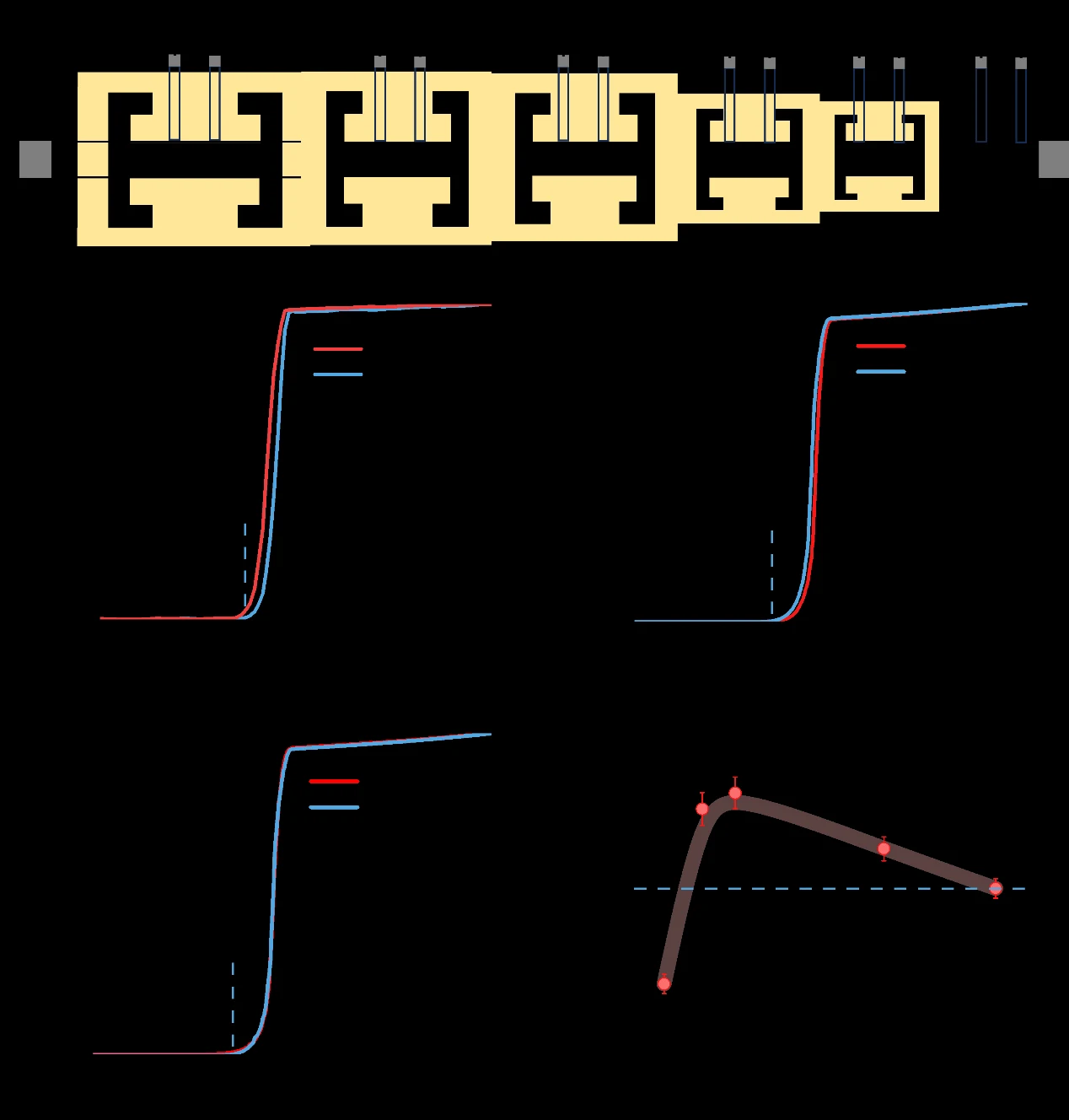
A well-coordinated orchestra of electrons in a superconductor is easily thrown off rhythm. Thermal jolts destroy the fragile order, and resistance returns. For decades, scientists have sought ways to strengthen this ensemble — mostly by changing the material's composition or compressing it to unimaginable pressures. But there is a third, almost ethereal tool: emptiness filled with an electromagnetic hum.
This hum is called vacuum fluctuations — spontaneous bursts of the field that are born and die even in absolute darkness. Placed inside a microscopic resonator, they begin to rock the crystal lattice at strictly defined frequencies. A team of researchers directed this ripple onto flakes of niobium diselenide — a layered material where superconductivity emerges at liquid helium temperatures. The resonator, shaped like a split ring, sang at 2.04 terahertz, just in tune with the atoms' own vibrations.
The enhancement proved finicky: it vanished when the sample was shifted away from the field's antinode, and weakened with frequency detuning. The peak occurred at 2 terahertz — the region where the resonance matches the breathing of the crystal lattice. This means the vacuum doesn't just heat or cool electrons: it tunes the very interaction that binds them into pairs.
Engineers gain a knob for fine-tuning quantum phases. The resonator acts like a conductor who doesn't change the notes but only sets the tempo, and the orchestra plays more cohesively. The next step is to test whether the same method can turn an ordinary metal into a superconductor at higher temperatures, simply by placing it in a properly designed cavity.
Niobium diselenide is a layered material similar to graphite: its flakes can be peeled off with tape. In such a thin state, it becomes superconducting at temperatures unattainable for a bulk crystal.
In Greg Egan's novel "The City of Permutations," vacuum fluctuations become a computational resource: it seems reality is starting to catch up with science fiction.