How Neutrinos Shape the Fate of Merging Stars express
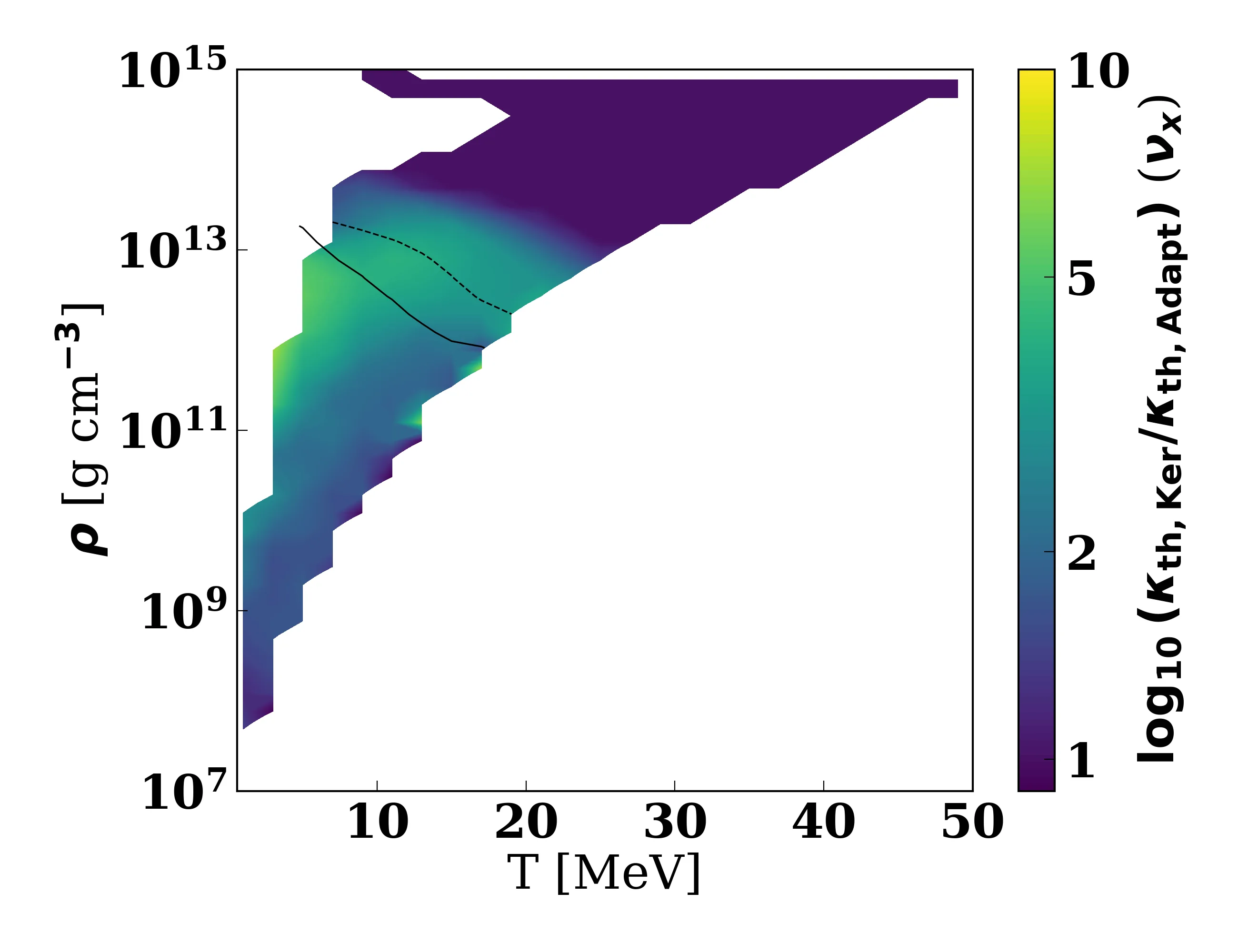
The collision of two neutron stars is a cosmic laboratory where matter is compressed to unimaginable densities. In the first moments after the merger, a hot cloud forms and cools by emitting neutrinos. These ghostly particles carry away energy and dictate how much matter is ejected into space and which heavy elements are synthesized.
Until now, computer simulations described neutrinos approximately: their energy was averaged, and complex reactions were simplified. The authors of the study made the model more realistic step by step. They allowed neutrinos to scatter off electrons — much like a billiard ball changes its trajectory after hitting another ball. And they calculated more precisely how neutrino-antineutrino pairs turn into radiation.
The result was surprising: even small corrections lowered the average energy of heavy neutrinos and increased the ejected mass by 50%—though from a very modest initial level (less than 0.005 solar masses). When the scientists slightly varied the total mass of the binary system, the ejecta either strengthened or nearly vanished, like a faucet being turned on and off.
This approach, though it adds noise to the calculations, for the first time allowed tracking fine details of the neutrino spectrum without excessive computational cost.
In a single second, a neutron star merger produces more neutrinos than our Sun will emit over its entire lifetime.
In Peter Watts's novel Blindsight, neutrino communication is used to talk with an alien spacecraft, so ubiquitous and penetrating are these particles.