Cosmic Radio Bursts: A Mystery a New Telescope Will Unravel express
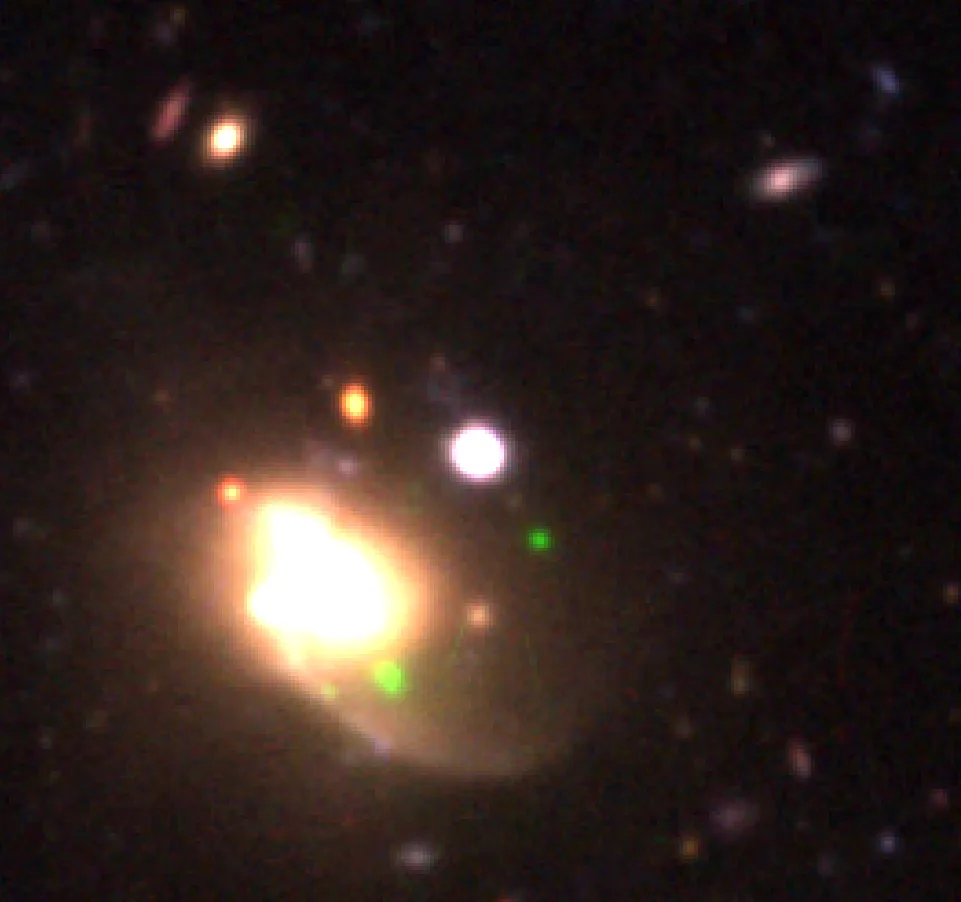
Somewhere deep in space, a radio beacon flashes for a fraction of a second, and then goes dark. Such signals are called fast radio bursts. They come from other galaxies and last from microseconds to milliseconds. In that instant, a burst releases as much energy as the most powerful explosions on neutron stars in our Milky Way. But what exactly serves as such a beacon remains a puzzle.
The prime suspect is a magnetar — a neutron star with a monstrous magnetic field. However, the evidence also points to other culprits: a pair of neutron stars interacting magnetically, or a black hole pulling in matter. The diversity of bursts and their birthplaces hints that there may be several mechanisms, like different orchestras playing the same melody, each in its own style.
The new instrument — the SKA radio telescope (Square Kilometre Array)—promises to be the ideal detector for these signals. Its antennas will spread across the Southern Hemisphere, covering the same patch of sky as the Vera Rubin Observatory. SKA will be more sensitive than current survey telescopes, will be able to search for bursts lasting up to tens of microseconds, and will cover frequencies from 50 megahertz to 15 gigahertz, like listening to the cosmos on all radio waves at once.
Unraveling the nature of fast radio bursts will not only help us understand how these cosmic beacons work, but also allow us to use them to measure distances in the Universe. The bursts will become a ruler calibrated by the very physics of extreme objects. And then a mysterious flash lasting less than a heartbeat will tell us about how the cosmos expands.
Original abstract
as written by the authors arXiv:2606.27546
Fast radio bursts (FRBs) provide a glimpse of high-energy astrophysical phenomena in other galaxies. They point the way to extreme conditions that are currently undetectable by any other known means. These coherent radio flashes have timescales of microseconds to milliseconds, and inferred energies that are comparable to those of the most extreme bursts seen from Galactic neutron stars. However, the nature of FRB sources remains an open question in astrophysics. Magnetically powered neutron stars known as `magnetars' are a leading candidate for explaining the FRB phenomenon, but other plausible progenitors include magnetically interacting neutron-star binaries or accreting black holes. The diversity of FRB burst types and their galactic environments hint that multiple mechanisms and progenitor types may be responsible. Here we discuss the ways in which the SKA can uncover the nature of FRBs. In particular, we focus on the key advantages of the SKA: its Southern Hemisphere location and hence overlapping sky coverage with the Vera C. Rubin Observatory, its high sensitivity compared to existing wide-field FRB surveys, its fast search timescales down to tens of $$\mu$$s, and its broad spectral coverage with bands from 50 MHz to 15 GHz. With these capabilities, the SKA will excel in detecting FRB sources across new frequency ranges and timescales. This will aid in a better understanding of the fundamental astrophysics behind FRBs, which will in turn also contribute to their use as cosmological probes, as explored in companion chapters.
If you could hear radio waves, a fast radio burst would sound like a single click, so brief that the human ear couldn't discern a pitch in it.