Galaxies Without Dark Matter: What Does Tsallis Entropy Reveal? express
Imagine a pot of boiling water. Toss in a handful of pasta, and it quickly overcooks and clumps into a sticky mess. But in a huge restaurant kettle where the pasta floats freely, each piece stays separate. Galaxies follow a similar pattern: the usual laws of heat (entropy) work when particles barely notice each other, but in a tightly bound gravitational "pot," stars and gas are so interconnected that the familiar rules break down. Bekenstein and Hawking once derived an entropy formula for black holes, but for entire galaxies, it often fails.
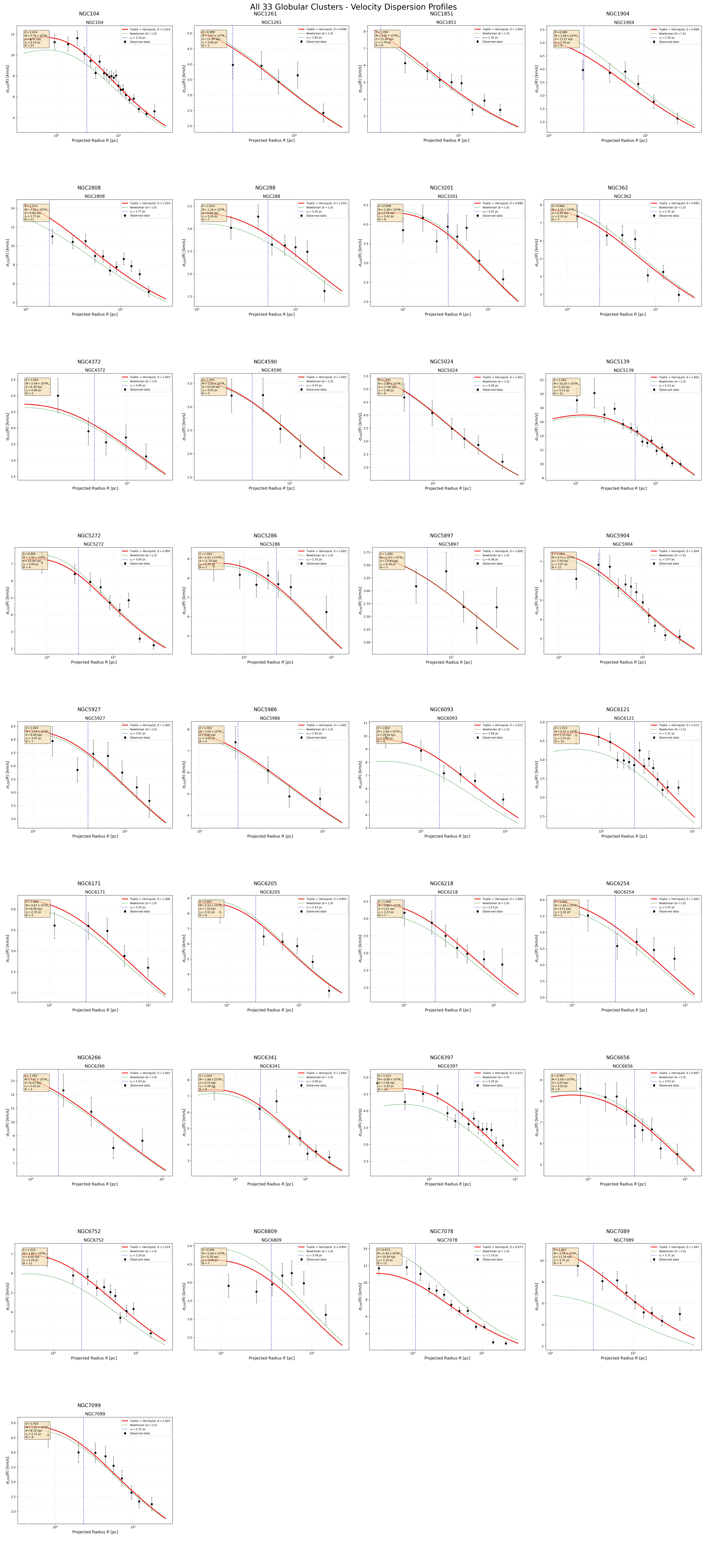
Enter Tsallis entropy Tsallis — a way to measure disorder not for proud loners but for systems where everything is tangled, like spaghetti on a plate. The paper tested several such "spaghetti entropies" and found that only Tsallis's version accurately describes how fast galaxies rotate and how gas moves in their clusters. It turns out that the correction introduced by this entropy does not depend on the system's size, mass, or temperature: it acts like a universal seasoning, working equally well for small globular clusters and giant galaxy clusters.
The most intriguing prediction: there should exist galaxy clusters where gravity is fully explained without dark matter — solely through this special entropy. Such "bare" clusters would be a decisive test: if found, they would point to new physics rather than invisible matter. Similar systems have already been observed on the scale of individual galaxies and globular clusters, but now scientists expect them on larger scales as well. So perhaps the familiar pot of pasta hides a clue to the structure of entire clusters: we just need to find the right entropy recipe.
Tsallis entropy originally emerged not in cosmology but in plasma physics and information theory — for describing systems with 'heavy-tailed' distributions, where extreme events occur more often than ordinary statistics predicts.
In Liu Cixin's novel 'The Dark Forest,' civilizations use the laws of physics as weapons — perhaps manipulating entropy on galactic scales would make the perfect tool for cosmic warfare.