The Universe Could Have Lingered in a Hot Start express
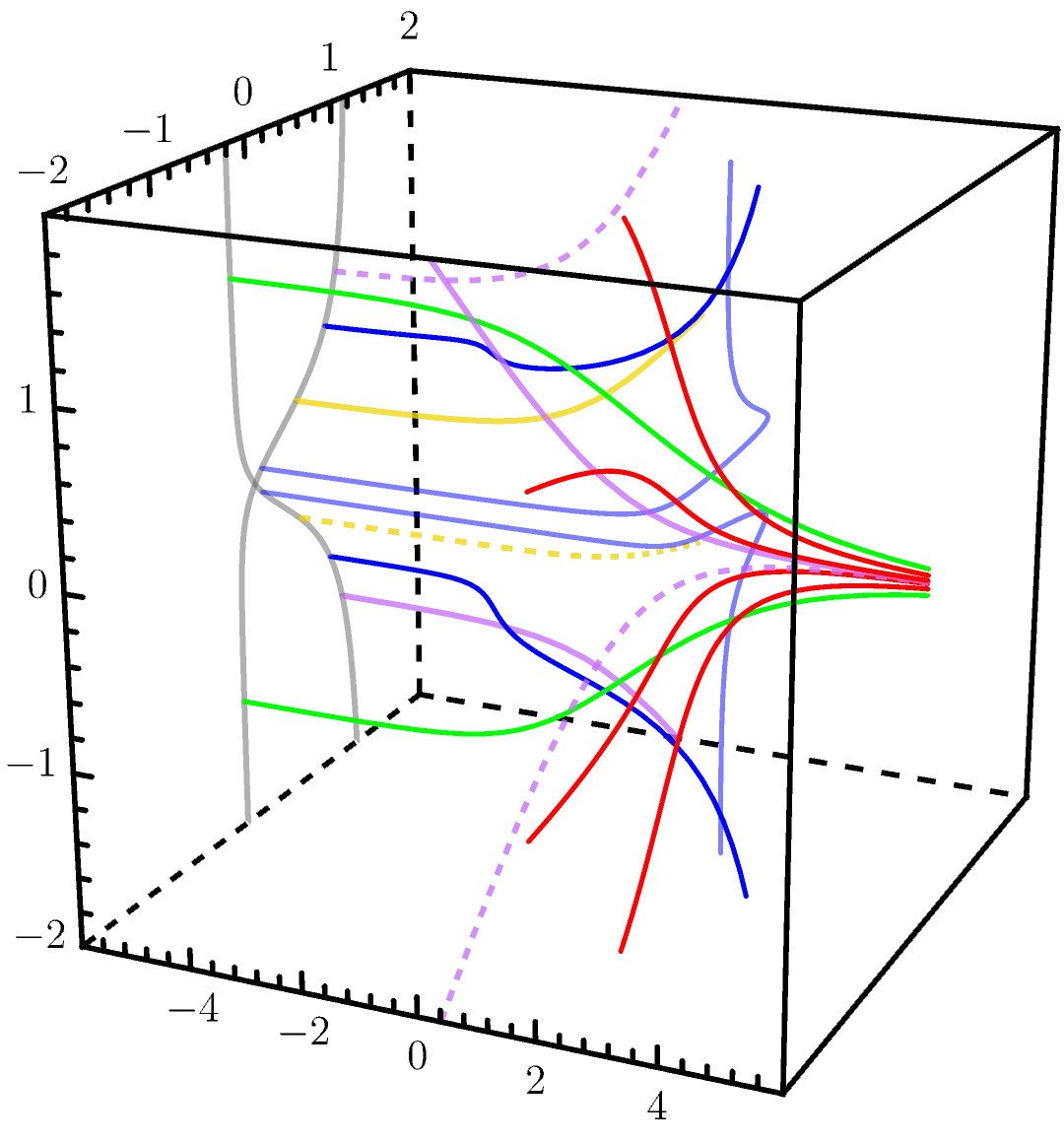
Space is expanding, and that expansion is accelerating. But what if, in the first instants after the Big Bang, gravity behaved differently? The authors of a new study added an invisible field to Einstein's equations that siphons energy from ordinary matter and radiation. Instead of curving spacetime, this energy goes into the field, like a spring compressing without pushing against the walls.
In the early universe, such a field could have nearly stopped expansion. Light would have had time to cross the entire observable volume many times, mixing the temperature into uniformity. This solves the horizon problem: opposite patches of the sky look the same, even though by standard calculations they were never in contact. The scenario is called the "early static hot universe," as opposed to inflation, where space expanded faster than light.
The field was also tried on the cosmological constant problem: that same dark energy pushing the modern cosmos apart. In theory, the field could absorb it, making it invisible to spacetime curvature. But so far the model cannot transition from this stage to the usual hot expansion: it gets stuck in the past, like a record skipping on one groove.
Original abstract
as written by the authors arXiv:2608.07318v1
Gravitational caloric theory (GCT) extends general relativity by introducing a vector field $$S_\mu$$ that is sourced by and non-minimally coupled to the fluid sector, while preserving covariant conservation of the standard fluid energy-momentum tensor. The initial motivation is to trigger early dark energy (EDE) using the total fluid equation of state that encodes the cosmic radiation-matter transition, thereby addressing the associated coincidence problem. The EDE dynamics are analyzed in detail by recasting the background evolution equations as a two-dimensional dynamical system. Poincar\'e compactification probes the global structure of this system and illustrates the role of critical points at infinity in shaping the phase portrait. There are two cosmological applications beyond EDE, both belonging to a broader family of energy-cancelling solutions in which conventional energy components (e.g., the cosmological constant $$\Lambda$$ or an ideal fluid) preferentially excite $$S_\mu$$ rather than sourcing spacetime curvature. First, the $$\Lambda$$-cancelling solution corresponds to the so-called self-tuning mechanism proposed to address the old cosmological constant problem. A major limitation is that our present realization cannot enter the standard hot Big Bang phase and therefore should not be regarded as a complete self-tuning solution. Second, inspired by a nontrivial critical point at infinity in the EDE phase portrait, we propose an \textit{Early Static Hot Universe} in which $$S_\mu$$ offsets the gravitational effect of ordinary hot gas, yielding quasi-static expansion with a decreasing comoving Hubble radius that can address the horizon problem. This scenario offers an alternative to inflation. This paper opens several avenues for further investigation of GCT, including cosmology, gravitational waves, and compact objects. (Abstract abridged to meet arXiv limits.)
In cosmology, the horizon is not the edge of an abyss but simply the distance light has traveled since the beginning of time. If the universe once nearly stood still, the horizon could encompass far more matter than during rapid expansion.
In Asimov's novel "The Last Question," humans seek a way to reverse the heat death of the universe — here, the early cosmos itself finds a temporary equilibrium, as if hovering before a leap.