Alzheimer's disease is a progressive neurodegenerative disorder and the most common cause of dementia. It is characterized by a gradual loss of memory, reasoning, and the ability to perform everyday tasks, accompanied by structural changes in the brain, most notably cortical atrophy — the shrinking of the cerebral cortex. The disease is defined by the accumulation of abnormal protein aggregates: extracellular amyloid-beta plaques and intracellular neurofibrillary tangles of hyperphosphorylated tau protein. These pathological hallmarks disrupt synaptic communication, trigger neuroinflammation, and ultimately lead to neuronal death, particularly in regions critical for memory such as the hippocampus and entorhinal cortex.
History
Alois Alzheimer first described the disease in 1906 after examining the brain of Auguste Deter, a patient with severe memory loss and disorientation. He identified the distinctive plaques and tangles that now bear his name. The condition was named Alzheimer's disease by Emil Kraepelin in 1910.
How it works
The disease process begins decades before clinical symptoms appear. Amyloid-beta peptides, normally cleared from the brain, begin to misfold and clump into plaques, while tau proteins detach from microtubules and form tangles inside neurons. This triggers a cascade of events: synaptic dysfunction, mitochondrial damage, oxidative stress, and chronic activation of microglia, the brain's immune cells. As neurons die, the brain loses volume — visible as cortical atrophy on MRI scans — and the white matter tracts connecting regions degenerate, disrupting neural networks. The progression follows a characteristic pattern, starting in medial temporal lobe structures and spreading through the default mode network, which is why memory and spatial navigation are affected first.
In practice
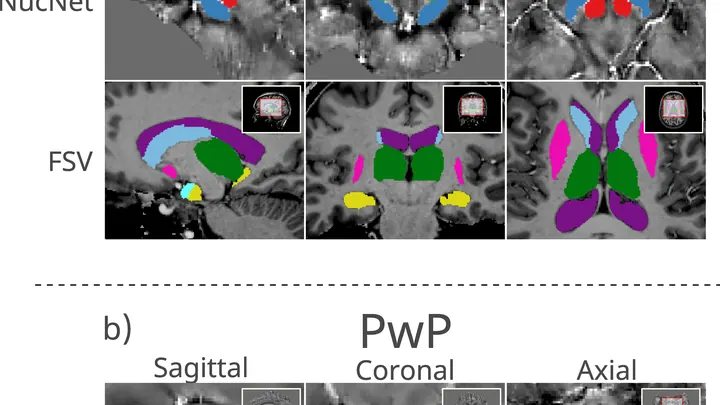
Neuroimaging techniques such as MRI and PET are used to detect cortical atrophy and amyloid deposition for early diagnosis, while computational models of brainnetworks help predict disease progression and personalize treatment strategies.
Fun fact
The brain of an Alzheimer's patient can lose up to 20% of its total weight by the late stages of the disease, with the hippocampus shrinking by as much as 40%.
A watchdog that yawns and turns away instead of barking at an intruder is a bad guard. That is roughly how CD8+ T cells behave in people with type 2 diabetes. These cells are professional killers: they patrol the body, find infected or cancerous cells, and destroy them. But in diabetes, something breaks in the recognition system itself, and the watchdogs stop recognizing the enemy.
The brain is like a city where every cell is a resident, and its fate depends on its neighbors. It used to be thought that the aging of each cell was its own private business: DNA damage accumulated, so the cell wore out on its own. But a new study shows that even a cell's ability to repair its DNA depends on who lives next door.
In a room with a Siemens Magnetom Lumina scanner, a person lies motionless for 45 minutes while the magnetic field draws a map of their brain. Nearby, test tubes for blood, scissors for a lock of hair, and a laptop with memory tests wait their turn. This is how the assembly of the first atlas of healthy aging for an entire country begins in Hyderabad.
In a psychologist's quiet office, a fourteen-year-old fills out a questionnaire about childhood. The scores climb, and on the MRI scans the amygdala climbs with them: a small node deep in the brain that teaches us to fear and to remember danger. In a rat held in a narrow tube for three hours a day, the same structure grows faster than in its calm counterparts.
When you're standing on a bus and the driver suddenly brakes, your brain manages to tense your muscles in a fraction of a second so you don't fall. This automatic response is born deep in the cortex, in an area that plans complex movements, the supplementary motor cortex.
A forest ages in different ways. In one spot the trees thin out gradually, as if they have grown tired of growing, while in another they cling stubbornly to life, spending their strength repairing damaged branches. The aging of the brain's cortex looks much the same when you view it through the lens of thousands of MRI scans.
Old wiring in a house doesn't announce itself right away: the bulbs still glow, but the light has dimmed, and switches sometimes respond with a delay. Neuromuscular junctions age in much the same way. These are the contacts through which a nerve tells a muscle fiber to contract.
In 1965, microbiologists brought back a soil sample from Easter Island, from which a substance later named rapamycin was isolated. It was first used against fungi, then found to slow aging in mice. Now the same drug appears to be able to repair the brain's vascular system damaged by Alzheimer's disease.
A translator who has finally turned off the noise in the hall hears every word for the first time. In much the same way, urinary aging clocks long confused the noise of the kidneys with the signal of age: the kidneys filter urine, and their work changes the mix of protein fragments by which we judge the wear and tear on the body.
In a large orchestra, every musician knows their part: the violinist carries the melody, the cello holds the bass, the flute comes in during the pauses. If the violinist suddenly started playing the horn part, the music would fall apart, even though the instruments themselves would remain intact.
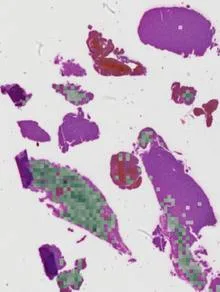
Imagine trying to figure out what happened in a room from the sound that lingers after a gunshot. The shot is gone, but the echo still bounces off the walls. That's roughly how a neuropathologist views a brain tissue section where the tumor itself is absent: the biopsy only captured healthy tissue that reacted to the disease.
A tightly stretched membrane, squeezed into a narrow case, decides on its own where to burst. So does a cell: when it is cramped, the point of division shifts from the middle, and the two halves come out unequal. Previously, it was thought that such asymmetry is predetermined by chemical labels, but the new work shows that mechanics alone is enough.
A long-lived cell is like a house where, instead of turning off the lights to save money, you switch them to emergency lighting: the bulbs dim, but life still glows. In amyotrophic lateral sclerosis (ALS), such house-neurons show up in the spinal cord, and scientists have now seen for the first time exactly how they shift into this mode.
A city power plant is running itself into the ground, but the city doesn't know it yet. Lights are on in its homes, the streets are noisy, and only the engineers notice that the turbines are spinning more slowly and voltage is dropping in the wires. This is what an aging brain looks like: the neurons are alive, but their internal power plants, the mitochondria, are already losing capacity.
In an orchestra that has been playing the same symphony for years, the musicians gradually start to drift: each one plays on their own, yet the notes remain the same. That is roughly what happens to cells as they age. Scientists have come up with a way to measure this discord, that is, how faithfully each cell follows the shared program of gene expression.
In an orchestra rehearsing a symphony, every musician must take their part on cue. If a violinist suddenly decides he's a cello, and a flutist starts playing the trumpet's part, the music turns into noise.
A Greenland shark swims through cold water in its fourth century, and with every passing year its odds of dying do not rise but fall. This is not a miracle, but the result of an evolutionary trade-off that has so far eluded theory. An organism is like a family budget that cannot be spent twice: every unit of energy can go into reproduction, growth, or body repair.
An aspirin tablet is like a key that doesn't fit every lock. In a large study of older adults, this key usually refused to turn: life without disability was not extended. But for some locks, especially those belonging to people with diabetes, excess weight and high blood pressure, the key did work. Why that happens remained a mystery for a long time.
In 2023, in Belgium, 101 people aged 50 to 69 spent several days in a lab where their brains were scanned, their sleep was recorded, and they were asked to solve memory and attention tasks. That is how the COFITAGE dataset was born, describing each participant from five angles: molecular, structural, physiological, genetic and cognitive.
In the orchestra of our immunity there are three conductors, and each has a score of their own. One tells the musicians to play softer when a threat appears in the hall, another does the opposite and cranks up the noise, and the third conducts in such a way that the hall fills with sound, though nobody can say why.
In the dark room of the scanner, a person watches for rare flashes on a screen. An infrared camera records their pupil a thousand times per second, while an MRI scanner simultaneously logs which brain areas light up. In this way, 89 volunteers aged 19 to 78 helped scientists see how the pupil becomes a display on which the brain outputs two different signals.
The orchestra plays a funeral march, and the conductor is not to blame for the choice of notes. But if he waves his baton more energetically, the music grows louder and the walls of the hall shake. Likewise, microglia, the brain's immune cells, don't start the disease, but they can turn a quiet fading into a collapse.
The brain as a house built too spacious: lovely to live in, but expensive to maintain. Parkinson's disease is usually pictured as the destruction of that house, with neurons dying and structures shrinking.
Imagine someone hauling two sacks up a hill. One is stuffed with sugar the body cannot process. The other is filled with the years the body has lived faster than the calendar. While the sacks are light, the climb is manageable. But if both are filled to the brim, the legs give way, and the person collapses not with one disease but with several at once.
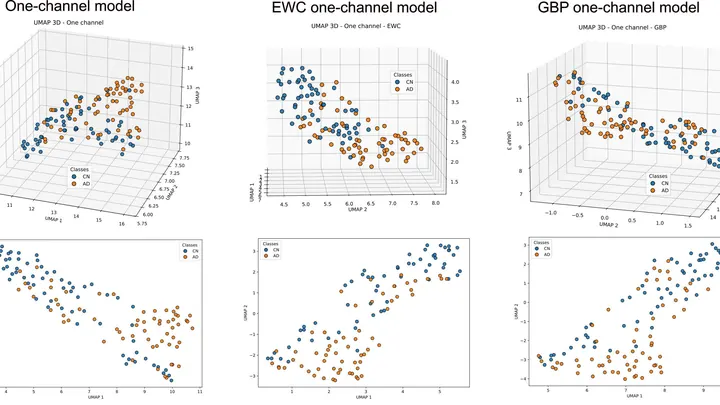
In a lab where patient data resemble a scattering of gold dust, every test is a speck, and Alzheimer's disease is a river washing away the precious metal. Scientists set a task for the neural network: to tell whether a person received rapamycin, a drug that slows cellular aging, or not.
At a crowded reception, an older person asks their conversation partner to repeat themselves again and again: the words drown in the hum of voices. This is what the bridge looks like, the one that carries sound from the ear to meaning. While that bridge holds, noise merely gets in the way, but it doesn't cut the conversation short.
Picture an old house where every room ages in its own way: in one, the wallpaper has faded; in another, the floorboards creak; and in a third, everything looks brand new. The brain ages much the same way: different cell types accumulate changes at different rates, and until recently we had no tool to peer into each "room" and measure its age separately.
An older person says with confidence that the word "sunflower" was on the list, even though only "almond" was there. Both words are tied to oil, and that semantic thread was enough for the brain to fill in the memory. Memory works like a compass: one needle points to meaning, the other to the order of events. With age, one of the needles starts to outweigh the other.
In the orchestra of the immune system, B cells play the antibody part, while the sex chromosomes and gonads act as conductors setting a different tempo. Until recently, scientists could not work out which of them calls the shots: the genes written into the chromosomes, or the hormones produced by the gonads.
The classroom goes quiet after the lesson, but the echo still rings in the child's head: faces, objects, places. It is this echo, not the lesson itself, that decides what will stay in memory. For the first time, researchers have caught it in children aged 6 to 17.
Children memorized scenes inside an MRI scanner: they were shown a room, then an object or a face in a particular spot.
Picture a muscle's control panel where buttons are removed with age. First to go are the buttons that handle hormone response, then those that kick off recovery after exercise. Researchers studied cell nuclei from vastus lateralis muscle biopsies from 287 donors aged 20 to 79 and saw exactly how these buttons disappear at the level of DNA packaging.
A river begins high in the mountains: one channel carries more water, another less. In the same way, a person's social position sets the course of their life, but it doesn't carve the brain directly; it does so through tributaries: habits, blood pressure, blood sugar. Scientists measured these tributaries in 36,878 people to find out which ones carry away the most years.
A doctor spends years learning to recognize diseases from brain scans. First, they excel at spotting signs of aging, then they master tumors, and suddenly they start confusing what they knew before. Many neural networks behave much the same way: new knowledge overwrites the old.
The brain is an orchestra where each group of instruments must come in on time. In Alzheimer's disease, the musicians lose their notes: connections between brain regions get tangled, and the harmonious performance turns into cacophony. Scientists have long seen these disruptions on scans, but they didn't know if the situation could be fixed by touching just one string.
When the conductor leaves the orchestra, the musicians keep playing from memory for a while. But without a unified rhythm, each one starts to speed up or slow down on their own, and the harmonious symphony turns into disjointed noise. According to new research, the brain and heart behave much the same way in the last hours of a person's life.
A tightly stretched sheet lies on a table for days. Outwardly it's still, but the fabric fibers retain tension — loosen one edge slightly, and wrinkles will run across it, rearranging the whole pattern. That's roughly how a layer of epithelial cells behaves at rest. It doesn't just freeze; it accumulates mechanical stress — a kind of cellular memory of past movements.
For one person, the disease begins with a tremor in the hand — the cup dances on its saucer as they carry it to the table. For another, the legs suddenly refuse to move smoothly: the step becomes short and shuffling, as if the floor were suddenly covered in a sticky layer. These are not two different diseases but two faces of the same one — Parkinson's disease.
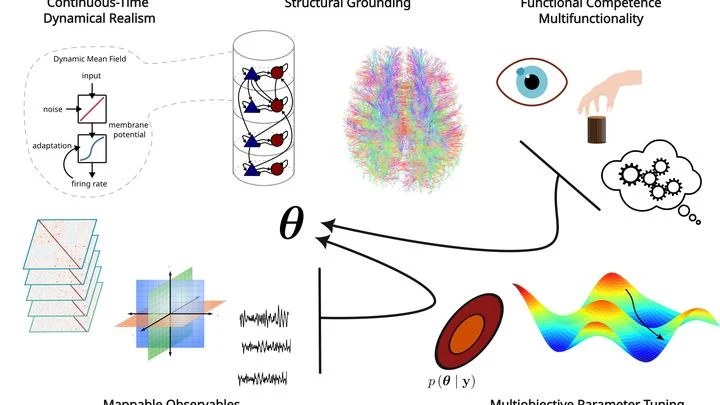
Engineers are building a car. Some assemble an exact replica of the engine, every piston and spark plug, but the car doesn't move: there's no steering wheel or wheels. Others build a fast self-driving go-kart, but its engine is made of playdough and doesn't resemble a real one. This is roughly the situation in brain science.
An orchestra at its first rehearsal without a conductor. Violins come in at the wrong time, brass is late, and instead of a symphony, you get cacophony. That's roughly how a computer model of the brain behaves when you remove special cells — von Economo neurons.
A person hunting for keys mentally runs through places where they might be. A bird that tucked hundreds of seeds into crevices in autumn retrieves them flawlessly in winter. How can a brain hold so many addresses when all birds have roughly the same number of neurons? The answer lies in geometry.