Life from Bubbles: How Prototype Cells Gained Evolution express
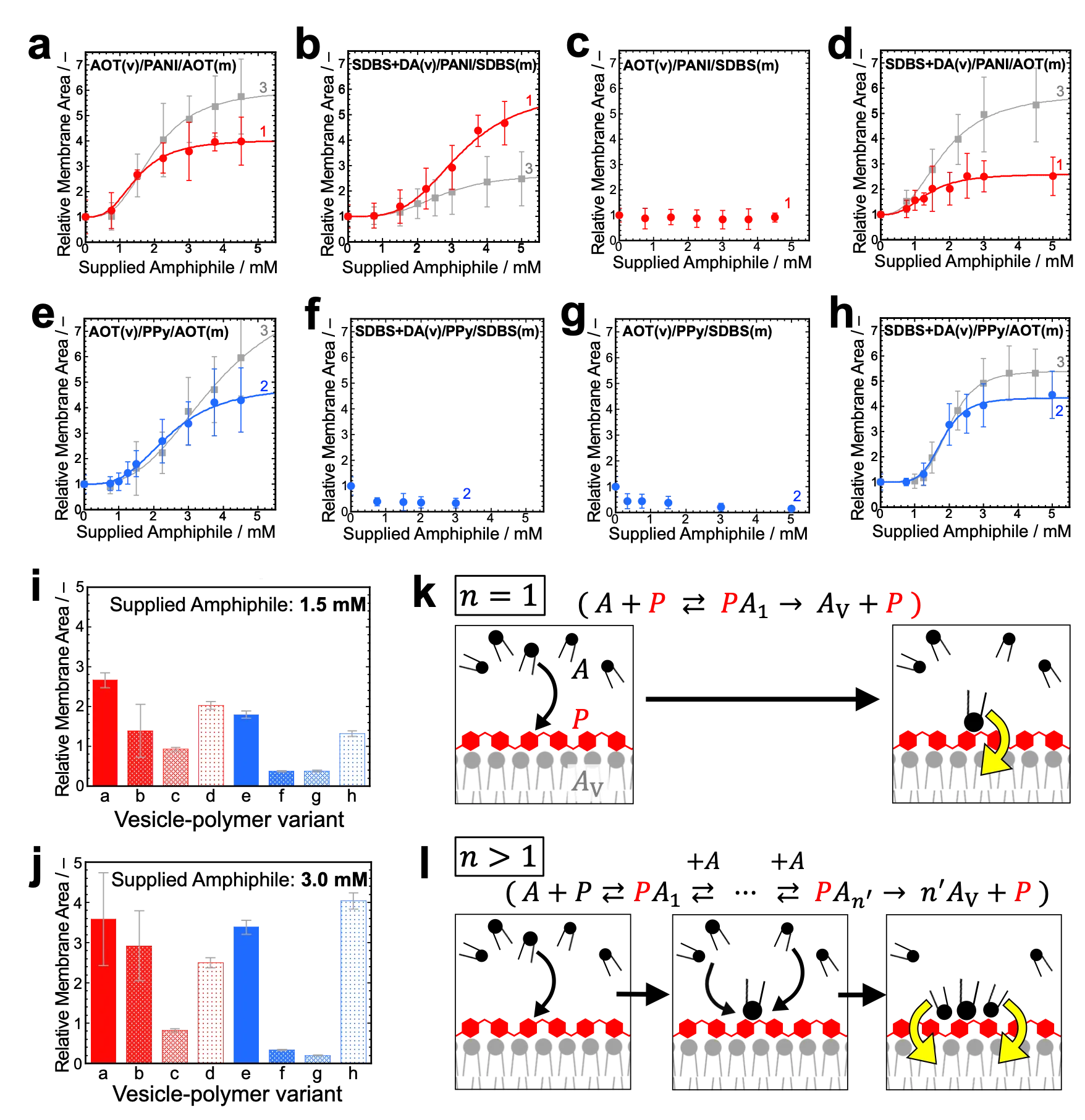
Life begins with a bubble. In a warm puddle on ancient Earth, fat molecules could gather into tiny spheres — prototypes of cells. Inside such a sphere, a polymer happened to be present that accelerated the uptake of new fats from the surrounding water. The bubble grew, divided, and passed its composition to offspring.
Each variant grew in its own way. Some bubbles eagerly absorbed fat and swelled, others barely changed, and still others shrank. Growth is described by a simple formula, like the rate of a chemical reaction. The result is a fitness landscape: which bubble wins depends on how much food is around. This is evolution in a test tube — without genes, only physics and chemistry.
A bubble that uses available food better than others leaves more offspring. After a few generations, its composition begins to dominate. This is the same mechanism as in living beings, only instead of DNA, a simple mixture of fats and polymers.
Original abstract
as written by the authors arXiv:2608.18425v1
Understanding how life-like behaviors can emerge from simple molecular assemblies and primitive compartments remains a central challenge in origins-of-life research. Synthetic minimal cells provide a bottom-up platform for investigating, from scratch, the minimal physicochemical principles underlying compartment growth, reproduction, and evolution. Previously, we developed a vesicle/polymer-based compartment system in which the vesicle membranes template the formation of a catalytic polymer. This polymer promotes selective incorporation of amphiphiles into the vesicle membrane, driving vesicle growth while maintaining the compositional identity and enabling spontaneous deformation and division over several generations. Here, we report about experiments in which we advanced this system beyond reproduction by systematically constructing eight synthetic minimal cell variants from combinations of two template vesicles, two catalytic polymers, and two supplied amphiphiles. The variants exhibited distinct, composition-dependent vesicle growth responses, ranging from pronounced growth to suppressed growth or vesicle shrinkage. These growth responses were described by the Hill kinetics and characterized by three parameters, revealing a multi-dimensional fitness landscape shaped by environmental conditions, in which the relative advantage of each variant depends on both composition and amphiphile availability. This framework links molecular recognition, compositional inheritance, and differential growth, providing a physicochemical route toward evolvable synthetic minimal cells.
The artificial cells in this experiment divided on their own, without any external commands — simply because they grew and became unstable.