Life from Bubbles: How Prototype Cells Gained Evolution express
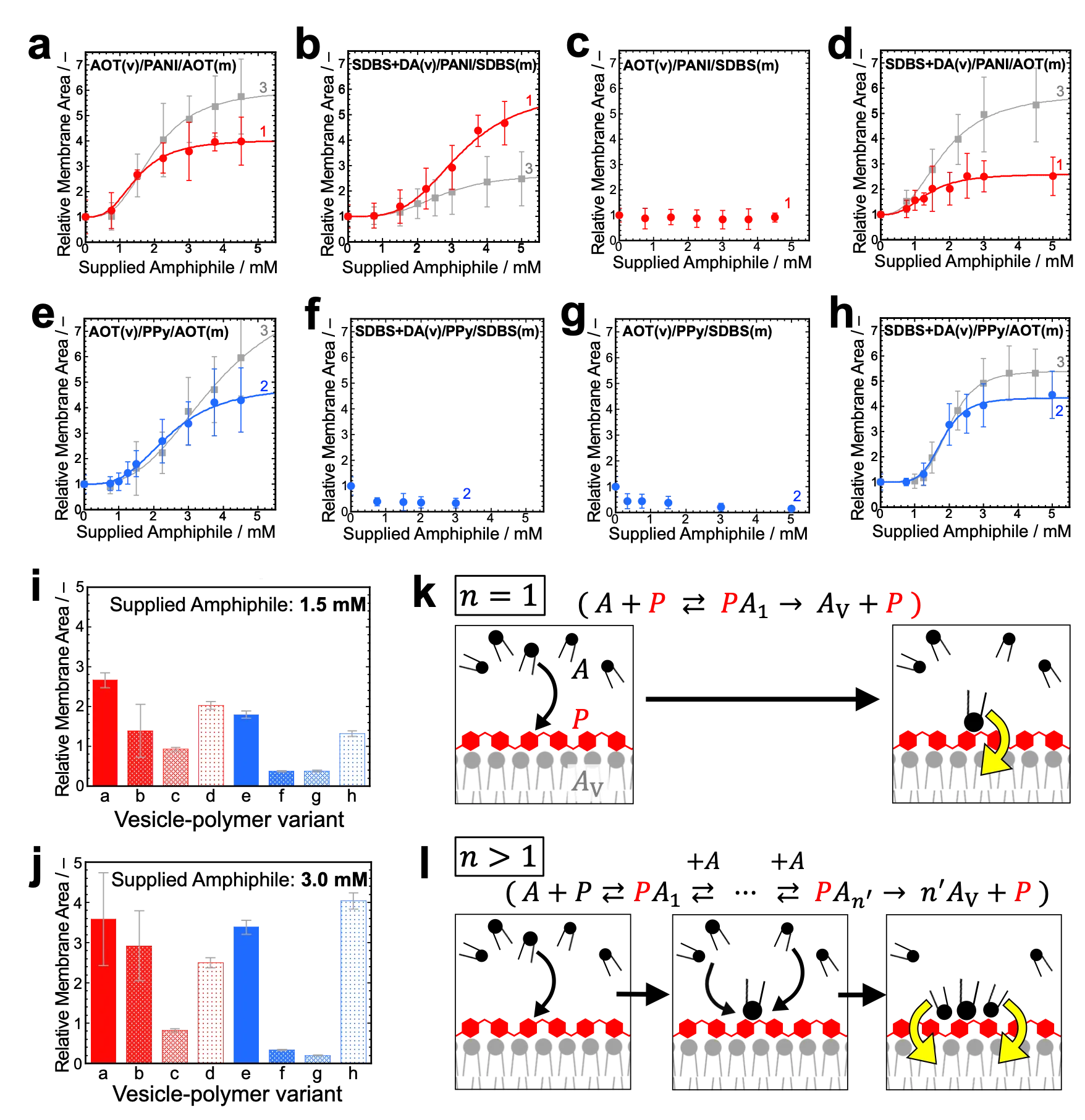
Life begins with a bubble. In a warm puddle on ancient Earth, fat molecules could gather into tiny spheres — prototypes of cells. Inside such a sphere, a polymer happened to be present that accelerated the uptake of new fats from the surrounding water. The bubble grew, divided, and passed its composition to offspring.
Each variant grew in its own way. Some bubbles eagerly absorbed fat and swelled, others barely changed, and still others shrank. Growth is described by a simple formula, like the rate of a chemical reaction. The result is a fitness landscape: which bubble wins depends on how much food is around. This is evolution in a test tube — without genes, only physics and chemistry.
A bubble that uses available food better than others leaves more offspring. After a few generations, its composition begins to dominate. This is the same mechanism as in living beings, only instead of DNA, a simple mixture of fats and polymers.
The artificial cells in this experiment divided on their own, without any external commands — simply because they grew and became unstable.