A Faint Ghost Galaxy in the Virgo Cluster express
The night sky only looks black: telescopes reveal millions of galaxies, but some are so dim they blend into the background. Astronomers caught just such a "nearly invisible" one by chance while observing the Virgo Cluster with the two-meter telescope at Teide Observatory.
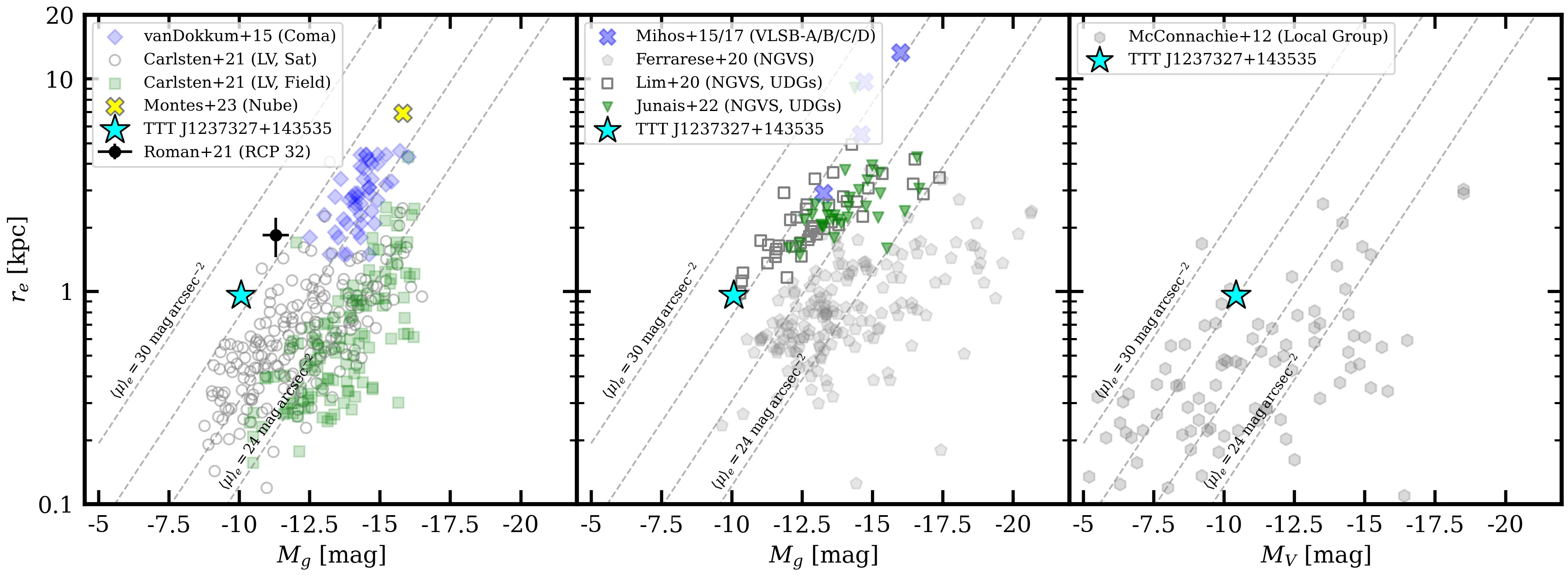
The galaxy is named TTT J1237327+143535. Its central light is 27.9 times fainter than the darkest sky the human eye can see without instruments. To put it in perspective: it's like trying to spot a firefly in front of a spotlight. Yet this galaxy isn't a tiny dot: it's a stretched cloud about 3,000 light-years across, roughly the size of thirty Milky Way disks laid side by side.
It has very few stars: the total stellar mass is just two million solar masses. For comparison, our galaxy has about one hundred billion times more stars. Almost all the matter in this dwarf galaxy is dark matter, which doesn't emit light but holds the stars together through gravity.
Finding one such galaxy in the Virgo Cluster is just the tip of the iceberg. Future sky surveys, such as those with the Vera Rubin Observatory, should uncover thousands of similar objects. Then astronomers can understand how galaxies that lacked the "building material" for bright stars are born.
The surface brightness of this galaxy is so low that it doesn't show up even in most deep sky images — special processing techniques are needed to separate its light from detector noise.