Extra Electrons in Cosmic Rays ✎ express
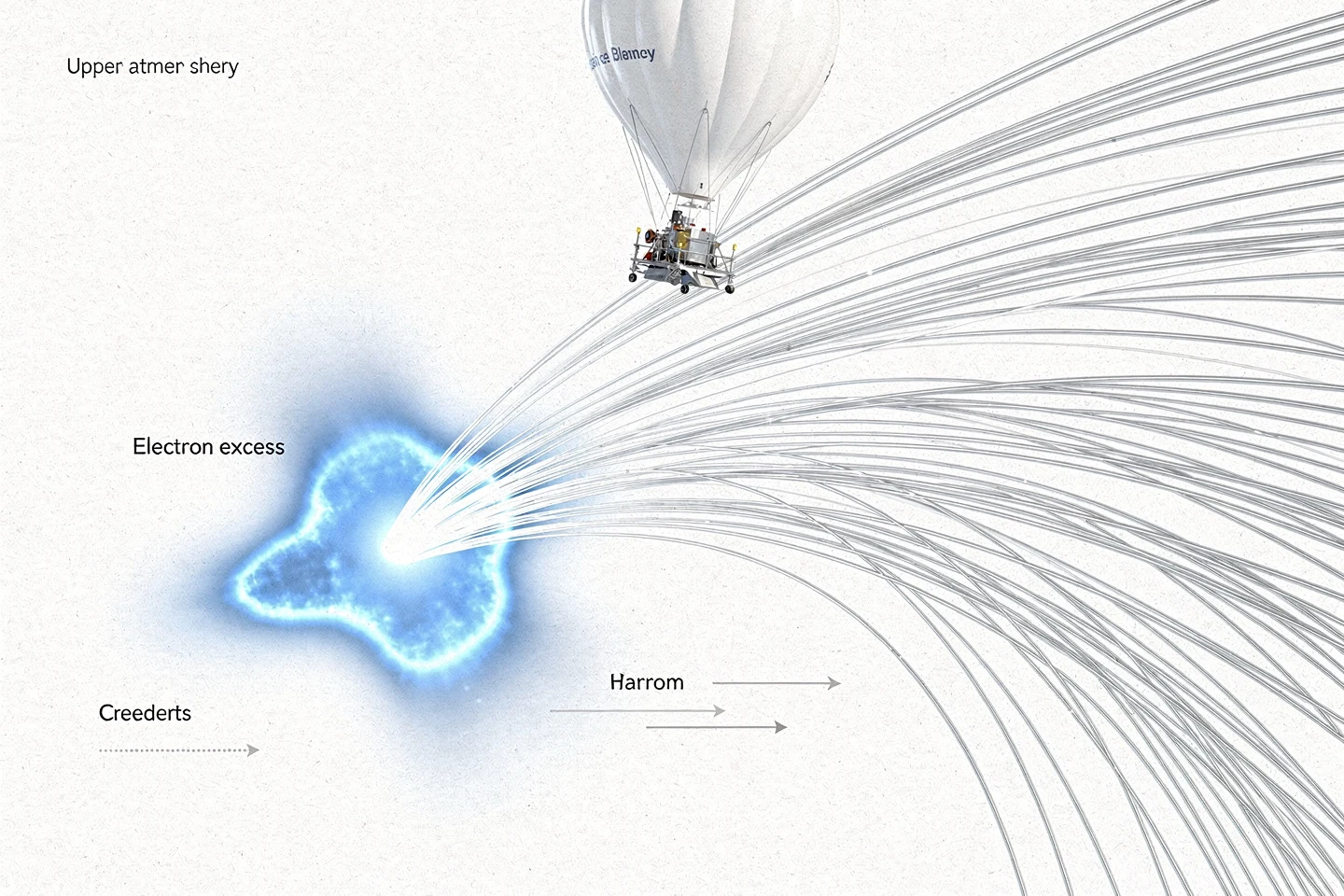
High above Antarctica, a balloon carried an instrument that caught electrons from space. These particles come from distant stellar explosions and other powerful events. The instrument measured their energy, like the force of an impact. And in one energy range, there were more impacts than calculations predicted.
The first analysis of the data showed a broad bump on the graph: as if an extra stream had appeared in the particle flux. Now the same data have been reprocessed using different methods. It turned out that the bump is not smooth but consists of several narrow peaks. As if individual drops were discerned in the noise of rain.
Comparison with data from another experiment, a telescope on a satellite, showed that the peaks are not seen by everyone. Possibly this is a trace of some unknown source or an artifact of the measurements. But the mystery remains: where do so many fast electrons in space come from?
Electrons with energies of hundreds of GeV pass through the atmosphere and generate entire showers of secondary particles that can be detected on the ground.