The 'knee' is a sharp break in the cosmic-ray spectrum, the plot of particle flux versus energy, where the number of detected particles drops much more steeply than at lower energies. For decades, this feature has been a key puzzle in astrophysics: it marks the energy where something fundamental changes in the sources or propagation of cosmic rays. The knee occurs at roughly 10^15 electronvolts (one petaelectronvolt), and below it the spectrum follows a smooth power law, while above it the flux falls off more rapidly.
History
The knee was discovered in 1958 by the Italian physicist Giuseppe Cocconi, who noticed the spectral break while analyzing air-shower data. The name 'knee' was coined by analogy to the bend in a leg.
How it works
The knee is thought to arise from a combination of effects. One leading explanation is that cosmic-ray sources, likely supernova remnants, can only accelerate particles up to a certain maximum energy that depends on the particle's charge; heavier nuclei reach higher energies, so the knee is the superposition of cutoffs for progressively heavier elements. Another factor is propagation: as particles travel through the galaxy, their paths are bent by magnetic fields, and higher-energy particles escape the galaxy more easily, reducing their flux at Earth. The precise shape of the knee thus encodes information about both acceleration and transport.
In practice
Studying the knee helps calibrate large cosmic-ray observatories like the Pierre Auger Observatory and informs models of particle acceleration in astrophysical shocks.
Fun fact
Recent measurements show that the knee is not a single sharp break but a sequence of 'ankles' and 'knees' for different nuclei, with iron nuclei bending at about ten times the energy of protons.
The night sky looks serene, but it is actually pierced by an invisible rain of charged particles: cosmic rays. Scientists have long tried to figure out where the most energetic ones are born. Until recently, it was thought that our Galaxy supplies particles up to about 4 EeV, the so-called "ankle" in the spectrum.
Cosmic rays are particles that race across our Galaxy at enormous speeds. Their energies can be millions of times higher than those of particles in the most powerful accelerator on Earth. But the higher the energy, the fewer such particles there are: the plot of their numbers shows a noticeable kink, which is called the knee.
Cosmic rays do not travel in straight lines. Charged particles accelerated to enormous speeds loop through the Galaxy's magnetic field like dust motes in a gust of wind. It's usually assumed that they simply scatter along and across field lines.
In an orchestra, each musician plays their own part, but at a certain moment all instruments pause on a single note. Cosmic rays behave somewhat like this — particles flying toward us from distant stars.
An X-ray of a knee with osteoarthritis looks like a road map where the roads have narrowed and bumps have grown along the shoulders. Doctors look at this map and assign a grade from zero to four — how worn out the joint is. The problem is that two experienced specialists often see the map differently: one gives a three, the other a four.
When a heavy nucleus slams into interstellar gas at enormous speed, it shatters into pieces. Those pieces (lithium, beryllium, boron) then fly onward, and their abundance in the cosmic-ray flux depends on how the breakup unfolded. Conventionally, one expected the proportions to shift smoothly with energy, like the taste of soup when you keep adding water.
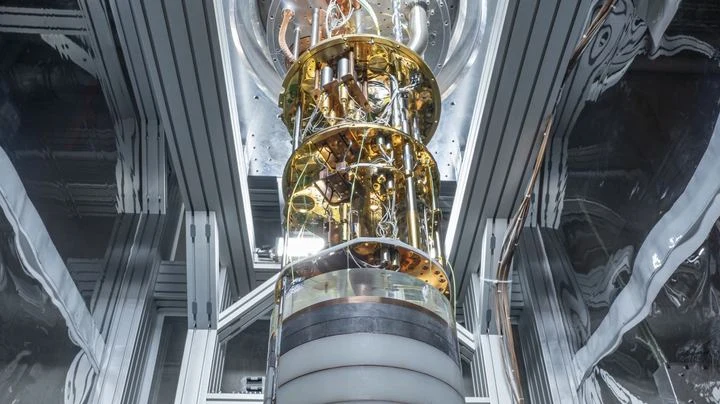
In a dark chamber where the temperature sits just four degrees above absolute zero, a sapphire crystal the size of a grain of rice lies waiting. When a neutrino, a ghostly particle that barely notices matter, flies through it, the crystal shudders and warms by a tiny fraction of a degree.
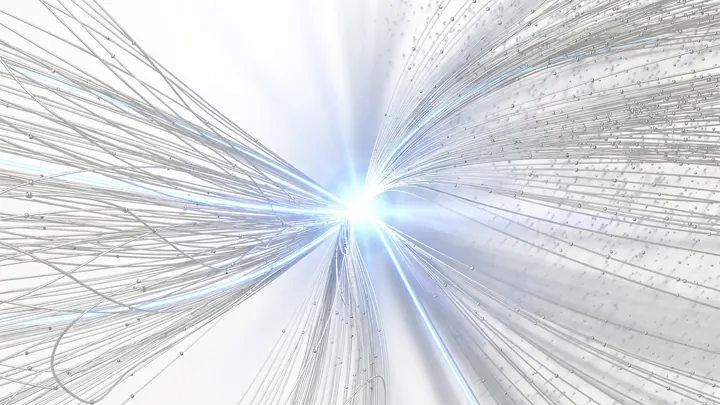
Cosmic rays are charged particles that constantly bombard Earth from deep space. When one of these particles enters the atmosphere, it collides with air nuclei and spawns a whole cascade of secondary particles: electrons, muons, photons.
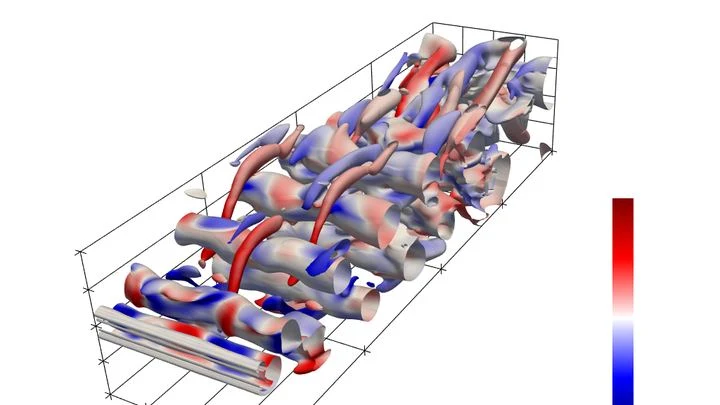
A thin plate stands across a flow of water or air. Behind it, a wake forms — a region where the flow becomes tangled and mixed. Usually, such a wake becomes turbulent when the flow speed is high enough, quantified by the Reynolds number.
Cosmic rays are charged particles that fly to us from the depths of the Galaxy. If you plot how many particles arrive at each energy, the line runs smooth, then suddenly drops sharply.
High above Antarctica, a balloon carried an instrument that caught electrons from space. These particles come from distant stellar explosions and other powerful events. The instrument measured their energy, like the force of an impact. And in one energy range, there were more impacts than calculations predicted.