Cosmic Showers Reveal the Composition of Cosmic Rays express
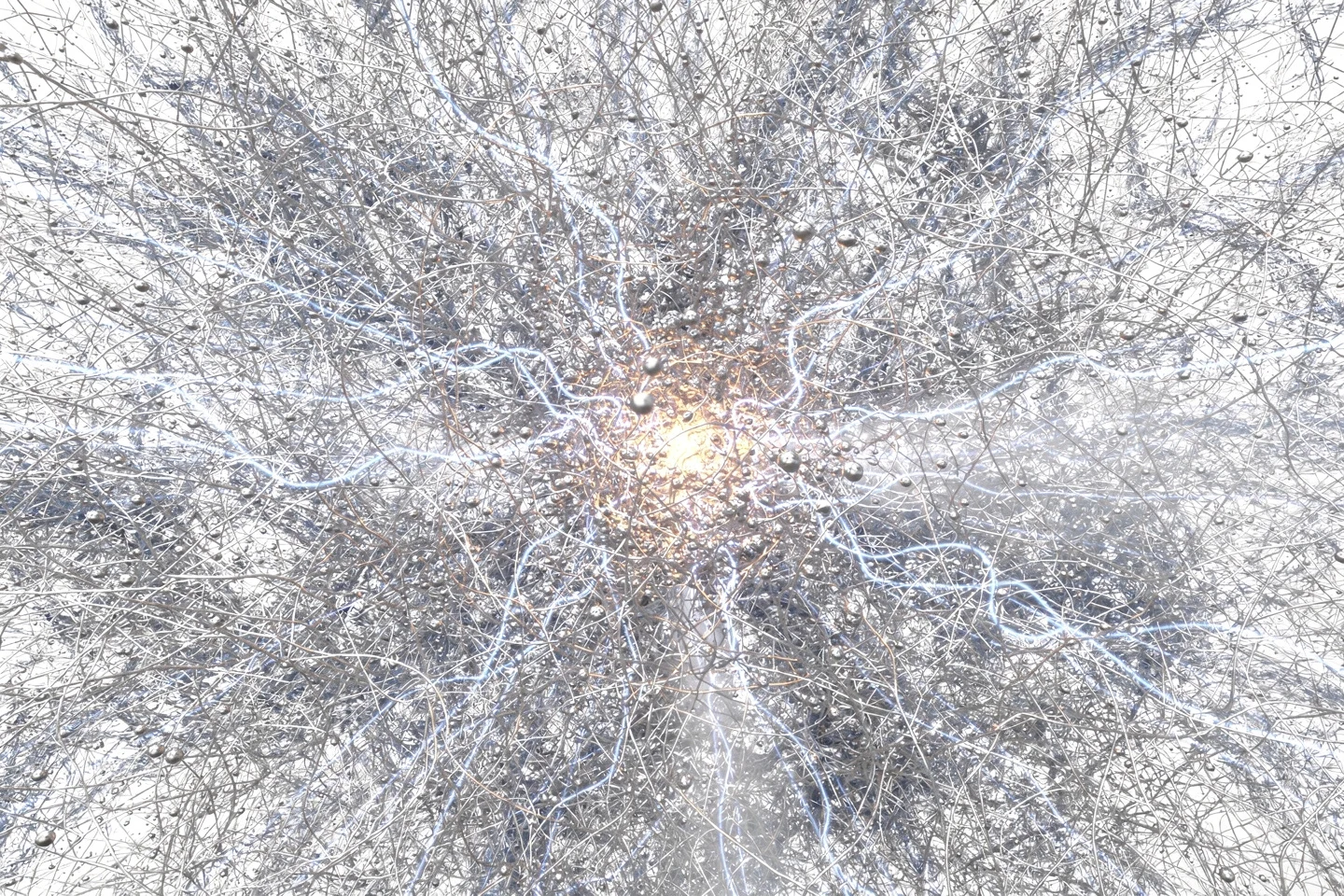
At night over the Siberian taiga, a faint blue light sometimes flickers. It's not the aurora borealis but a cosmic-ray shower: a single particle from deep space slams into the atmosphere and shatters into millions of secondary particles. They race toward the ground in a broad front, like a ripple from a stone dropped into water, and make the air glow.
The Tunka-133 and TAIGA-HiSCORE arrays watched for such flashes for seven years. Dozens of sensors scattered across the taiga over an area of several square kilometers captured the light. By how far from the shower axis the light is visible, one can determine the energy of the original particle. The new parameter Q100 is the brightness of light at a distance of exactly one hundred meters from the center. It turns out that this parameter recovers energy more accurately than previous methods.
The measurements showed: the higher the energy, the heavier the average particle. In the range from 200 trillion to 20 quadrillion electronvolts, the composition shifts from light protons to iron nuclei. It's as if in a stream of cars, the faster they go, the more often you see trucks. This trend helps us understand where and how cosmic accelerators boost particles to such energies.
Now physicists can compare results from different arrays more accurately. And that means we can more reliably determine what kind of 'projectiles' arrive from the depths of space.
The energy of the fastest particle ever caught is millions of times greater than that of protons in the Large Hadron Collider. A single such particle carries the energy of a flying golf ball.