Quantum Dispatcher for the Power Grid ✛
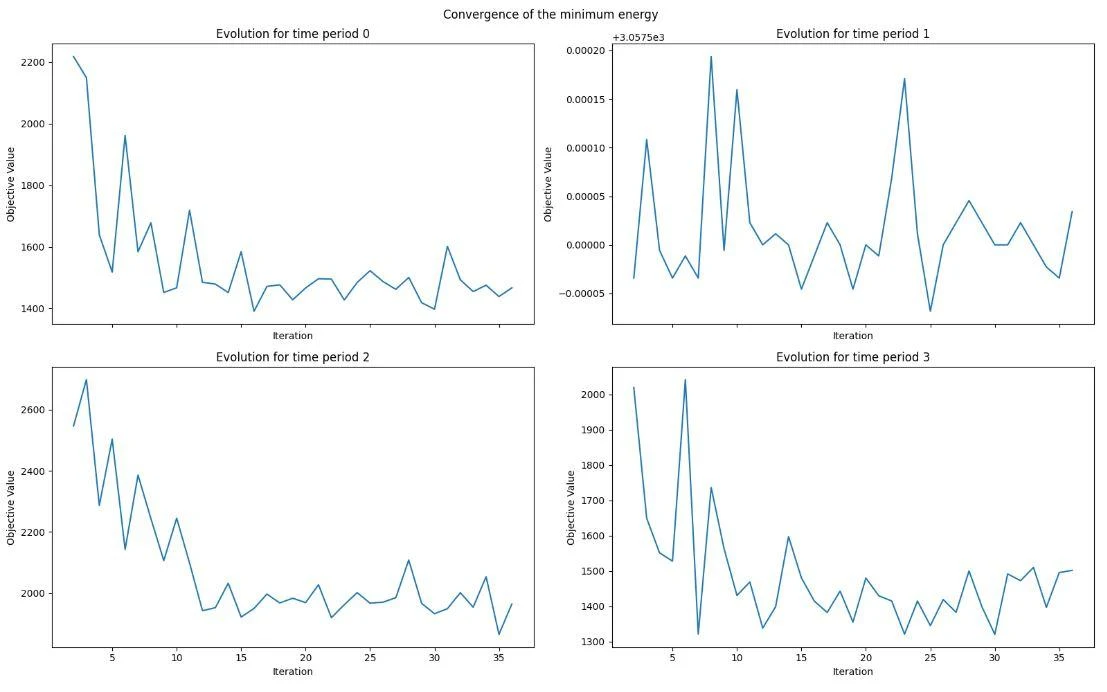
Managing power plants is like tuning a city's water supply: you need to open the right valves so pressure is adequate and water loss is minimal. The new algorithm combines quantum annealing — an idea inspired by the work of Richard Feynman — with conventional optimization. The quantum part instantly sifts through millions of 'on/off' combinations, reducing the chaos (or entropy) of costs. Then the classical block, like a seasoned plumber, finely adjusts the power valves at each station. Unlike standard approaches, which take hours to compute, the hybrid scheme works hundreds of times faster. For a network of 26 stations, the number of possibilities exceeds the number of atoms in the observable universe — a classical computer would be stuck for a day, while the quantum assistant finds a solution in minutes. Implementing such algorithms will reduce fuel burning, shrink the carbon footprint, and perhaps lower our electricity bills.
The scheduling of power plant startups (unit commitment) is considered one of the trickiest tasks: you have to simultaneously decide which plants to turn on and calculate their output, with the number of combinations exploding exponentially.