Quantum Bridge of Light ✛
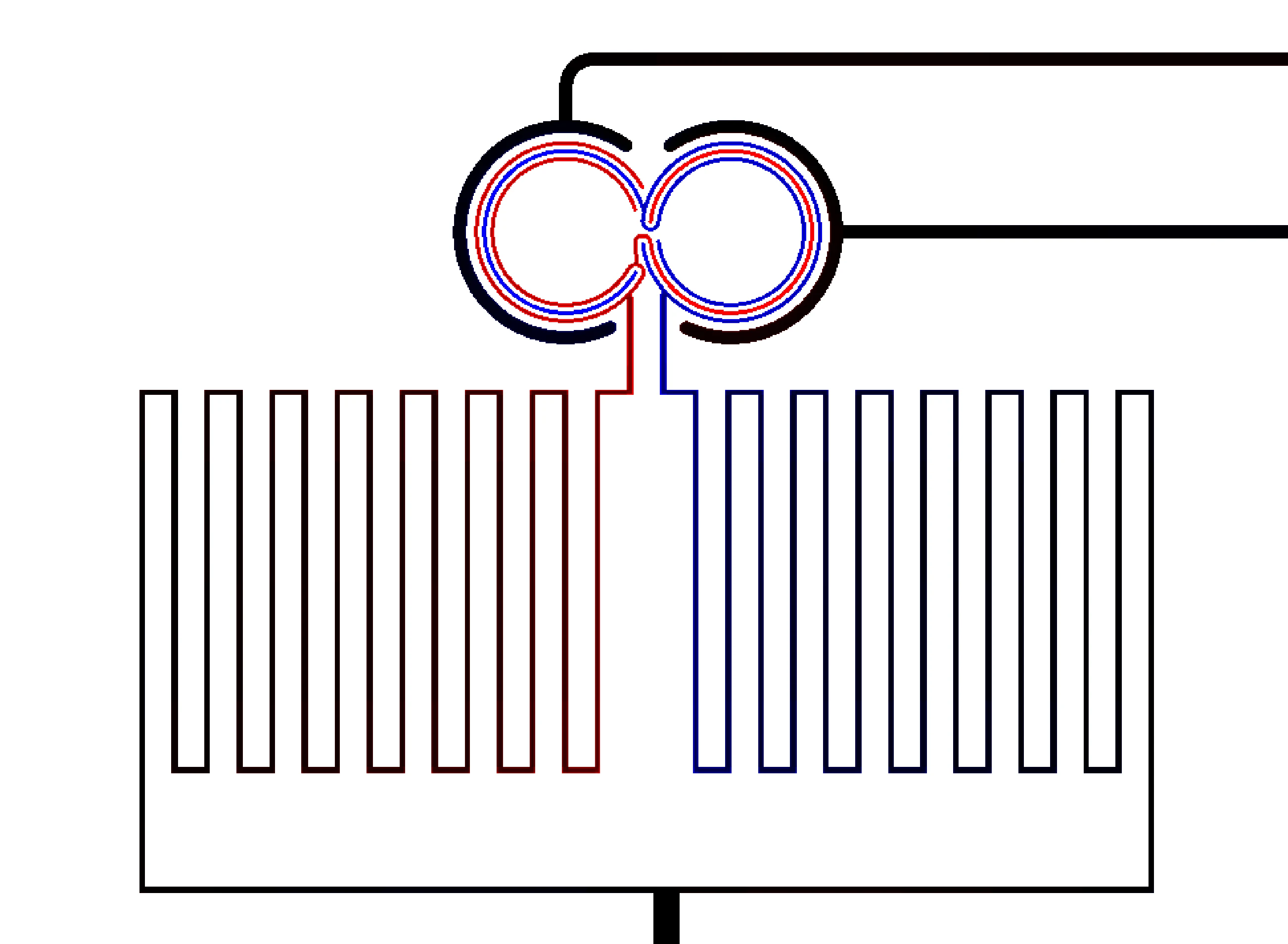
Each quantum processor is an island in a sea of ultra-low temperatures. It communicates via a microwave whisper, which fades after a couple of centimeters — thermal noise drowns it out. To connect two such islands, physicists built a bridge: on both sides they placed converter crystals, tuned to the same frequency, and between them laid a kilometer of optical fiber, just like in regular internet cables. The crystal turns microwaves into red light, which races through the fiber at the speed of light, and at the distant shore, a second crystal turns it back into the whisper — exactly the original. The quantum essence remained unharmed.
The conversion efficiency is only 0.1%, but the whisper from a kilometer away becomes a hundred million times louder than without the bridge. Thus, scattered quantum islands weave together into a single network, the quantum internet.
Light travels a kilometer in 3 microseconds — faster than the blink of an eye.
This quantum bridge is like the ansible from science fiction: it connects not planets, but quantum processors.