Ionic Liquids on Rocky Exoplanets: Life Without Water ✛
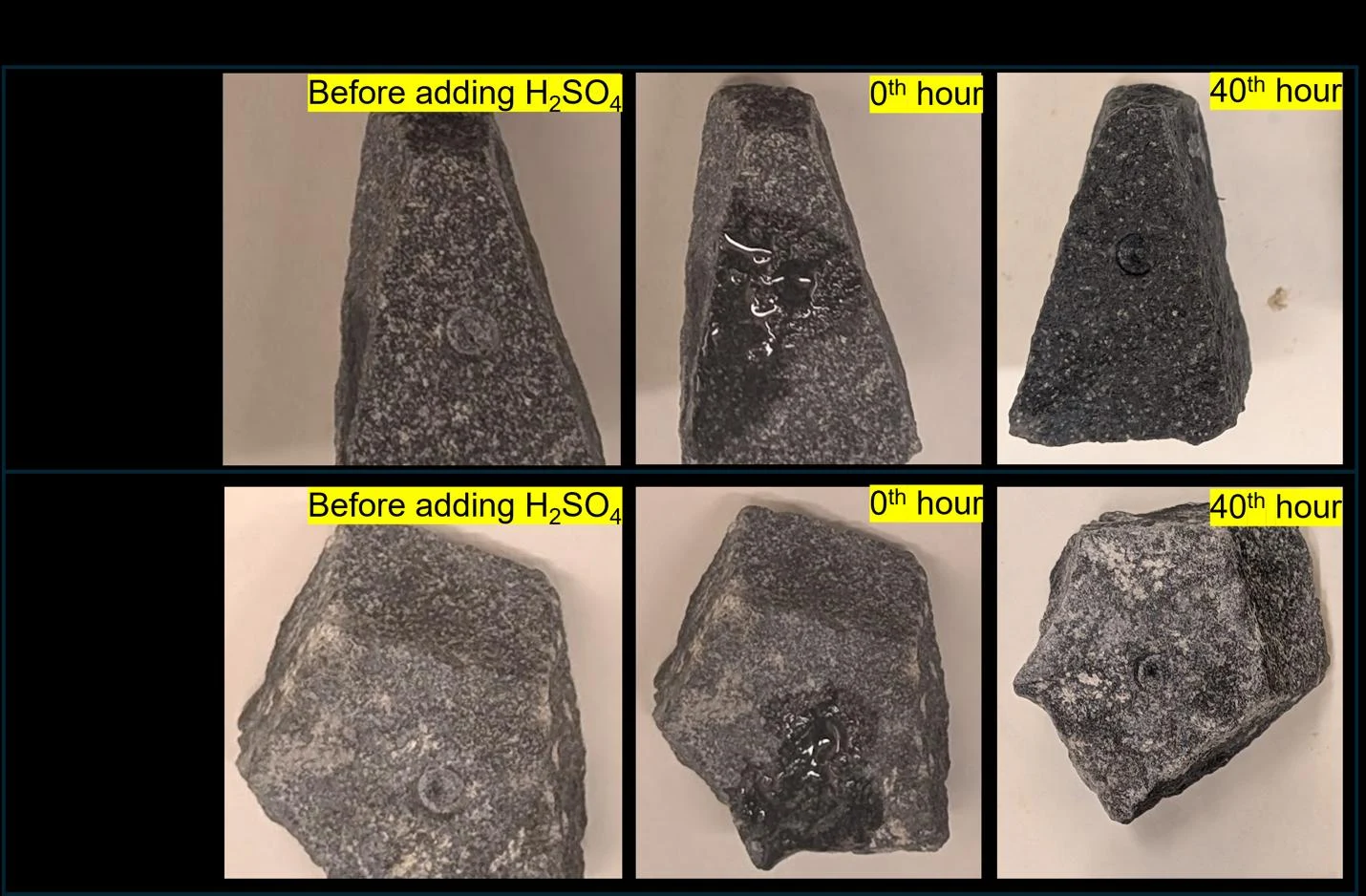
Water is the gold standard for life. We search for its traces on Mars, in icy moons, and in the atmospheres of distant planets. But what if life doesn't need water? On a warm rocky exoplanet with a thin atmosphere, water would evaporate within hours. An ionic liquid, however—a salt that is liquid at ordinary temperatures—would remain. It's like a chemical soup that doesn't boil away.
In the lab, scientists recreated planetary conditions: they mixed sulfuric acid with nitrogen-containing organics—amino acids, nucleobases, amines—and let the excess acid evaporate in a vacuum chamber at about 100 °C and a pressure of 10⁻⁵ bar. The result was ionic liquids with a hydrogensulfate anion (the negatively charged part of sulfuric acid) and a protonated organic cation. They formed for all 20 biogenic amino acids and many other compounds. Decomposition temperatures range from 180 °C to 346 °C, which is stability sufficient for the surface of a typical warm exoplanet.
Previously, ionic liquids were considered purely synthetic substances, and no one considered them as a possible natural solvent for life. Now it has been shown that they form readily from materials found on many bodies in the Solar System. This is the first experimental demonstration that a planet's surface can remain "wet"—but not with water, with ionic liquid. Practical applications on Earth are not yet apparent, but the results could guide future searches for biosignatures: if we know that ionic liquids can support the chemistry of life, we can look for their traces in exoplanet spectra.
The prospect opens new horizons. Next steps include investigating the stability of ionic liquids to ultraviolet radiation and cosmic rays, searching for other possible anions and cations, and modeling conditions under which such liquids could accumulate in significant quantities. The question of whether they can support metabolic networks analogous to those on Earth remains open. But one thing is clear: life may not be exclusively water-based. Ionic liquids are a chemical soup that doesn't boil away, and perhaps it is in such a soup that life will emerge on other worlds.
The only known natural occurrence of ionic liquid formation on Earth is the detoxification of fire ant venom by the ant Nylanderia fulva: their venoms mix to form a viscous, non-toxic ionic liquid.
The idea of life in non-aqueous solvents echoes Isaac Asimov's novel 'The Gods Themselves', which describes beings living in an environment with chemistry completely different from Earth's.