Why Dark Molecular States Promise Better Solar Cells ✛
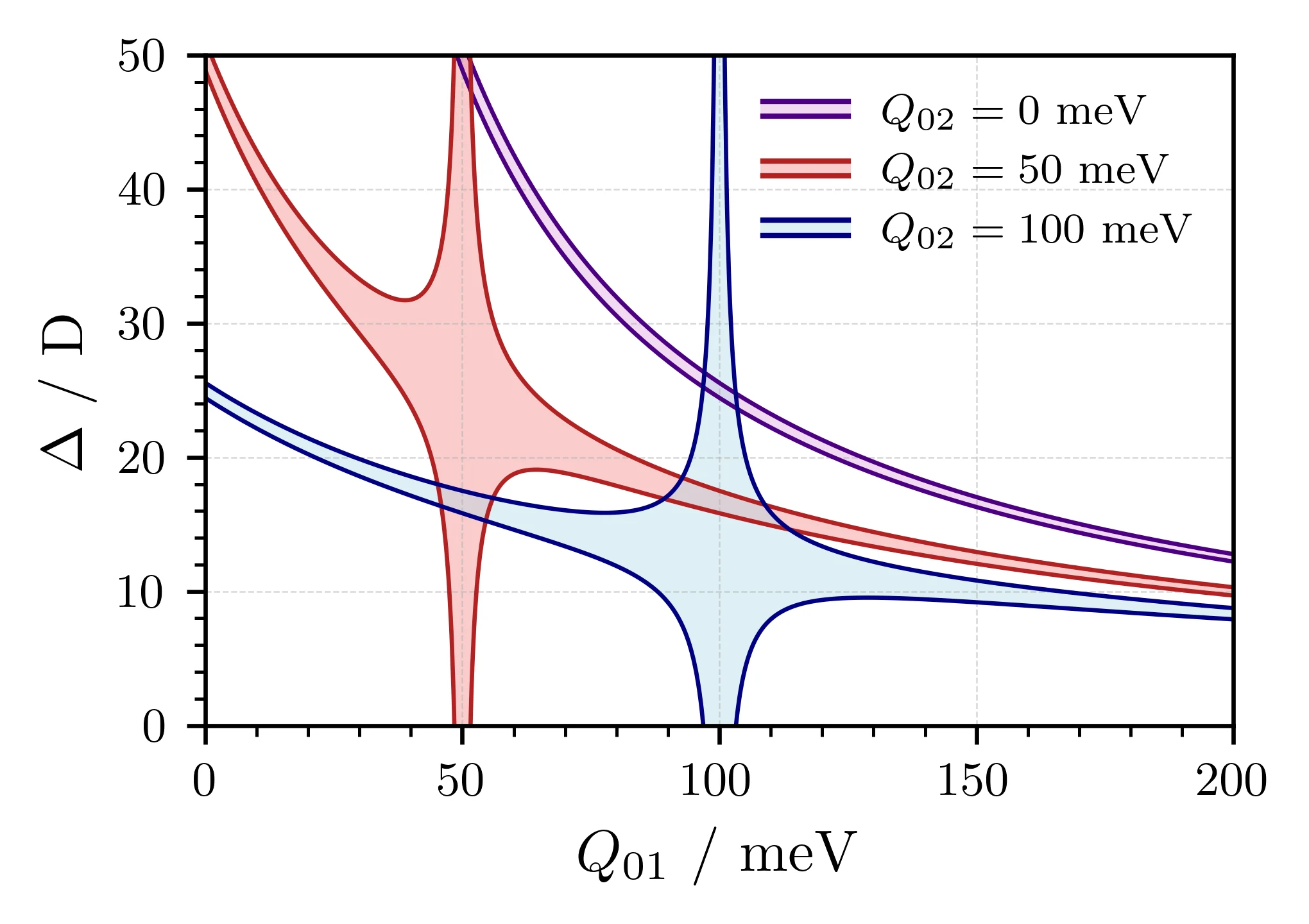
Molecules with a built-in charge imbalance are like dancers leaning to one side. When two such molecules pair up, their leans create an unusual bond that alters their response to light. Normally, upon absorbing light, molecules oscillate in sync (bright state) or in opposite rhythm (dark, non-emitting state). However, the charge imbalance, which changes with excitation, opens a hidden channel: light can directly transfer energy from the bright state to the dark one.
These dark states are almost immune to thermal noise and vibrations. This quality is extremely valuable for carbon-based organic solar cells. Embedded in a panel, these states reduce energy losses during transfer between molecules. Paradoxically, molecules that glow poorly on their own work more efficiently together, boosting the efficiency of solar cells.
Even ordinary water has a permanent dipole: its molecules are like tiny magnets, and this property helps microwaves heat food.