Magnetic monopoledark matter is a hypothetical form of dark matter composed of particles carrying a net magnetic charge—a north or south pole in isolation. Unlike ordinary matter, which has separate electric charges, magnetic monopoles would interact strongly with electromagnetic fields, potentially explaining the observed magnetic fields in galaxies and galaxy clusters. As dark matter candidates, they are motivated by certain grand unified theories that predict their existence and by the need for a particle that interacts weakly with ordinary matter but can seed cosmic magnetism.
History
The concept of magnetic monopoles was introduced by Pierre Curie in 1894, but their quantum-theoretic foundation came from Paul Dirac in 1931, who showed that a single monopole would explain charge quantization. Their role as dark matter was explored in the 1980s within the context of grand unified theories.
How it works
Monopoles would be produced in the early universe and could cluster gravitationally like other dark matter. Their magnetic charge would cause them to interact with charged particles and magnetic fields, possibly generating or amplifying galactic magnetic fields through dynamo effects. Detection relies on their distinctive signature: as they pass through matter, they induce a magnetic flux change, which can be picked up by superconducting coils or by the deflection of light in their vicinity.
In practice
Monopole dark matter is searched for in cosmic-ray detectors, neutrino telescopes, and dedicated experiments like MoEDAL at the Large Hadron Collider, which look for the telltale magnetic charge.
Fun fact
If magnetic monopoles exist, they would make the laws of electromagnetism perfectly symmetric between electricity and magnetism—a symmetry that is otherwise broken in our universe.
In the first moments after the Big Bang, the universe was a searing 'soup' of particles. As it cooled, phase transitions occurred — much like water turning to ice. At one such moment, magnetic monopoles of dark matter could have been born: tiny clumps of field with a single magnetic pole.
The early universe expanded at a breakneck pace: this phase is called inflation. But how exactly did it do it? Some models describe the expansion as a steep exponential surge, others as a more gentle power-law motion.
When the cooling cosmos, in the aftermath of the Big Bang, lost its primordial symmetry, tensions arose in the fields, like microcracks forming in solidifying glass. Global monopoles, predicted by Gerard 't Hooft and Polyakov, became such “scars” on the fabric of the universe. Each monopole is a tiny but incredibly massive knot of field.
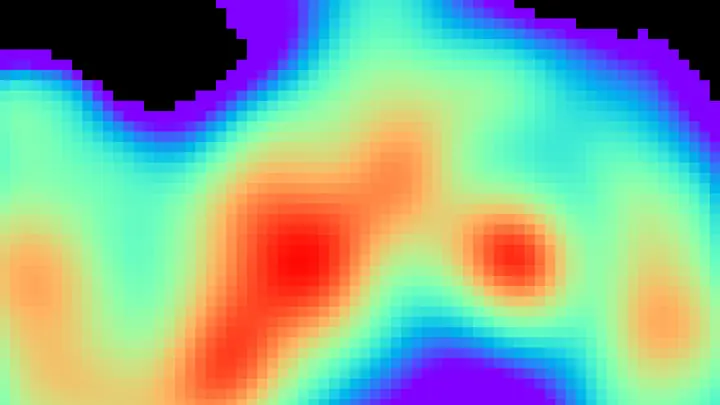
Light from a distant blazar, an active galactic nucleus whose jet points our way, travels for billions of years. Along the way, it triggers cascades of charged particles that the intergalactic magnetic field deflects sideways. This creates a blurred gamma-ray glow around the blazar: a secondary halo.
In the hot early universe, like in an overcrowded dance hall, magnetic monopoles swirled — loner particles carrying only a north or only a south pole. In an ordinary magnet, poles always come in pairs, but here each one is on its own. Theories that unify all forces of nature predict that such particles should have been produced in vast numbers, yet today we don't see them.
An ordinary magnet always carries two poles — north and south. Split it in half, and each piece immediately grows its own pair. But deep in particle theory lives a strange notion: the monopole — a particle carrying just one magnetic charge, a lone pole without a partner.
A magnet with only one pole — north, but no south. Split it in half, and instead of two ordinary magnets, you get two more one-pole magnets. In our world, no such particle has been found, although many theories predict their existence. These hypothetical objects are called magnetic monopoles.
The authors of the study noticed a curious connection.
A magnet with only one pole (north, without a south) is not a fragment but a particle in its own right. Physicists call it a magnetic monopole (a carrier of a single magnetic charge). Such visitors could have been born in the early universe, when the forces were just separating.
In the dark cloud L43, where stars are born, dust grains twirl like tiny compasses. Light from a young star pushes them, while the magnetic field lines them up in a specific direction. When a grain is turned sideways to us, its heat reaches us polarized, like light passing through a narrow slit.
Dark matter is invisible, but according to calculations, it holds galaxies together. Catching its particles is like hearing a whisper in a noisy room. You need a material that responds loudly and noticeably to the slightest nudge.
Molecular magnets could be such a material — substances where each molecule acts as an independent tiny magnet.
Without the invisible framework of dark matter, galaxies would fly apart. Astronomer Vera Rubin proved back in the 1970s that stars rotate as if held by an unseen mass. But new research shows it's not just passive ballast.
The Universe after the Big Bang was almost perfectly homogeneous. Almost, because tiny density perturbations stretched by inflation became the seeds of galaxies. But what if these same perturbations could give birth not only to stars but also to black holes?
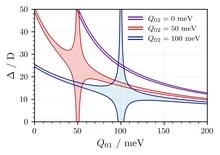
Two voices in a molecular duet can sound in unison or cancel each other into silence. In physics, such silence is called a dark state: a quantum excitation that does not interact with light and therefore lives unusually long.